

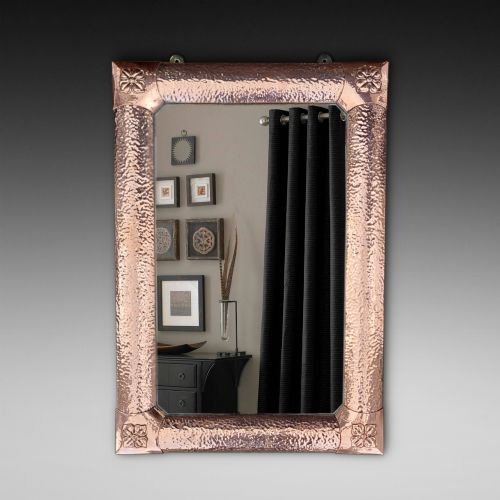
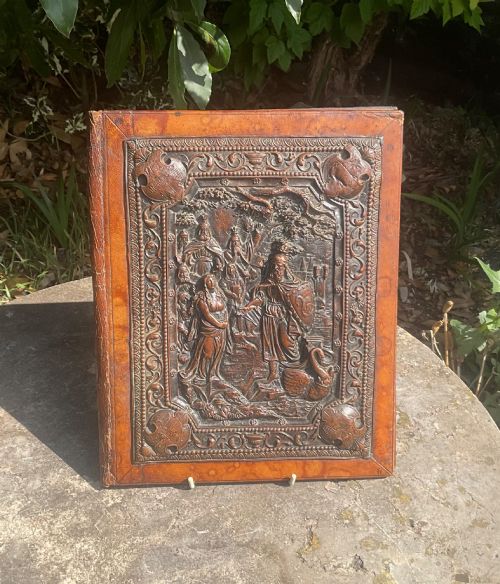
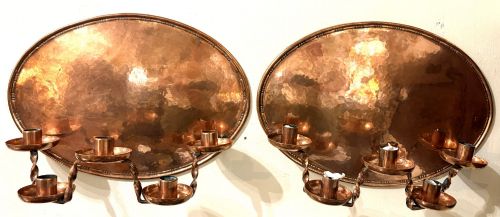

Repousse Copper Art
These pieces of repousse copper art bring tactile warmth to an interior through raised metalwork shaped by hand.
Repousse Copper Art
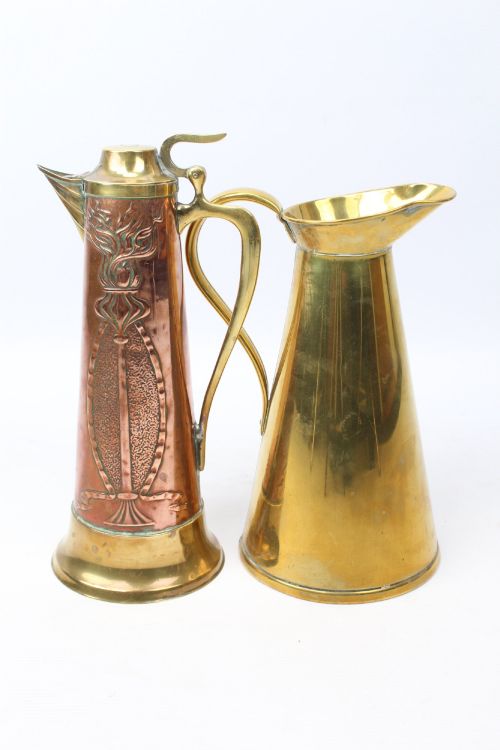
Repousse copper art encompasses decorative and functional household items formed predominantly during the late nineteenth and early twentieth centuries. Pieces appearing in this selection reflect Arts and Crafts and Art Nouveau ideals, drawing on periods spanning the Victorian era to the nineteen-twenties.
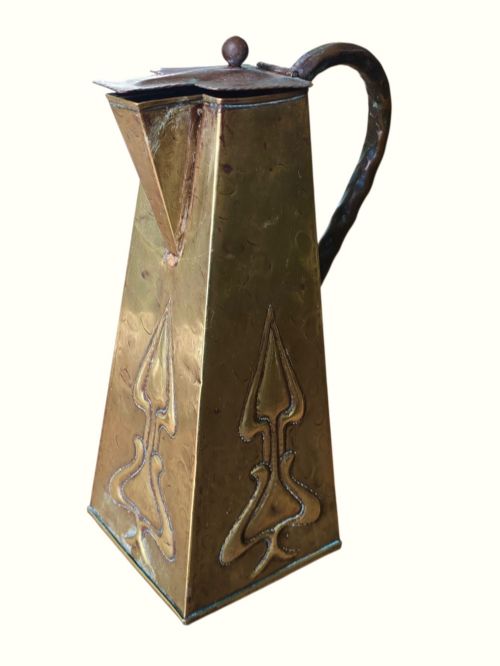
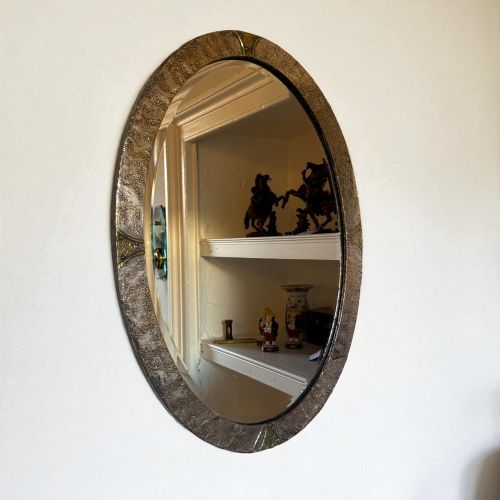
Domestic items dominate the forms, ranging from wall mirrors and fireplace screens to jardinieres, trays, and coal scuttles. Wall mirrors framed in beaten and embossed metal and decorative jugs or vases are the versions most frequently encountered on this page.
Origins stretch from English and Scottish regional workshops to French studios and Persian ateliers. Makers utilised copper alongside oak, brass, iron, and glass to create items intended for daily utility and visual display.
How they were made
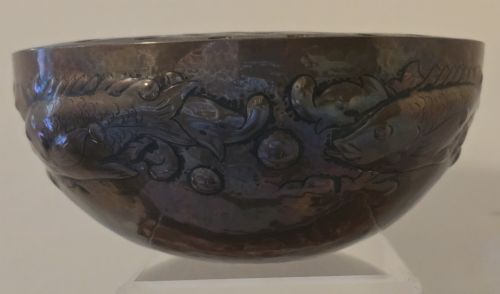
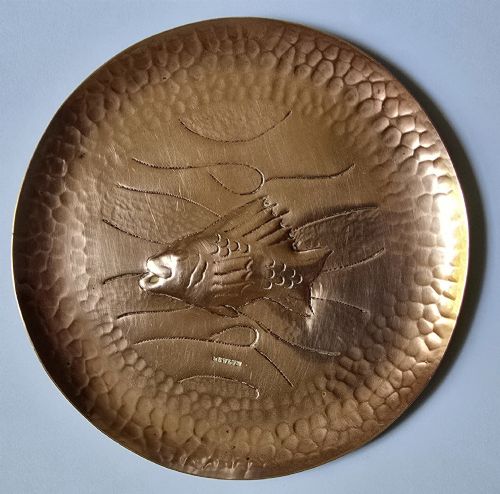
Craftsmen shaped sheets of copper by hammering them from the reverse side to push out raised motifs, a technique known as repousse. Detail was often refined from the front using punches and chisels to sink the surrounding metal.
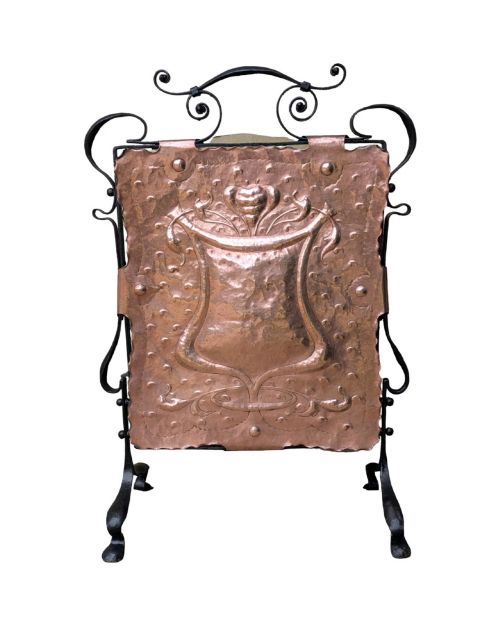
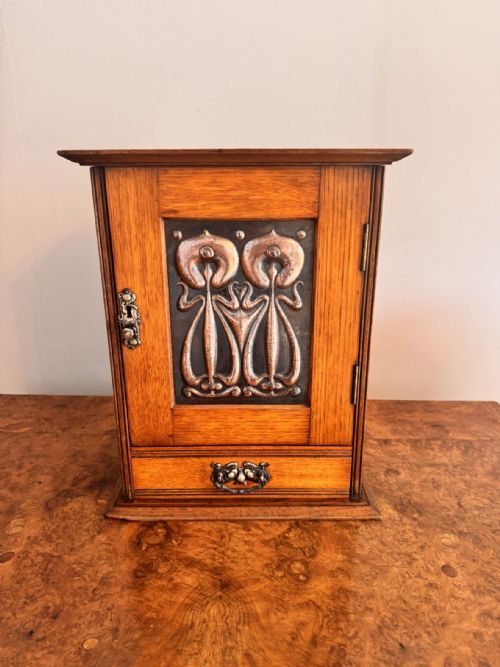
Makers mounted these decorated metal panels onto structural supports of oak, wrought iron, or brass. Frames, fire screens, and coal boxes combined timber and hammered metal to give rigidity to the pliable copper.
Repousse Copper Art Retail Price Guide 2026
Typical asking prices for repousse copper art among the pieces listed under this phrase on Sellingantiques today, from the lower quarter to the upper quarter. They describe what is for sale here now, not the wider market.
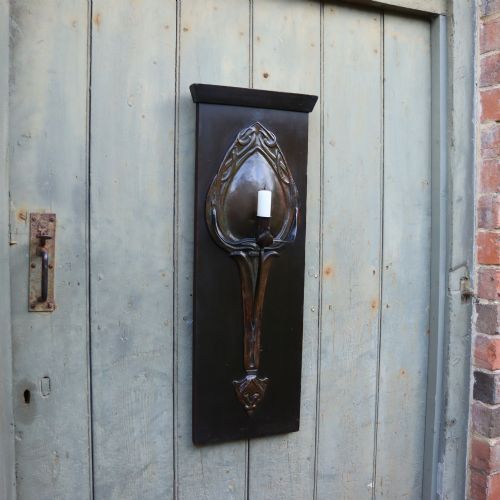
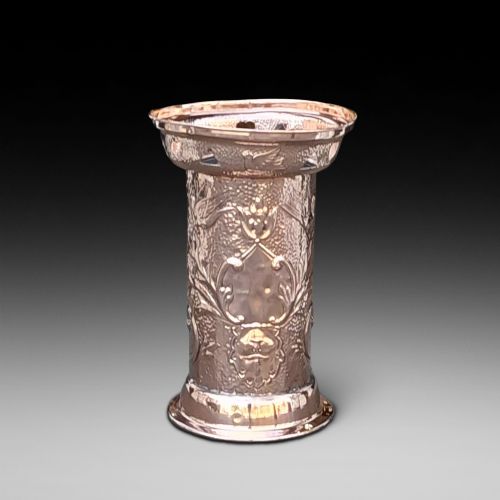
The selection includes domestic furnishings ranging from umbrella stands and wall sconces to desktop blotters.
What varies in quality
The depth and definition of the hammered relief distinguish standard production from superior work. Crisp contours and balanced proportions show deliberate handling of the metal rather than rushed stamping.
Materials and associated framework indicate the standing of a piece. Solid oak mounts, well-wrought iron supports, and workshop stamps elevate an object above simpler domestic items.
Newlyn Copper·Joseph Sankey·Keswick Arts and Crafts·Liberty and Co
The Repousse Copper Art Glossary
- Repousse
- Metalworking technique where the design is hammered into relief from the reverse side. This method pushes the metal outward to create three-dimensional pictorial or abstract forms.
- Arts and Crafts
- Design movement valuing handcraft, vernacular traditions, and visible construction methods over machine production. It heavily influenced metalwork design around nineteen hundred.
- Art Nouveau
- International style characterised by organic, flowing lines and plant-inspired motifs. It appears frequently on mirrors, vases, and trays from the early twentieth century.
- Jardiniere
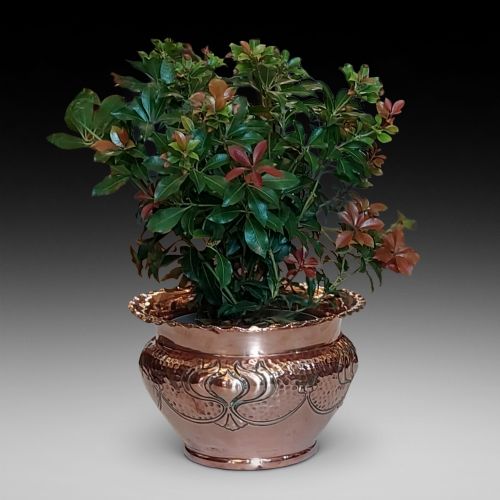
- An ornamental pot or stand designed to hold plants or flowers. In copper, these often feature embossed floral or geometric borders.
- Charger
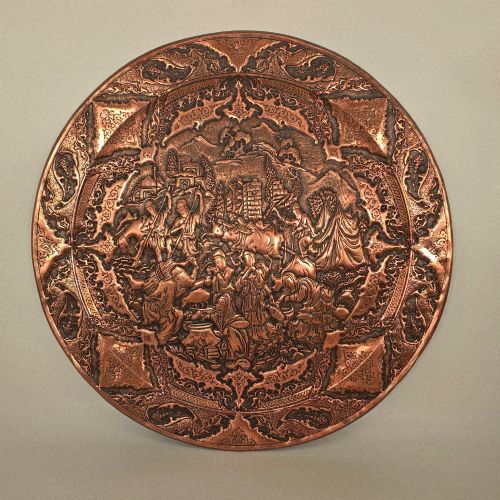
- A large ornamental decorative plate or shallow bowl meant for display on walls or furniture. Examples often display intricate engraved or raised pictorial scenes.
Repousse Copper Art: Frequently Asked Questions
What is repousse copper art?
Repousse copper art involves items shaped by hammering sheet metal from behind to form raised patterns. These pieces include mirrors, trays, and fire screens originating mostly around nineteen hundred.
They reflect movements like Arts and Crafts and Art Nouveau, combining utility with expressive metalwork.
How do I date a piece?
Dating relies on stylistic markers, materials, and workshop stamps. Items from the Victorian period tend toward heavier frames and neoclassical motifs, while nineteen-hundred pieces often show organic Art Nouveau curves.
Structural woods like oak and specific maker marks help narrow the era of production.
Where were these pieces made?
Production centres included specialised guild workshops in Britain, such as those in Cornwall and the Lake District, alongside French studios and Persian metalworkers. Regional cooperatives often stamped their work on the reverse.
Domestic items were produced to bring handcrafted art into everyday middle-class homes.
How do I care for copper?
Copper requires gentle cleaning to preserve its natural patination and surface integrity. Harsh abrasives will strip the historical finish and thin the hand-hammered metal.
Dusting with a soft cloth and avoiding excessive moisture keeps the frames and vessels stable in modern interiors.