

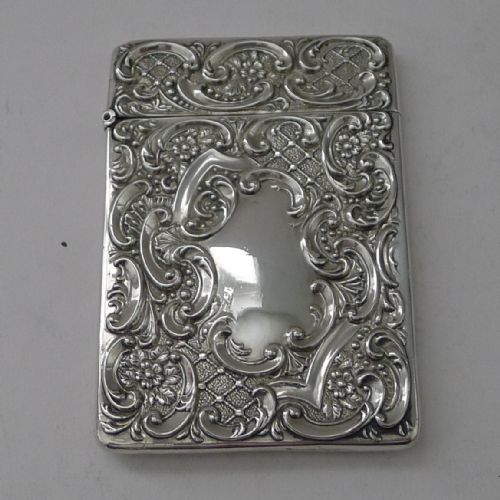
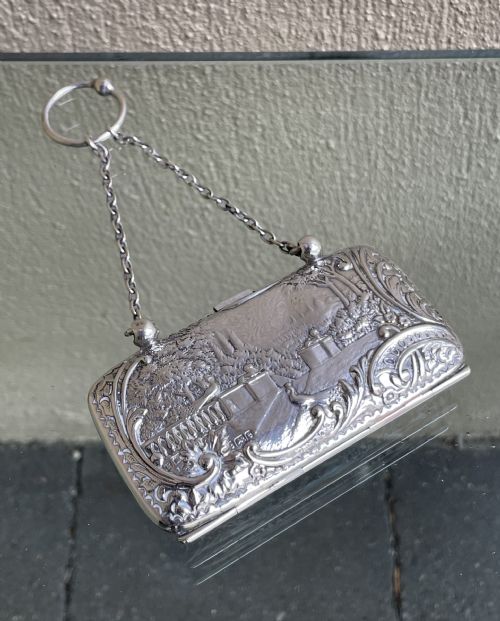


Repousse Card Case
These repousse card case examples bring textured silver work straight to your pocket, offering a tactile piece of Victorian and Edwardian craftsmanship.
Repousse Card Case
A repousse card case is a pocket accessory designed to hold visiting cards, emerging most frequently from the Victorian and Edwardian periods in sterling silver and silver. These pieces serve as functional social tokens from an era when calling upon acquaintances required formal presentation.
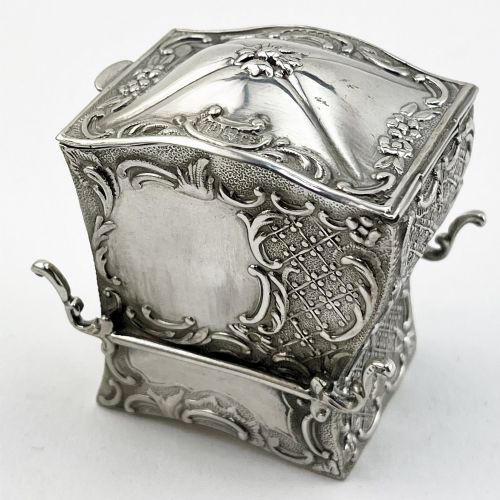
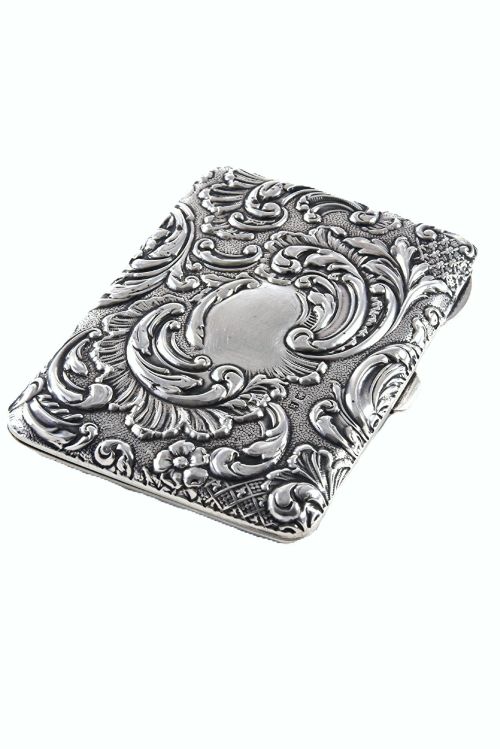
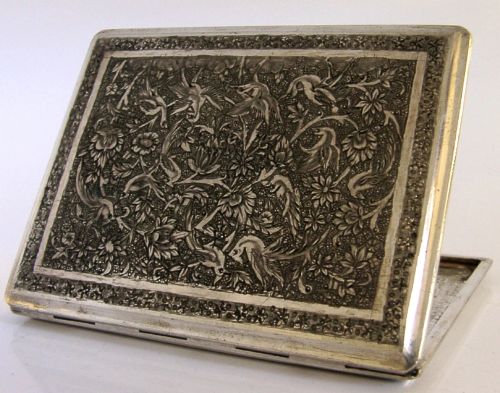
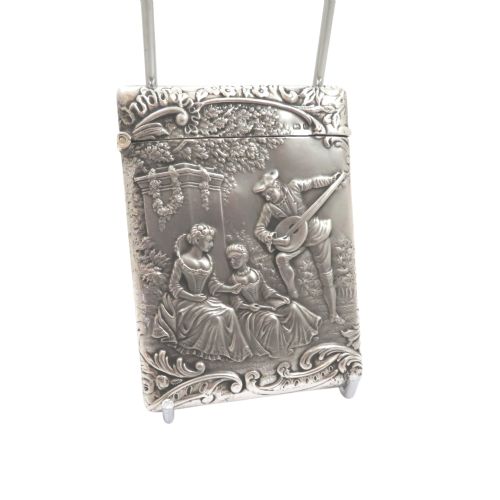
The selections available on this page lean heavily toward Edwardian examples alongside Victorian pieces, featuring distinct decorative motifs such as figurative scenes, animals, and architectural designs. Alongside standard card cases, buyers will encounter related forms like aide memoires, purses, and cigarette cases sharing the same worked silver surfaces.
How they were made
Makers shaped these objects primarily from sterling silver and silver, hammering the metal from the reverse side to push out raised ornamental designs in relief. This technique, known as repousse, allows for intricate pictorial depth and tactile surface texture across the body of the case.
Additional decorative methods complement the raised metalwork on specific regional pieces, including niello work for contrasting dark inlays and detailed chasing applied to the front and back panels.
The listings span Victorian and Edwardian eras, utilising sterling silver, standard silver, and niello across various global origins.
What varies in quality
Quality in a repousse card case rests on the depth, crispness, and artistic ambition of the hammered relief work rather than the mere weight of the metal. Superior examples exhibit high definition in figurative elements, animals, or architectural motifs, whereas lesser pieces show flattened or shallow surface detailing.
The presence of specific maker attribution or complex pictorial narratives, such as detailed pastoral scenes or specific architectural landmarks, elevates the standing of an individual piece above plain or mechanically uniform alternatives.
The Repousse Card Case Glossary
- Repousse
- A metalworking technique where a design is hammered into relief from the reverse side of the sheet. This method creates raised ornamentation that catches the light and provides a textured surface.
- Niello
- A black metallic alloy used as an inlay on engraved or hammered silver surfaces. It creates stark visual contrast against the bright polished metal.
- Aide memoire
- A small notebook or memorandum tablet often housed in a silver case with a pencil. These items were used for jotting down social engagements and calling notes.
- Sterling silver
- A silver alloy containing a specific high proportion of pure silver by mass, standard for British domestic plate and wearable accessories of the periods shown.
Repousse Card Case: Frequently Asked Questions
What is a repousse card case?
A repousse card case is a small pocket receptacle made of silver, featuring ornamental designs hammered into raised relief from the reverse side. Victorians and Edwardians carried them to protect and dispense visiting cards during social calls.
These accessories reflect the formal etiquette of the period, turning a simple utilitarian item into a miniature canvas of metalwork artistry.
How were calling cards used?
Calling cards served as formal introductions or tokens left at a residence when a visitor found the host absent. They acted as social currency in regulated Victorian and Edwardian society.
Keeping them crisp and unbent inside a dedicated silver case was essential for maintaining proper etiquette.
How do I date an Edwardian card case?
Dating an Edwardian card case involves checking the hallmarks stamped into the silver, which indicate the assay office, standard, and specific year of production. Stylistic markers such as lighter gauge metal and specific floral or animal motifs also point to the early twentieth century.
Comparing the design characteristics with known production years helps narrow down the exact decade.
Can I still use a silver card case today?
Modern credit cards and business cards often fit into antique card cases, though contemporary card dimensions vary. Checking the interior depth and width against your specific cards ensures a proper fit.
Many collectors prefer to use them for modern visiting cards or simply display them as part of a decorative silver collection.