



Renaissance Style Majolica
Renaissance style majolica brings the rich, colourful pageantry of sixteenth-century Italy and France directly into your home.
Renaissance Style Majolica
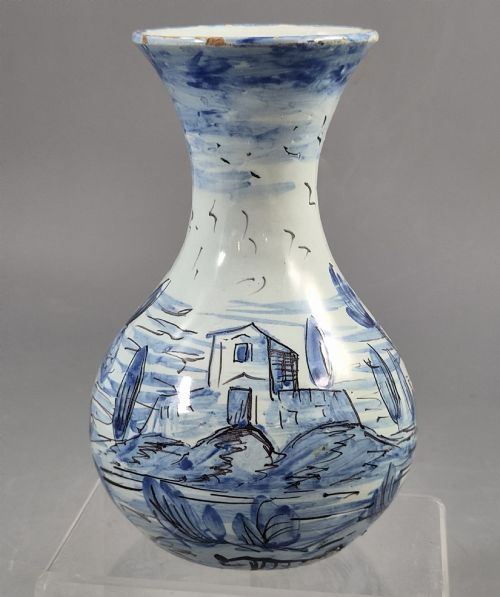
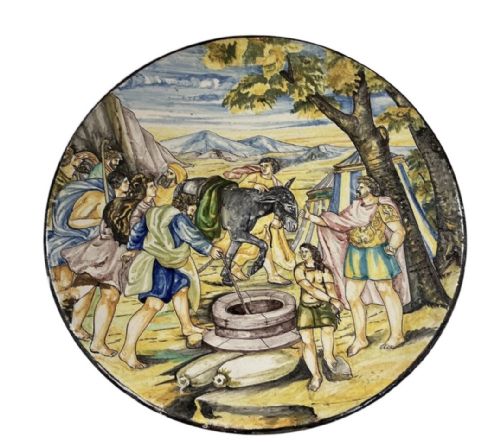
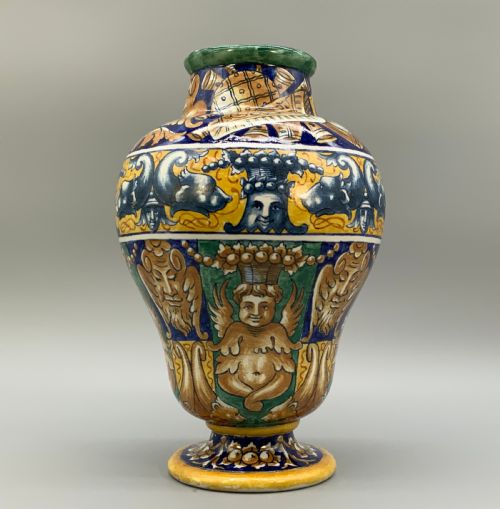
Renaissance style majolica encompasses tin-glazed earthenware vessels, chargers, and decorative objects that revive historical forms from Italian and French traditions. When you search for renaissance style majolica, you encounter grand chargers depicting classical historical scenes, alongside ewers and vases produced during the nineteenth and early twentieth centuries.
The objects on this page largely originate from nineteenth-century revivals, particularly drawing on Italian neo-Renaissance and French Renaissance Revival idioms. Pieces span from cabinet vases and tulip vases to large centrepiece bowls and wall brackets, reflecting an era that passionately reimagined earlier historic aesthetics.
How they were made
Potters built these items using earthenware or ceramic bodies, which were then coated in a characteristic tin glaze or majolica glaze. Artisans applied pigments by hand to create elaborate polychrome or blue and white designs before firing.
Makers utilised traditional techniques of the faience and maiolica traditions, employing hand-painted brushwork to render figurative historical scenes and intricate botanical motifs across chargers, vases, and ewers.
Renaissance Style Majolica Retail Price Guide 2026
Typical asking prices for renaissance style majolica among the pieces listed under this phrase on Sellingantiques today, from the lower quarter to the upper quarter. They describe what is for sale here now, not the wider market.
Listings feature earthenware and ceramic materials finished with tin glaze, majolica glaze, and pigment across the nineteenth and early twentieth centuries.
What varies in quality
The distinction between standard decorative items and finer works rests upon the ambition of the painted decoration. Hand-painted istoriato scenes executed with precision elevate a charger or vase far beyond simple mass-produced polychrome wares.
The depth of the tin glaze and the control of the pigment application determine the visual impact of the piece. Superior examples display crisp detail in historical narratives and harmonious balance across large surfaces like centrepiece bowls and wall brackets.
Cantagalli·Gien·Minton
The Renaissance Style Majolica Glossary
- Majolica
- A type of earthenware decorated with an opaque tin-lead glaze and painted with metallic oxides. It provides a smooth white ground for vibrant polychrome painting.
- Maiolica
- The traditional Italian spelling for tin-glazed earthenware. This term frequently appears in descriptions of Italian revival ceramics.
- Faience
- French or English tin-glazed earthenware produced in imitation of Italian majolica. Gien stands out as a notable maker working in this tradition.
- Charger
- A large decorative plate or platter designed for display rather than dining. These pieces often feature elaborate historical or mythological scenes.
- Istoriato
- A style of ceramic decoration featuring narrative scenes derived from history, mythology, or literature. It covers the entire surface of the vessel with complex figurative compositions.
Renaissance Style Majolica: Frequently Asked Questions
What is renaissance style majolica?
Renaissance style majolica refers to tin-glazed earthenware ceramics produced primarily during the nineteenth-century revival periods. These items imitate the tin-glazed pottery of sixteenth-century Italy and France.
Makers drew inspiration from historical forms such as large chargers, ewers, and tulip vases, decorating them with hand-painted classical and historical scenes.
How do I display a majolica charger?
Majolica chargers are large, decorative platters originally intended to be shown on walls, sideboards, or dedicated display stands. Their wide surfaces make them striking focal points in a room.
When placing a charger, ensure the mounting or stand supports its weight securely while fully revealing the painted Istoriato scene or polychrome border.
How do I tell Italian from French pieces?
Italian pieces often reference regional workshops such as Urbino, Pesaro, or Florence, frequently employing the term maiolica and depicting classical historical narratives. French examples, often marked as faience, derive from factories like Gien and reflect French Renaissance Revival aesthetics.
Examining the style of the tin glaze, the palette of the pigments, and any factory marks helps clarify the geographic origin of the ceramic.
Are these pieces from the Renaissance?
The objects found here are nineteenth and early twentieth-century revivals rather than original sixteenth-century artefacts. Makers of this era recreated the styles of the Italian neo-Renaissance and French Renaissance Revival with great technical skill.
This Victorian and later interest in historicism produced elaborate vases, wall brackets, and centrepiece bowls that capture the decorative spirit of earlier centuries.