




Renaissance Revival Carved Frame
These renaissance revival carved frame pieces bring heavy historical ornament and rich timber into a room, offering nineteenth-century interpretations of sixteenth-century classical design.
Renaissance Revival Carved Frame
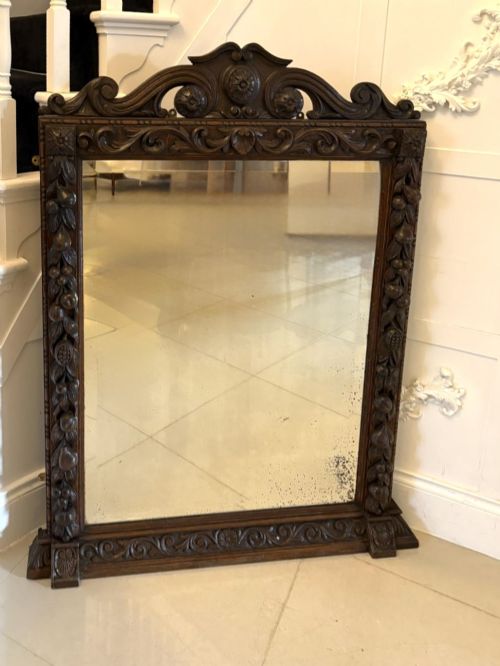
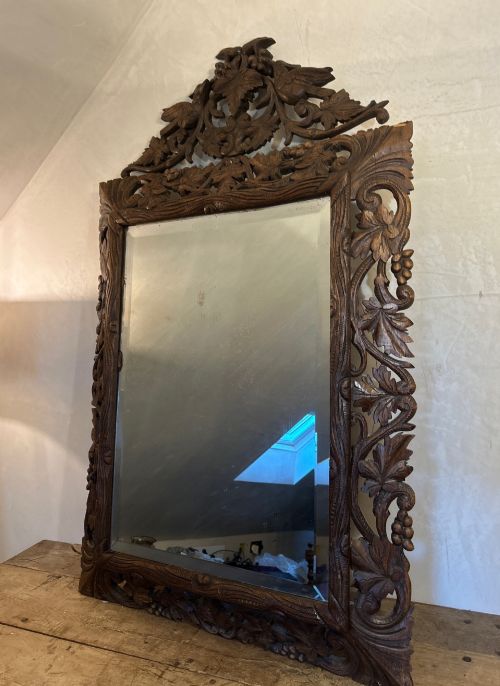
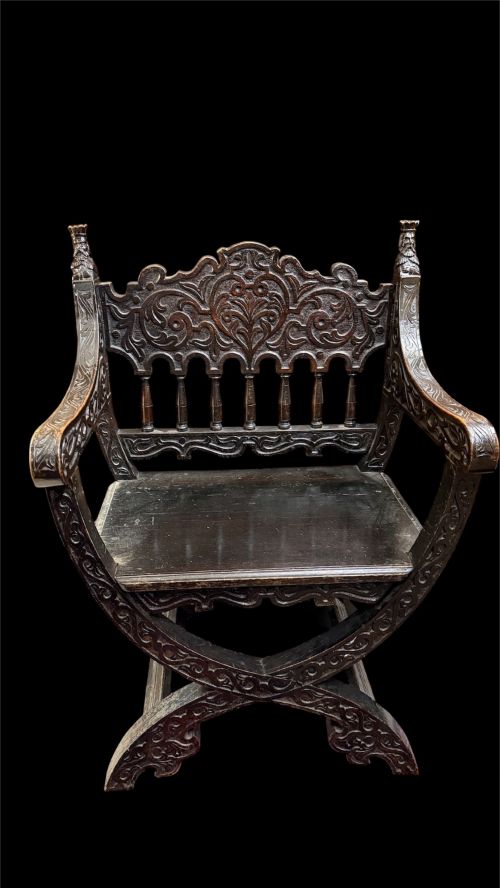
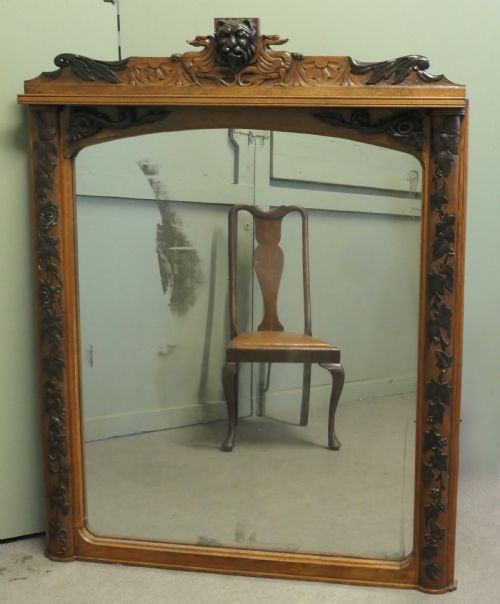
When you search for renaissance revival carved frame, you encounter a selection dominated by nineteenth-century wall mirrors, armchairs, and beds. These objects draw heavily upon Italian and French sixteenth-century motifs, translating classical architectural elements into domestic furnishings.
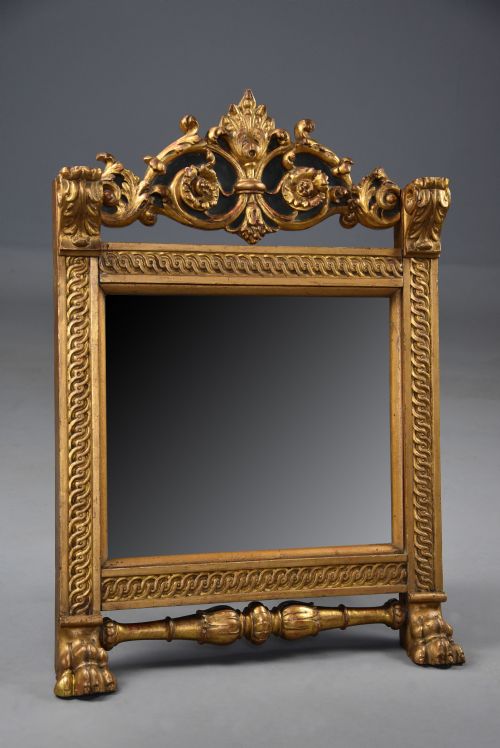
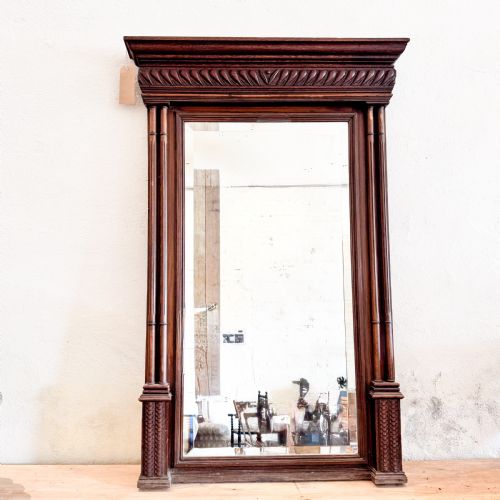
The wall mirrors and overmantel pieces form the most frequent encounters on this page, often featuring deep mouldings, side columns, and armorial crests. Alongside these hang chairs and stools utilising X-frames and curule structures.
The broader selection includes walnut bedsteads, benches, and oil paintings housed in matching decorative surrounds. The nineteenth-century maker looks back to earlier periods with notable ambition, producing heavy timber forms built to command attention in a room.
How they were made
Makers relied primarily on solid oak and walnut, selecting woods with deep grain patterns suitable for heavy carving. Giltwood and gesso appear where a brighter decorative surface is required, providing contrast against the dark timber.
Carving serves as the principal decorative technique across frames, panels, and mirror surrounds, executed by hand to achieve high relief. Textile upholstery and oil on panel inserts supplement the woodwork in specific seating and decorative items.
Listings demonstrate a strong preference for walnut and oak, often combining carved timber with bevelled glass plates and textile elements.
What varies in quality
The depth and definition of the timber carving separate standard production from superior pieces, where undercut foliage and crisp architectural details demonstrate sculptural skill. The choice of timber grain and the integrity of the joinery further dictate the standing of an individual frame or chair.
Surface finish and the preservation of original gilding or polish affect the visual impact of the piece. Superior examples retain their original glass, armorial crests, and textiles without losing the structural rigidity required of heavy furniture.
White, Allom & Co.
The Renaissance Revival Carved Frame Glossary
- Renaissance Revival
- A nineteenth-century design movement that adopted the classical motifs, symmetry, and ornamentation of the fifteenth and sixteenth centuries. This style appears frequently in heavy oak and walnut furnishings.
- Giltwood
- Timber that has been coated with gold leaf or a gold-coloured finish. This material is found on mirrors and tabernacle frames.
- Overmantel Mirror
- A large mirror designed to hang specifically above a fireplace mantelpiece. These pieces often incorporate elaborate carved crests and side columns.
- Curule
- An ancient chair shape featuring two curved legs that cross to form an X-form base. This classical form returns in nineteenth-century armchairs and stools.
- Armorial Crest
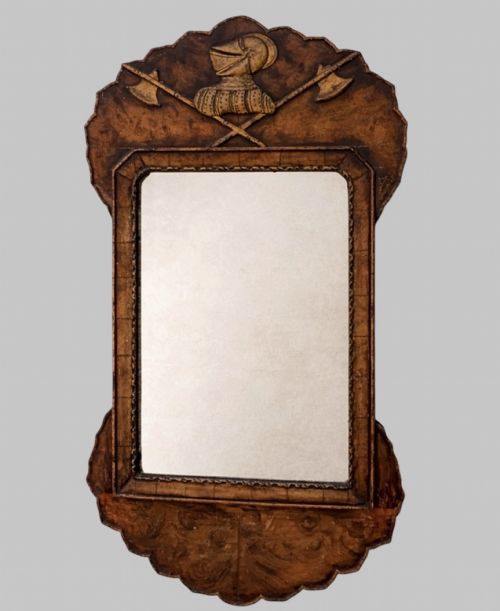
- A decorative sculptural element displaying heraldic bearings or family crests. Carvers placed these motifs at the apex of mirror frames.
Renaissance Revival Carved Frame: Frequently Asked Questions
How do I identify a renaissance revival frame?
Look for heavy classical architectural elements such as columns, pediments, and strapwork carved into walnut or oak. These pieces borrow heavily from sixteenth-century models while retaining nineteenth-century construction methods.
The presence of bevelled mirror plates, armorial crests, and deep relief carving further points towards this nineteenth-century revival aesthetic.
How do I care for carved oak furniture?
Dust the deep recesses of the carving regularly using a soft bristle brush to prevent the accumulation of dirt within the grain. Apply appropriate beeswax sparingly to nourish the timber without building up excess residue.
Keep the timber away from direct heat sources and strong sunlight to prevent the wood from drying out or splitting over time.
What is an X-frame stool?
An X-frame stool uses intersecting curved supports underneath the seat to distribute weight and create a striking geometric silhouette. This form draws directly upon ancient Roman and Renaissance precedents.
In nineteenth-century examples, these frames are frequently carved from solid walnut and sometimes retain period upholstery.