

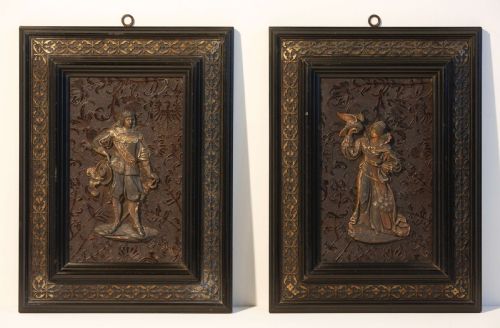





Renaissance Revival Art
Renaissance revival art brings the grand subjects and rich textures of past centuries into nineteenth and twentieth-century interiors.
Renaissance Revival Art
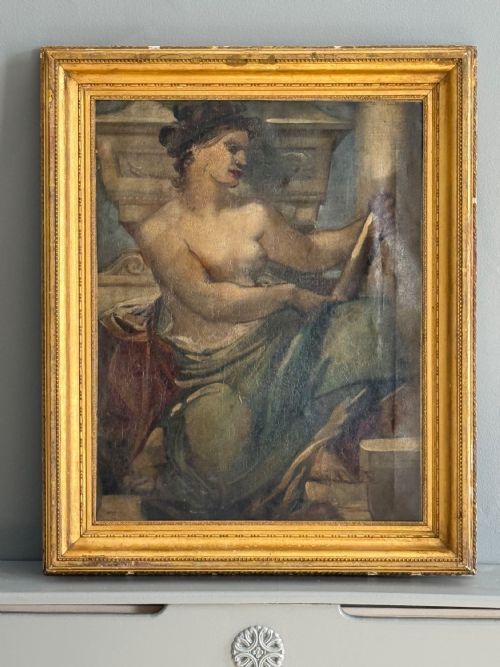
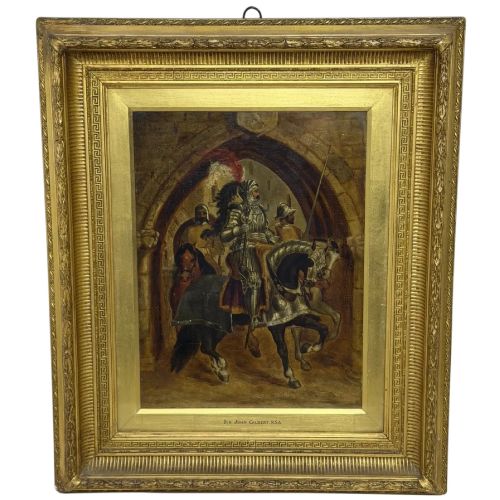
When you search for renaissance revival art, you encounter oil paintings, wall plaques, decorative panels, and copper chargers inspired by earlier historical periods. The pieces appearing here span the nineteenth century, the Edwardian era, and the mid-twentieth century, drawing directly upon sixteenth-century compositions.
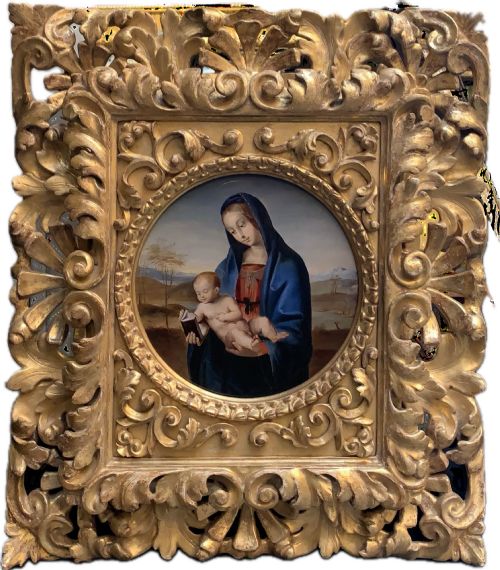
You will meet numerous works executed after Raphael, alongside panels and wall art reflecting Italian, French, and Northern aesthetic traditions. These objects range from large canvas oil paintings to carved wood bindings and metal relief plaques.
The aesthetic looks back to older religious and portrait subjects, reinterpreting historical masters through the lens of nineteenth-century craft. Buyers select these works to introduce historical depth and traditional painterly subjects into domestic spaces.
Materials and technique
Makers utilised traditional supports such as canvas, wood, and copper, applying oil paint, gesso, and enamel to build rich surfaces. Several panels feature heavily carved wood, walnut, and gilded elements that echo historic framing and architectural fragments.
Metalwork pieces incorporate brass, white metal, and gilded bronze relief, while textile works employ European wool and metal thread. Enamel painting on copper and painted book cover bindings demonstrate the varied technical scope within these revivals.
Renaissance Revival Art Retail Price Guide 2026
Typical asking prices for renaissance revival art among the pieces listed under this phrase on Sellingantiques today, from the lower quarter to the upper quarter. They describe what is for sale here now, not the wider market.
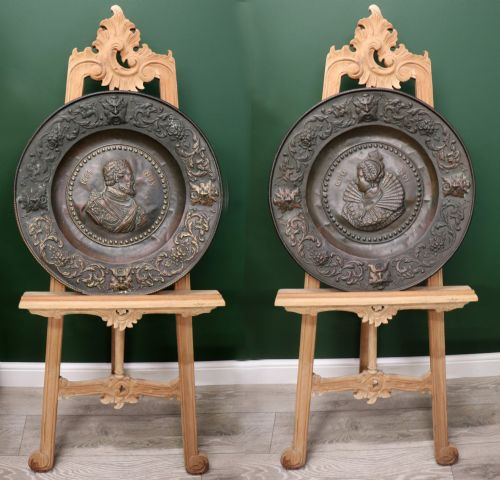
Henry IV and Queen Marie de' Médicis gaze across copper wall chargers at anyone willing to hang them in a modern hallway.
Assessing quality and execution
Quality rests upon the skill of the brushwork in oil paintings and the precision of the modelling in metal relief plaques. Works executed by skilled hands display depth in portraiture and drapery that simpler decorative copies miss.
The choice of materials, from fine European wool and metal thread tapestries to heavily carved walnut panels, dictates the presence and physical weight of the piece. Finer examples maintain a clear dialogue with their historical source material rather than relying on generic historical motifs.
Sir John Gilbert RA·Raphael·Icilio Federico Joni·Hans Holbein·Joachim Bueckelaer·Samson·Girolamo Dai Libri·C Ravier
The Renaissance Revival Art Glossary
- Tavolette
- Painted wood book cover bindings associated with Sienese Biccherna aesthetics. These historical panels often depict administrative or religious scenes.
- Wall charger
- A large decorative plate or dish intended for display on a wall rather than use at table. They frequently feature embossed or painted historical portraits.
- Limoges enamel
- Enamel painted on copper plaques, produced in workshops following traditional French techniques. These pieces often render Renaissance portraits in rich coloured pigments.
- Faience
- Tin-glazed earthenware decorated with coloured pigments. Large plaques in this medium imitate earlier majolica traditions.
- After Raphael
- A descriptor used when a painting reproduces a composition by the Renaissance master Raphael. These works pay homage to celebrated canonical imagery.
Renaissance Revival Art: Frequently Asked Questions
What is renaissance revival art?
It encompasses paintings, plaques, and decorative objects made in the nineteenth and twentieth centuries that imitate the styles of the sixteenth century and earlier.
These pieces draw on historic compositions, religious themes, and classical portraits to recreate the visual culture of past European eras.
How were these paintings displayed?
Many oil paintings and framed panels were designed to hang in principal rooms as focal points, mimicking the gallery walls of country houses.
Smaller plaques and decorative panels were often mounted on walls or placed on furniture to introduce texture and historical interest into a scheme.
How do I identify a copy after an old master?
Inscriptions, titles, or stylistic attributions often indicate whether a work follows a known composition by artists like Raphael.
Examination of the canvas, panel, and pigments helps determine if the work dates to the nineteenth century or earlier.
How do I care for framed art and panels?
Keep wooden panels and oil paintings away from direct sunlight and sudden changes in temperature to prevent wood movement and cracking.
Dust gilded frames and carved surfaces gently with a soft dry brush without using liquid cleaning products.