






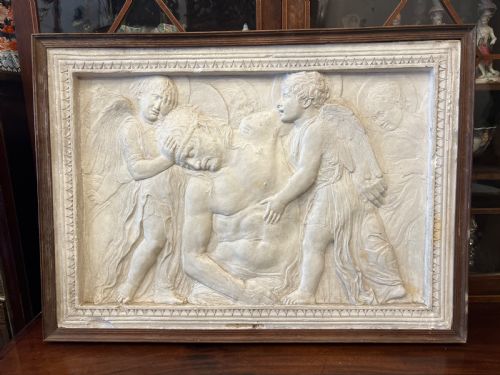
Framed Renaissance Panel
These framed renaissance panel examples bring centuries of historical artistry into domestic spaces through carved wood, painted panels, and textile fragments.
Framed Renaissance Panel
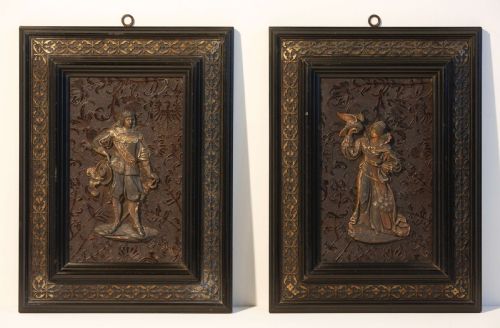
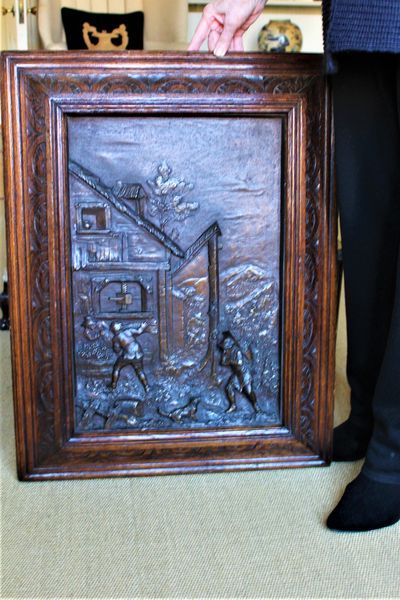
The objects take many physical forms, appearing as stained glass panels, painted wood tavolette book cover bindings, Limoges enamel plaques on copper, and carved walnut wall hangings. Pieces from the seventeenth century sit alongside later nineteenth-century French and Italian revivals, mounted within period giltwood or carved oak frames.
How they were made
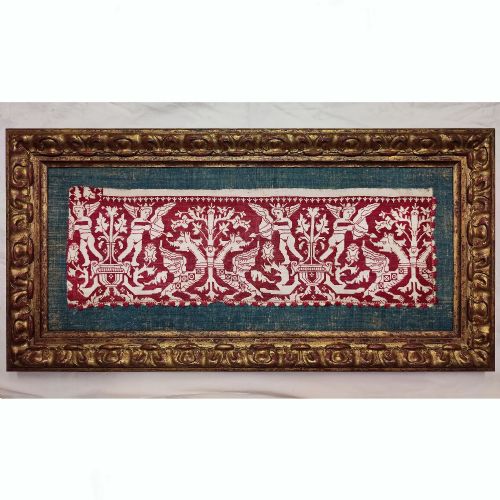
Materials recorded in the inventory rely heavily on wood, oak, walnut, and gilded wood or giltwood for the structural frames and carved reliefs. Textile works utilise wool, silk, and early needlepoint or tapestry fragments, often mounted securely within protective borders.
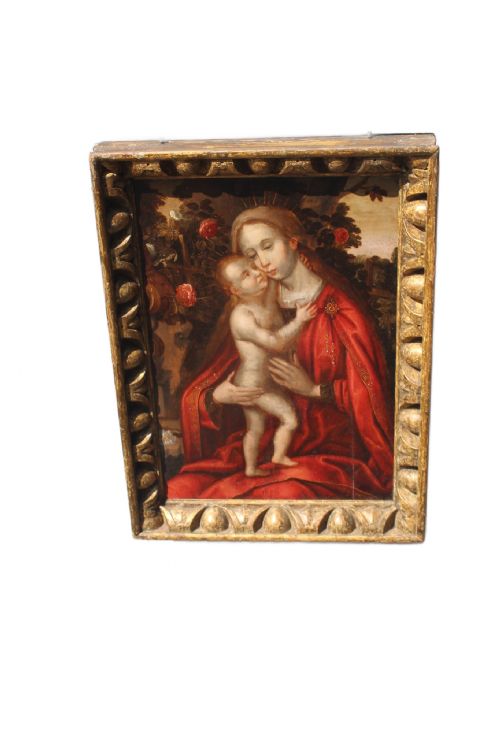
Surface decoration employs painting on wood and copper, enamel work, and detailed metal relief using white metal and gilded bronze. Stained glass and glazed faience ceramics expand the technical repertoire seen across these decorative wall pieces.
Framed Renaissance Panel Retail Price Guide 2026
Typical asking prices for framed renaissance panel among the pieces listed under this phrase on Sellingantiques today, from the lower quarter to the upper quarter. They describe what is for sale here now, not the wider market.
Listings feature works spanning the sixteenth, seventeenth, nineteenth, and early twentieth centuries, constructed from wood, wool, silk, glass, and enamel.
What varies in quality
Quality differentiates through the integrity of the primary medium, whether it is the crispness of carved walnut details, the pigment preservation on painted wood and copper panels, or the structural survival of fragile textile fibres. Early seventeenth-century elements demonstrate distinct hand-workmanship compared to later nineteenth-century revival productions.
The relationship between the panel and its frame influences the overall standard of the piece, with period giltwood and carved oak surrounds complementing the visual weight of the central artwork. Finer examples maintain original pigments, stable textile weaves, and well-preserved enamel surfaces without extensive modern intervention.
Icilio Federico Joni·Samson
The Framed Renaissance Panel Glossary
- Renaissance Revival
- A nineteenth-century aesthetic movement that draws inspiration from the art, architecture, and ornamental motifs of the fifteenth and sixteenth centuries. This style frequently manifests in nineteenth-century decorative panels and architectural woodwork.
- Limoges Enamel
- Vitreous enamel applied to metal bases, historically associated with the French city of Limoges. Pieces commonly appear as painted plaques on copper substrates.
- Tavolette
- Painted wooden panels traditionally used as book cover bindings in Siena, particularly associated with Biccherna records. These small painted objects appear framed as independent artworks.
- Faience
- Tin-glazed earthenware produced across European potteries, notably in Italy and France. These ceramic plaques display hand-painted pictorial scenes.
- Tapisserie
- Woven textile art used historically for wall hangings and domestic insulation. Surviving fragments are frequently mounted and framed for display.
Framed Renaissance Panel: Frequently Asked Questions
What periods do these panels date from?
The selection spans authentic sixteenth and seventeenth-century items alongside nineteenth-century revival pieces produced during historicist movements. Makers and artists from later periods often recreated earlier aesthetics.
Dates extend from the sixteen hundreds through to twentieth-century interpretations, reflecting enduring interest in historical European craftsmanship.
How should I hang a heavy wooden panel?
Solid wood and carved walnut panels require secure wall fixings distributed evenly to support their weight. Wall anchors suited to plaster or masonry ensure safe installation.
Consulting a professional art installer prevents damage to both the historic frame and the surrounding wall surface.
Are textile fragments fragile?
Historic wool and silk tapestries or needlepoint pieces require protection from direct sunlight to prevent fibre degradation and fading. Maintaining stable indoor humidity levels preserves the textile structure.
Glass fronts on framed textile panels shield delicate threads from dust and environmental wear.
What is a tavolette book cover?
Tavolette are painted wooden panels originally created to bind administrative records and tax books in medieval and Renaissance Siena. Artists decorated these wooden boards with narrative scenes and heraldry.
Today, surviving examples are preserved within frames as standalone decorative paintings.