


Renaissance Oak Coffer
A renaissance oak coffer is a heavy storage chest built to last generations, offering robust construction alongside deep historic character for a traditional interior.
Renaissance Oak Coffer
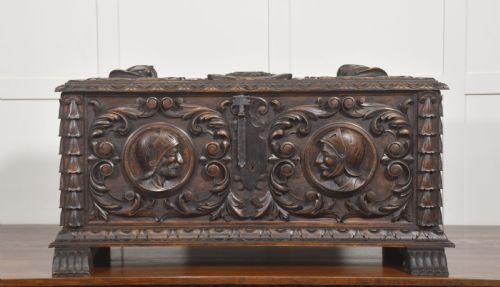
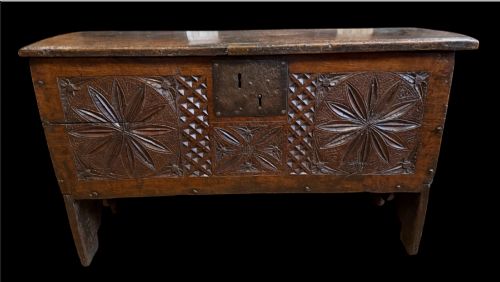
A renaissance oak coffer stands as a sturdy storage box from the sixteenth or seventeenth century, designed to hold valuables and household goods. These heavy pieces often display deep relief carving and sturdy board construction that marks their early domestic origins.
Buyers will encounter both genuine sixteenth-century examples and later revival pieces from the nineteenth century, including styles such as Tudor, Jacobean, and Flemish Renaissance. Alongside traditional coffers, the selection includes related forms like walnut chests, hall benches, and carved panels.
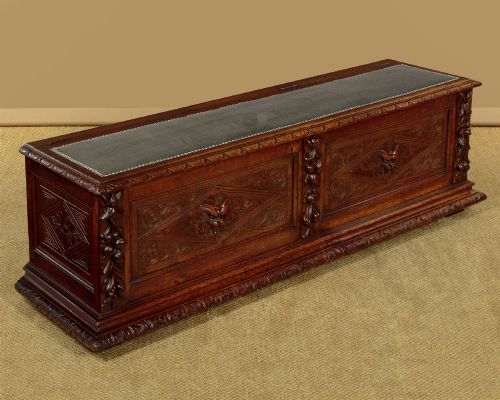
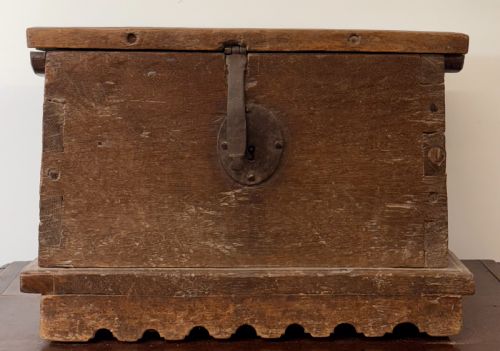
Original plank coffers and iron-bound chests represent the utilitarian roots of these items, whilst Italian cassones and marriage chests bring elaborate figurative medallions and architectural mouldings. Every piece shows the heavy timber framing typical of early European cabinet making.
Materials and construction methods
Solid oak provides the primary structural timber for these coffers, frequently supplemented by walnut in continental European examples and iron for structural hinges and strapwork. Artisans utilised durable hardwoods that could withstand centuries of daily domestic use and movement.
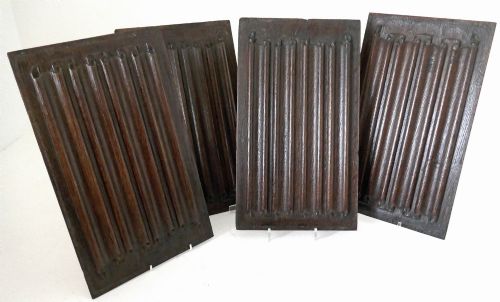
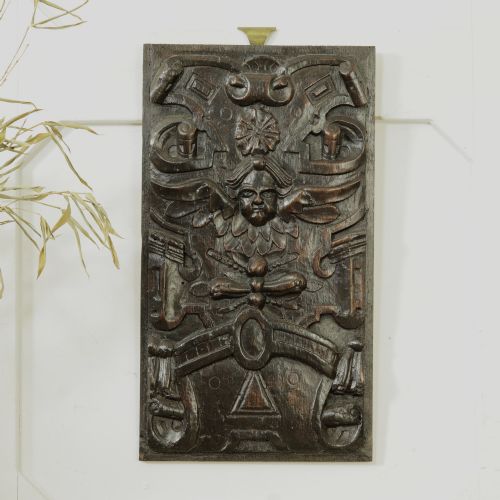
Panels were hand-carved in high relief or shaped into linenfold patterns, held together with traditional joinery rather than modern metal fixings. Wrought iron bands and brass mounts were often added to secure the heavy lids and corners of the box.
Surfaces were left with natural timber finishes that developed deep patinas over hundreds of years of polishing and handling. The integration of carved figural medallions and architectural details demonstrates the high level of craftsmanship applied to domestic furniture.
Some sixteenth-century coffers still carry old iron locks that required keys the size of a small dagger to secure.
Factors influencing quality and grade
The depth and execution of the hand carving separate standard utilitarian boxes from high-status artistic commissions. Crisp, detailed figural medallions and intricate relief work indicate a more skilled hand in the original workshop.
The integrity of the timber and the extent of original material define the enduring worth of a coffer. Pieces retaining their original iron bindings, hinges, and structural boards hold greater authenticity than those rebuilt with replacement elements.
Geographic origin and stylistic attribution influence how a piece is regarded, with specific regional schools such as Flemish, Spanish, or Italian demonstrating distinct decorative vocabularies. The balance between sturdy construction and refined ornamentation dictates the overall standing of each chest.
The Renaissance Oak Coffer Glossary
- Cofer
- A heavy wooden chest used for storing valuables, clothes, and documents. These sturdy boxes formed essential furniture in early homes before built-in wardrobes existed.
- Cassone
- An ornate Italian marriage chest designed to hold a bride's trousseau. These pieces frequently feature elaborate carved panels and figural decorations.
- Linenfold
- A style of wood carving that mimics folded fabric or linen. This decorative motif appears frequently on sixteenth-century panels and chest fronts.
- Plank coffer
- A primitive chest constructed from thick boards joined at the edges. This simple form represents an early method of box-making before frame and panel construction became standard.
- Revival
- A nineteenth-century architectural or decorative style that imitates earlier historical periods. Pieces from this era often borrow heavily from Tudor and Jacobean design vocabulary.
Renaissance Oak Coffer: Frequently Asked Questions
What were renaissance oak coffers used for?
These heavy chests primarily served as secure storage for valuable household goods, clothing, and documents in early domestic settings. Their solid construction and heavy lids offered protection against theft and damp conditions.
Over time, many functioned as benches or tables within the great hall of a home. Their sturdy build allowed them to double as seating when living space was limited.
How do I date an antique coffer?
Dating relies heavily on examining the jointing techniques, tool marks left by the maker, and the style of the wood carving. Sixteenth-century pieces typically show hand-split boards and traditional pegged mortise and tenon joints.
Stylistic indicators such as linenfold panels, linenfold motifs, or figural medallions help narrow down the period. Comparing the timber patination with documented examples provides further confirmation of age.
Are all these coffers from the sixteenth century?
The selection includes both genuine sixteenth and seventeenth-century pieces and nineteenth-century revival items made during the Victorian era. Craftsmen in the eighteen-hundreds frequently reproduced earlier Tudor and Jacobean styles.
Checking the construction details helps distinguish period originals from later interpretations. Both categories offer distinct historical interest and craftsmanship.
How do I care for an oak coffer?
Maintain the timber by applying traditional beeswax sparingly to nourish the dry oak and preserve the historic patina. Avoid placing the chest near direct heat sources or in fluctuating humidity to prevent wood splitting.
Keep the surface clean with a soft, dry cloth rather than modern liquid polishes. Proper environmental control ensures the old ironwork and timber remain stable.