



Renaissance Maiolica
These renaissance maiolica pieces bring tin-glazed earthenware and faience into the home, prized for their rich painted classical scenes and vibrant revival styles.
Renaissance Maiolica
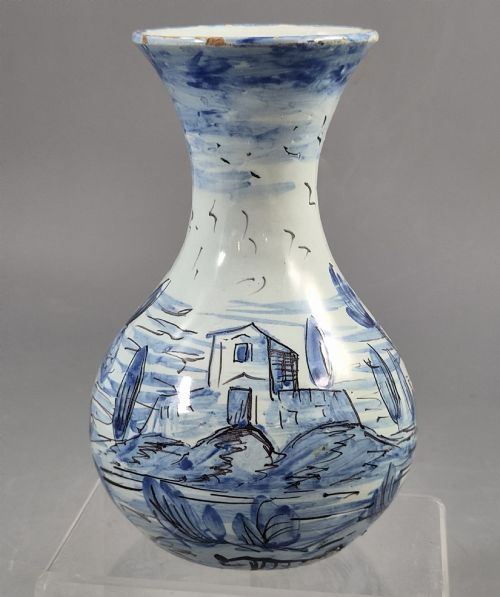
When searching for renaissance maiolica, buyers encounter tin-glazed earthenware and faience objects rooted in nineteenth-century revival aesthetics. The inventory on this page centres on decorative chargers, cabinet vases, and vessels decorated in styles that echo earlier Italian traditions.
Most items on this page date from the nineteenth century, including Victorian periods and the year nineteen hundred, with specific pieces attributed to the Pesaro school and Florence. Collectors find large chargers featuring classical historical scenes alongside table lamps and centrepiece bowls.
The assortment spans diverse utilitarian and decorative forms, from covered vases to monumental urns on pedestals. These objects capture the enduring Victorian fascination with Italian renaissance revival design through ceramic artistry.
How they were made
The foundation of these works is earthenware or ceramic, coated in a tin glaze that provides a smooth white ground for detailed painting. Artisans applied pigments directly to the unfired glaze, a technique that requires immense precision as the porous surface absorbs colour instantly.
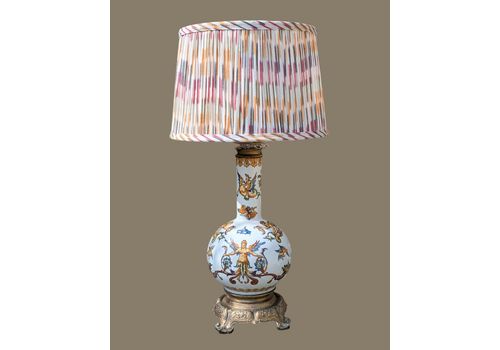
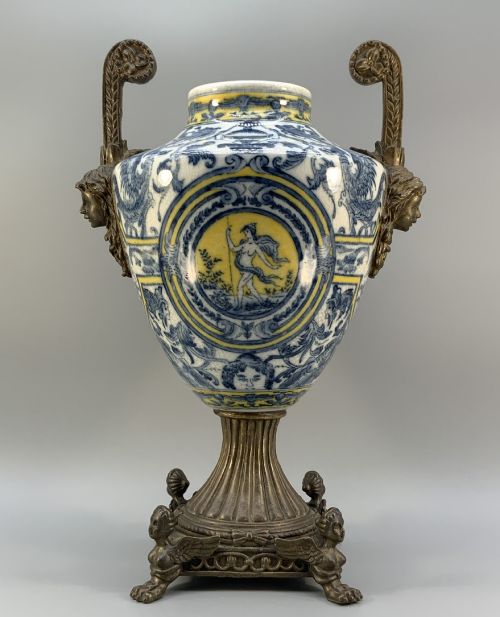
Selected vessels incorporate supplementary materials such as bronze mounts and brass components, elevating the ceramic body into an ornate furnishing. Fabric elements occasionally appear in functional lighting configurations like table lamps.
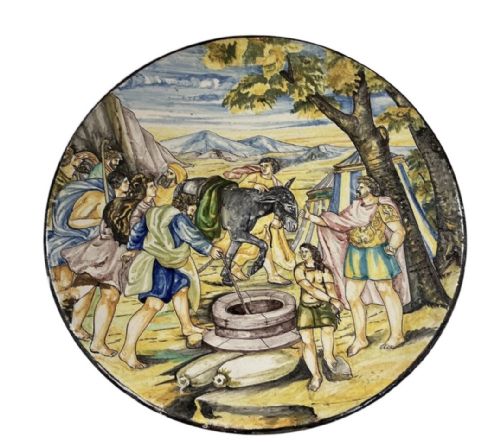
Painting styles draw heavily on historical precedents, notably the istoriato technique seen on large chargers depicting classical narratives. Faience production in centres like Florence utilised similar glazing and firing methods to achieve deep blue and white palettes or polychrome pictorial surfaces.
Renaissance Maiolica Retail Price Guide 2026
Typical asking prices for renaissance maiolica among the pieces listed under this phrase on Sellingantiques today, from the lower quarter to the upper quarter. They describe what is for sale here now, not the wider market.
Listings feature nineteenth-century earthenware and faience, incorporating materials such as bronze, brass, and fabric alongside tin-glazed ceramic bodies.
What varies in quality
Quality in renaissance maiolica rests upon the execution and ambition of the painted surface, particularly in istoriato chargers where narrative clarity and brushwork define the piece. Finer examples display meticulous control over figural drawing and compositional depth within classical historical scenes.
The integration of secondary materials, such as finely chased bronze mounts, distinguishes standard production from more ambitious decorative works. Superior execution is also evident in the handling of the tin glaze, where an even, luminous surface enhances the underlying ceramic body without distortion or pooling.
Ulisse Cantagalli·Cantagalli
The Renaissance Maiolica Glossary
- Maiolica
- Tin-glazed earthenware produced in Italy or in the Italian style, typically featuring colourful painted decoration. The term encompasses a range of ornamental vessels and chargers.
- Istoriato
- A style of ceramic decoration featuring painted narrative scenes derived from history, mythology, or literature. These intricate compositions cover the entire surface of plates and chargers.
- Charger
- A large decorative plate or platter intended for display rather than dining. These pieces often serve as the focal point of a collection due to their expansive painted surfaces.
- Faience
- Tin-glazed earthenware produced in France, Italy, and other parts of Europe. The term is frequently used interchangeably with maiolica in nineteenth-century revival contexts.
- Tin Glaze
- An opaque white ceramic glaze containing tin oxide, which creates a bright surface for painting. It forms the technical basis for traditional maiolica production.
Renaissance Maiolica: Frequently Asked Questions
What is renaissance maiolica?
Renaissance maiolica comprises tin-glazed earthenware and faience objects produced in revival styles, drawing heavily on historical Italian ceramics from earlier centuries.
Most examples found here date from the nineteenth century, reflecting Victorian tastes for classical narratives and ornate decorative arts.
How were chargers used?
Large chargers were primarily created for display on buffets, walls, or tables rather than for serving food. Their expansive painted surfaces allowed artisans to depict complex historical and mythological scenes.
Collectors often mount them on walls or display them on dedicated stands to showcase the detailed istoriato painting.
Where were these pieces made?
The pieces listed on this page originate predominantly from nineteenth-century European workshops, with specific works attributed to Italian centres such as Florence and Pesaro.
These production sites focused on reviving historical techniques, utilising local earthenware and specialised tin glazes to replicate traditional aesthetics.
How do I care for tin-glazed earthenware?
Tin-glazed ceramics require gentle handling to protect the brittle glaze and delicate painted surfaces from chipping or abrasion. Dusting with a soft, dry cloth is usually sufficient for routine maintenance.
Keep these objects away from direct moisture and extreme temperature fluctuations to preserve the integrity of both the ceramic body and any attached metal mounts.