
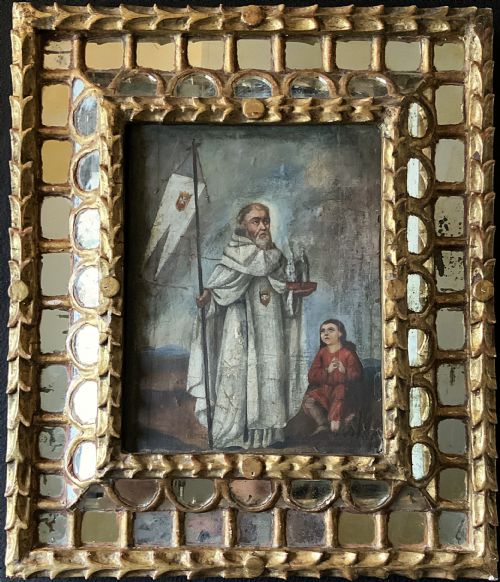


Religious Devotional Wall Art
Religious devotional wall art spans centuries of oil paintings, wood panels, and icons designed for private contemplation.
Religious Devotional Wall Art
Religious devotional wall art comprises paintings, panels, and sacred objects created to inspire spiritual focus in homes and chapels. Pieces range from small domestic icons to monumental canvas portraits of saints and the Madonna.
The selections available here lean heavily toward European traditions, particularly Italian, Spanish, and Russian schools from the seventeenth and eighteenth centuries. Oil on canvas and painted wood panels dominate the forms, alongside framed prints and enamel plaques.
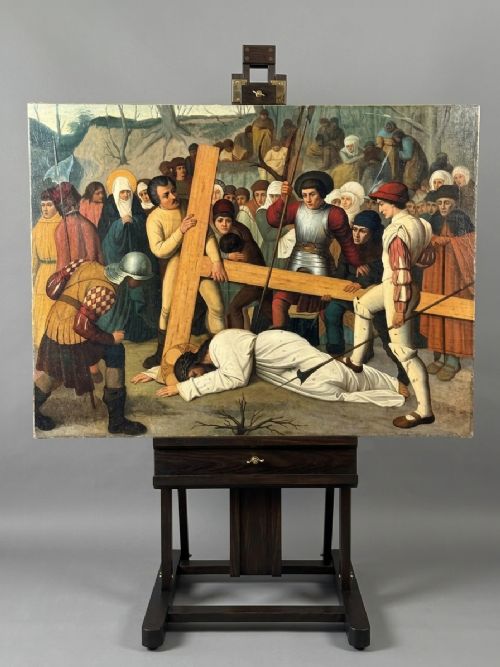
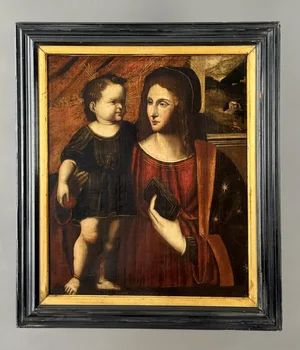
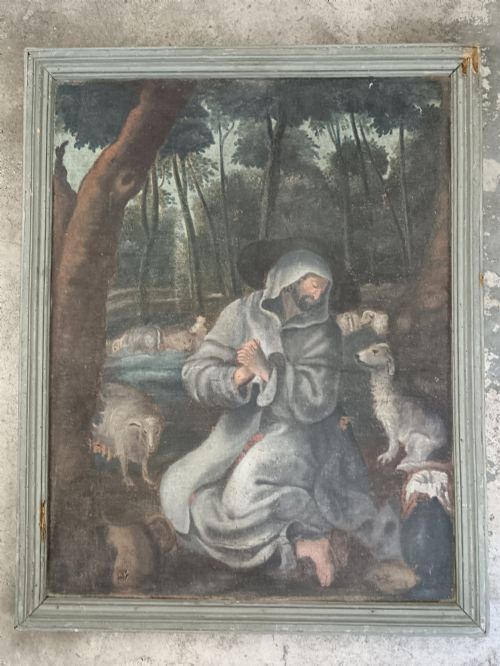
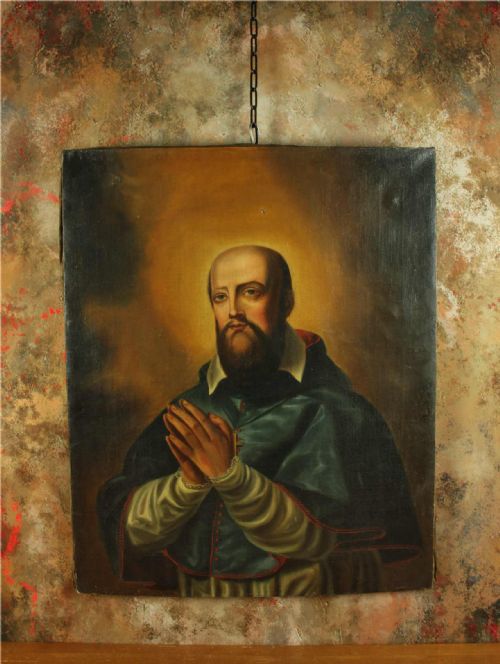
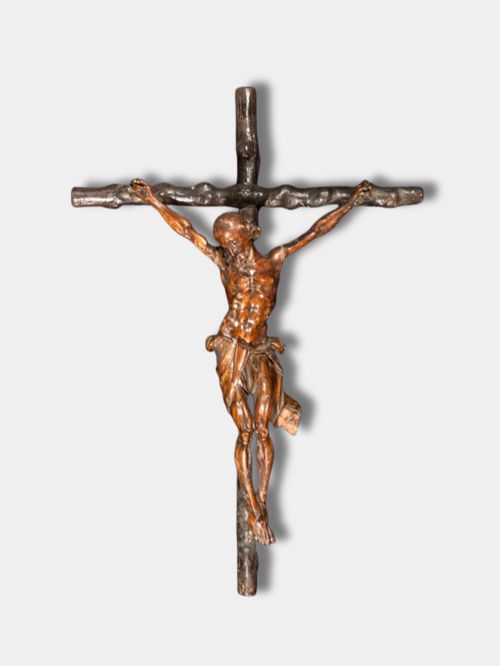
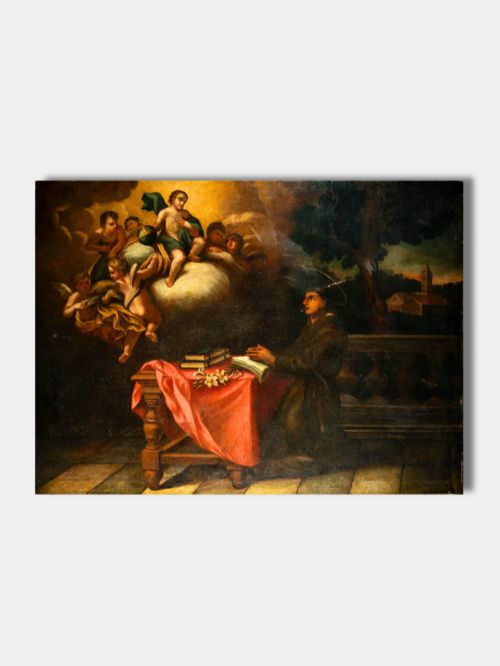
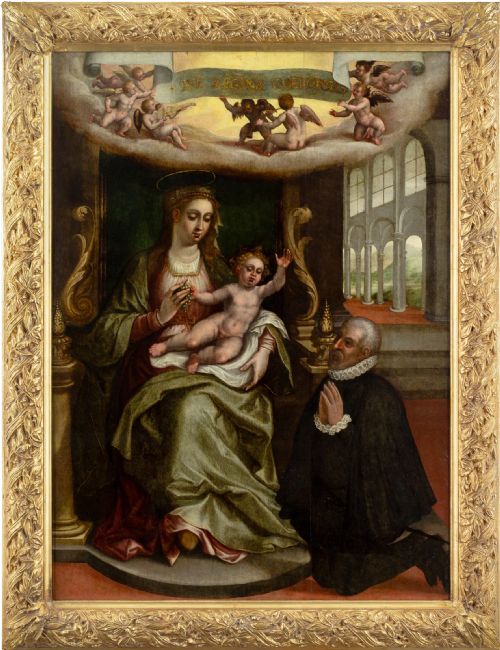
Buyers encounter works attributed to regional circles, follower schools, and traditional workshops rather than singular master outputs. Subjects consistently draw upon canonical figures including Saint Francis, the Virgin and Child, and the Crucifixion.
Materials and construction methods
Makers applied oil paint to prepared canvas, fruitwood panels, or copper plates, often finishing surfaces with protective varnishes. Gesso served as a foundational ground layer for wood panels, creating a smooth base for pigments and gold leaf application.
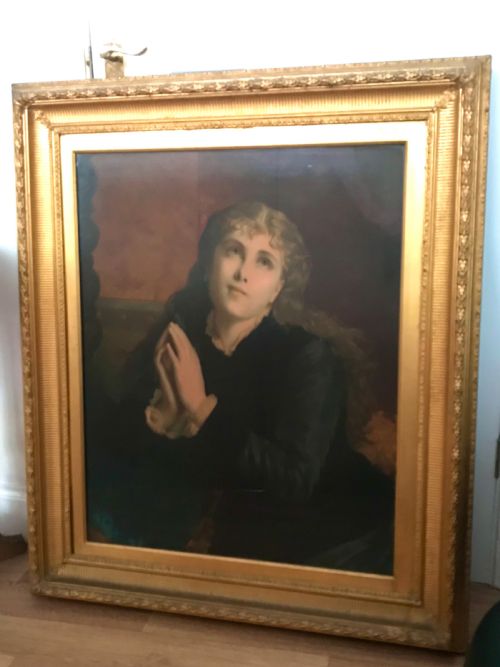
Frames play an integral role in construction, with period pieces housed in carved and giltwood mouldings or specialised oklad metal covers. Russian icons utilised tempera and oil on wood, sometimes featuring embossed metal rizzas that protected the painted surface.
Several seventeenth-century saints maintain an expression of mild annoyance rather than divine peace.
Assessing quality in sacred works
Quality rests in the brushwork finesse, anatomical proportion, and emotional intensity captured in the faces of sacred figures. Masterful handling of drapery folds and light sources distinguishes skilled regional studio output from simpler folk production.
The integrity of the original substrate matters greatly, as wood panels warp and canvases undergo lining over centuries. Surviving original frames and untouched paint surfaces elevate the historical standing of any devotional piece.
Jozef Jansessens·Bernardino Luini·Miguel Barroso·Costantino Frixione·Gaspar de Figueroa
The Religious Devotional Wall Art Glossary
- Pentimento
- A visible trace of earlier painting beneath the completed layer, showing where the artist changed their composition. These alterations often emerge through aged oil paint over centuries.
- Ex-voto
- A votive offering presented to a saint or divinity in fulfillment of a vow or in gratitude for a miracle. They take the form of painted panels or metal plaques.
- Corpus Christi
- The physical body of Jesus Christ depicted on a crucifix. These figures are carved from wood or cast in metal.
- School
- A group of artists working in a particular region and period, sharing a common style influenced by a master. Attribution to a school indicates geographical and stylistic origin.
Religious Devotional Wall Art: Frequently Asked Questions
What periods do these pieces date from?
The inventory spans several centuries, with particular concentrations in the seventeenth and eighteenth centuries alongside nineteenth-century revivals. Earlier works often reflect Italian and Spanish Baroque or Renaissance traditions.
Later items include nineteenth-century Russian icons and academic copies of Renaissance masters. Dating relies on material analysis, frame construction, and stylistic markers characteristic of specific regional schools.
How were devotional panels displayed originally?
Devotional panels and canvases hung in domestic chambers, private chapels, and monastic cells to aid daily prayer. Smaller icons and shadowboxes served as focal points for personal meditation.
Larger oil paintings were commissioned by affluent patrons and religious orders to adorn wall spaces in reception rooms or communal halls.
How do I identify Russian icons?
Russian icons are typically painted in tempera or oil on heavy wood panels, frequently accompanied by protective metal oklads. Subjects usually depict holy figures against gold leaf backgrounds with distinct stylistic conventions.
Inscriptions in Cyrillic lettering often identify the saint or religious scene portrayed on the panel surface.
What is an ex-voto painting?
An ex-voto is a devotional artwork commissioned to give thanks for a miraculous recovery or survival. These pieces frequently record the narrative of the event alongside the image of a protective saint or the Virgin Mary.
They offer direct insight into the personal piety and daily life of past communities.