




17th Century Religious Artwork
These 17th century religious artwork pieces bring devotional subjects onto canvas and wood, offering a direct link to the spiritual life of the period.
17th Century Religious Artwork
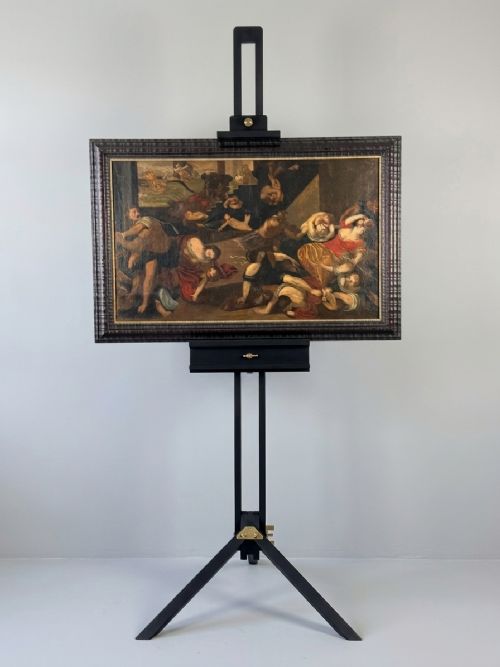
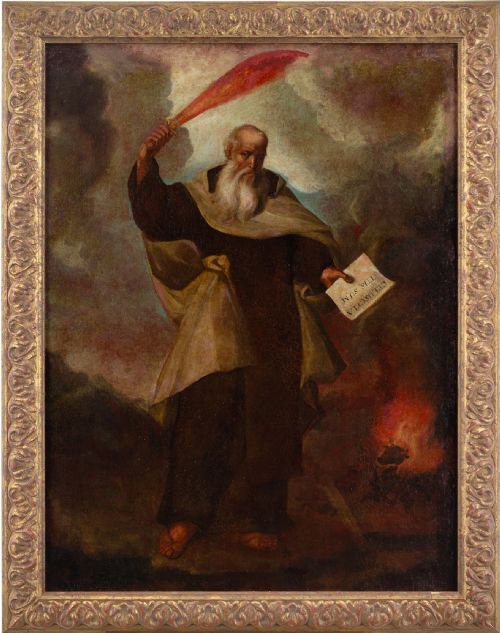
When you search for 17th century religious artwork, you encounter devotional paintings, icons, and carved panels originating from various European and colonial schools. The most frequent pieces on this page are oil paintings on canvas or wood panels depicting biblical scenes, saints, and portraits of religious figures.
The selection ranges from Spanish and Italian Baroque works to Spanish Colonial pieces and English portraits. You will find depictions of the Madonna and Child, crucifixion scenes, and individual saints rendered within the aesthetic framework of the seventeen hundreds and earlier decades.
Regional diversity shapes these offerings, with Hessian, Madrid, Genoese, and Veronese schools appearing alongside colonial workshops. Each piece reflects the specific theological and artistic conventions of its origin, whether Catholic or Lutheran.
Materials and technique
Painters of this era applied oil paint to stretched canvas, prepared wooden fruitwood panels, or occasionally copper sheets. These grounds were coated with priming layers before the artist built up the composition using layered pigments and glazes.
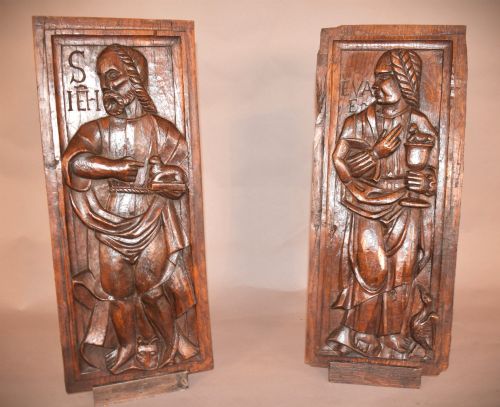
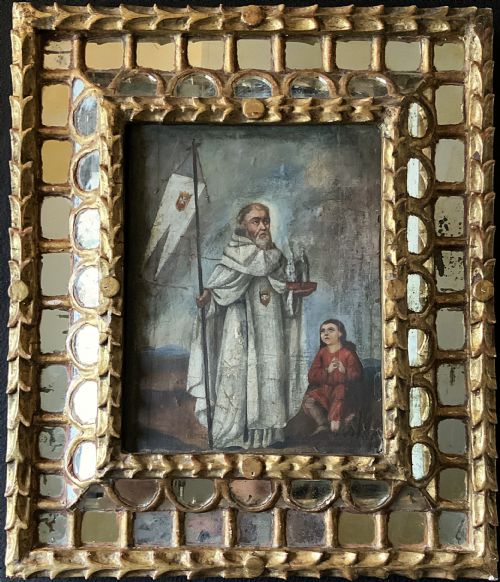
Carved wooden panels utilise solid timber like oak, often shaped into architectural framing elements or devotional reliefs. Many of these paintings retain period frames constructed from giltwood, which complement the gilded halos and rich tones within the artwork.
Martin Luther gazes sternly past a green curtain and bookshelves on a copper plate, proving theologians make surprisingly compact pocket-sized companions.
Assessing quality and execution
The sophistication of brushwork and anatomical handling distinguishes finer compositions from simpler workshop pieces. Master painters achieved nuanced expressions in faces and realistic drapery folds, whereas lesser examples rely on formulaic rendering.
The preservation of the original paint surface and panel stability influences the character of a piece. Works that retain their original giltwood frames and uncompromised pigment layers offer a more complete historical witness.
The 17th Century Religious Artwork Glossary
- Baroque
- A style of European architecture, music, and art of the 17th and 18th centuries that followed Mannerism and is characterised by ornate detail. In painting, it often employs dramatic contrast between light and dark.
- Oil on canvas
- A painting technique where pigmented oil paint is applied to a woven fabric support stretched across a wooden frame. This method allows for subtle blending and rich colour saturation.
- Icon
- A devotional painting of Christ, the Virgin Mary, or a saint, typically on wood, associated with Eastern Orthodox Christian traditions. These objects serve as focal points for prayer.
- Giltwood
- Wood that has been coated with a thin layer of gold leaf or gold paint. It frequently appears on the elaborate frames housing period oil paintings.
- School
- A group of artists sharing a similar style, time period, or geographical region, often centred around a prominent master or academy. It helps provenance attribution when specific signatures are absent.
17th Century Religious Artwork: Frequently Asked Questions
How do I hang a heavy panel painting?
Panel paintings require secure wall anchors and appropriate load-bearing fixings matched to the weight of the timber and frame. Consult a professional restorer to ensure the hanging method places no undue stress on the wood.
Keep these works away from direct heat sources and sunlight to prevent the timber from warping or the paint layer from drying out excessively.
Are these paintings signed by the artists?
Signatures from this era are uncommon, as many works originated from collaborative workshops or remained anonymous devotional objects. Attributions are typically established through stylistic analysis, historical documentation, and comparative study by specialists.
When a signature or inscription does appear, such as on portraits of reformers, it provides a valuable anchor for historical research.
What is the difference between an icon and a painting?
Icons follow strict canonical rules regarding iconography, materials, and preparation, often serving a liturgical function within Orthodox traditions. General oil paintings allow for greater individual artistic expression and narrative complexity.
Both categories, however, share a primary purpose centred on religious devotion and spiritual contemplation.