



Relief Moulded Pottery
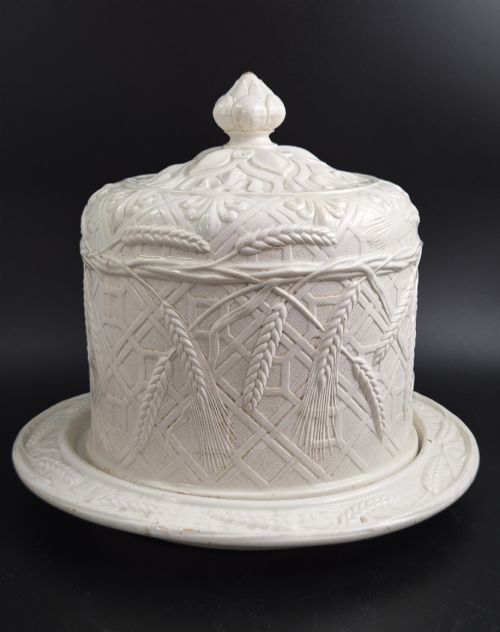
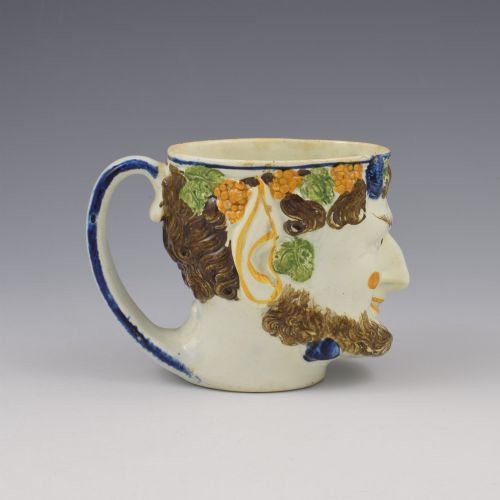
Relief moulded pottery brings raised decorative motifs to vessels like jugs, cheese domes and teapots, offering tactile depth and historic character.
Relief Moulded Pottery
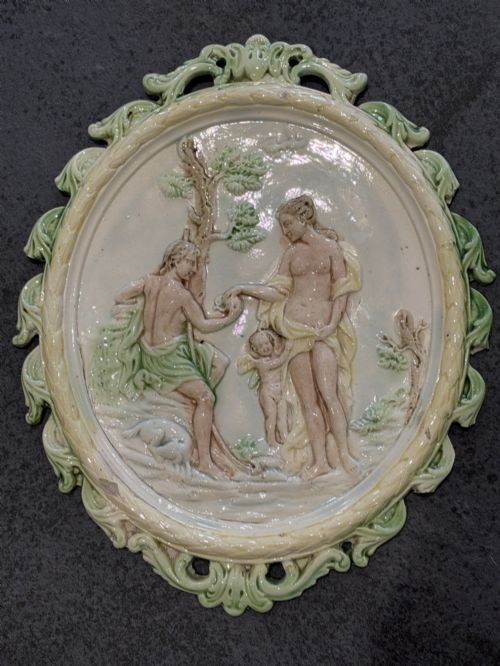
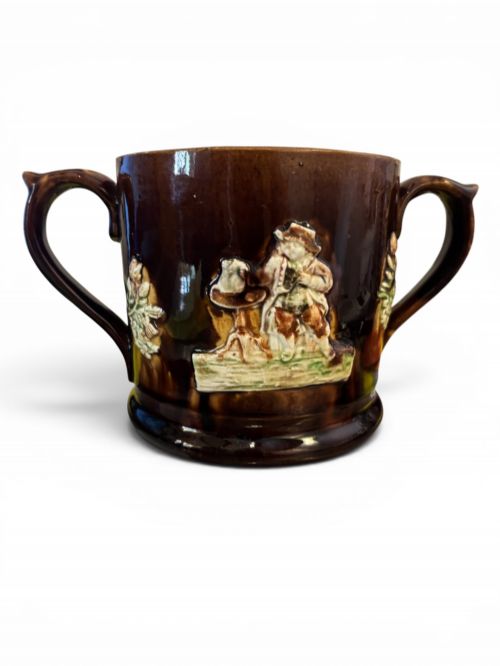
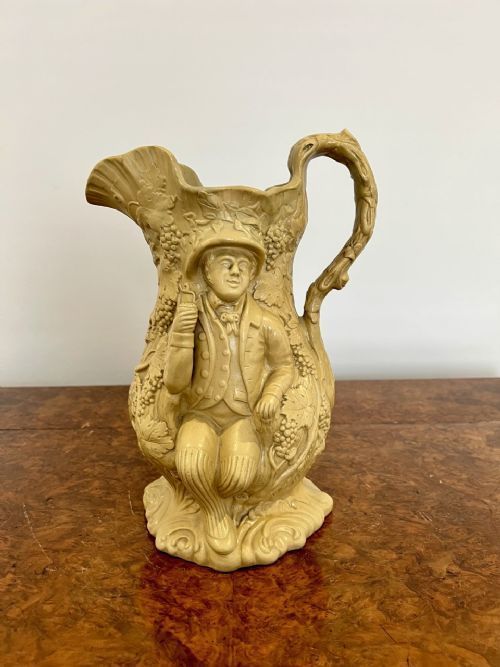
Relief moulded pottery encompasses vessels and decorative items defined by raised ornamentation shaped directly into the clay body or applied during forming. Collectors seeking relief moulded pottery frequently encounter nineteenth century examples, particularly Victorian jugs, cheese domes and majolica planters.
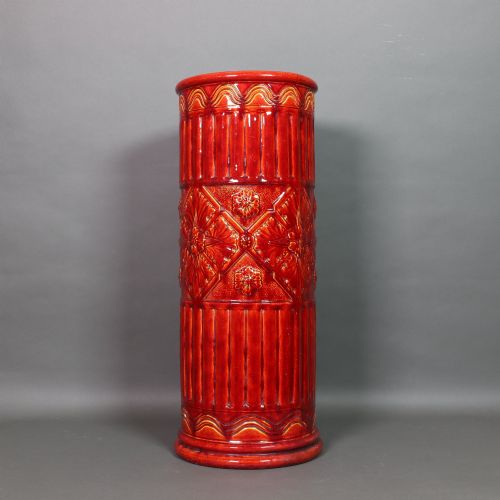
The forms span practical table and household items, including mugs, teapots, biscuit barrels and stick stands. Production stretches across Georgian, Regency and Victorian periods into the early twentieth century, showing diverse British and continental origins.
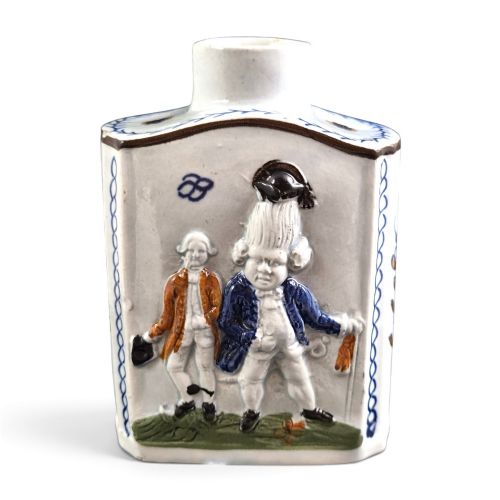
Common utilitarian and decorative objects dominate the selection, from salt glazed stoneware jugs to majolica jardinières. These pieces reflect shifting tastes across the eras, moving from pearlware tea caddies to elaborate aesthetic movement stick stands.
Materials and production techniques
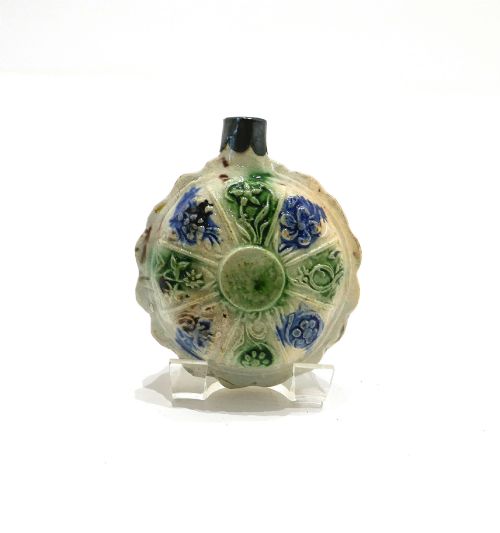
Makers utilised earthenware, stoneware, terracotta and pearlware, applying glazes to seal the porous clay bodies and enhance surface detail. Stoneware and ironstone provided durable structures for heavy use items like cheese domes and large ale jugs.
Moulds shaped the three dimensional decoration, pressing clay into carved matrices to achieve crisp figural scenes, foliage or geometric patterns. Applied sprigs and lead glazes further enriched the surfaces of tea canisters, pitchers and cache pots.
Relief Moulded Pottery Retail Price Guide 2026
Typical asking prices for relief moulded pottery among the pieces listed under this phrase on Sellingantiques today, from the lower quarter to the upper quarter. They describe what is for sale here now, not the wider market.
Listings feature earthenware, stoneware and terracotta across Victorian, Georgian and Edwardian periods.
Factors that determine quality
Quality rests on the sharpness of the moulding and the precision with which the raised design meets the eye. Finer pieces maintain crisp relief lines that do not blur into the surrounding glaze.
The depth of the glaze application and the harmony of the colour palette dictate visual success. Superior examples exhibit controlled coloration that accentuates rather than obscures the underlying modelled details.
George Gordon Morison·Davenport·George Jones·Sherwin and Cotton·Copeland Spode·Enoch Wood and Sons·Jones and Walley·Minton·Wedgwood·Phillips and Bagster·Burmantofts Faience
The Relief Moulded Pottery Glossary
- Pearlware
- A refined earthenware developed in the eighteenth century featuring a subtle bluish glaze pooled in recesses. It bridged the gap between salt glazed wares and later white earthenwares.
- Majolica
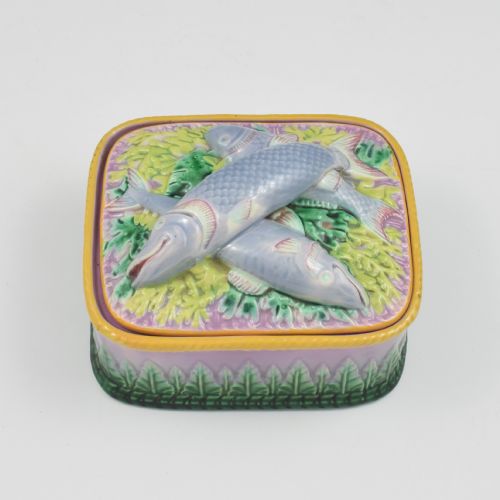
- A colourful lead glazed earthenware popularized during the Victorian period with vibrant tones applied over moulded plant and animal forms. It brought striking botanical themes to jardinières and jugs.
- Stoneware
- A dense, impermeable ceramic fired at high temperatures until vitrified. It provided exceptional strength for utilitarian pitchers and commemorative vessels.
- Basalt
- A fine grained, hard black stoneware introduced in the eighteenth century. It offered a smooth, unglazed surface well suited to classical neoclassical reliefs.
- Sprigged
- A technique where separately moulded clay motifs are applied by hand to the surface of a vessel before firing. It creates sharp, contrasting relief decoration on caneware and stoneware.
Relief Moulded Pottery: Frequently Asked Questions
What is relief moulded pottery?
Relief moulded pottery refers to ceramic pieces featuring raised designs shaped by a mould during manufacture. These decorative details stand proud of the main vessel wall.
Such ornamentation ranges from subtle sprigged motifs on stoneware teapots to bold figural scenes on Victorian majolica jugs and cheese domes.
How were these vessels used?
Many items served practical daily functions in the nineteenth century household, from pouring ale and milk to storing cheese and wine. Large vessels acted as umbrella stands or garden planters.
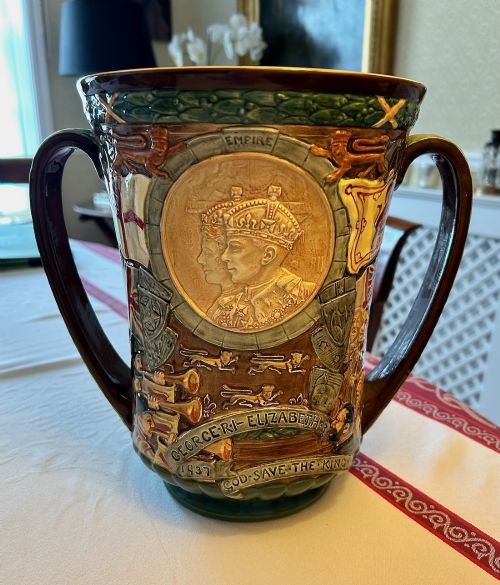
Others held decorative or commemorative roles, marking royal coronations or displaying botanical themes in parlours and halls.
How do I date a piece?
Dating relies on combining stylistic clues, material types and manufacturer marks found on the base. Victorian majolica points to the mid to late nineteenth century, while pearlware suggests the Georgian era.
Glaze characteristics and body compositions further narrow the timeframe, distinguishing early salt glazed stonewares from later art pottery.
How should I care for relief moulded ceramics?
These historical ceramics require gentle handling to protect delicate raised edges and applied handles from chips. Hand washing with mild soap preserves fragile glazes and historic surfaces.
Avoid abrasive cleaners and submersing porous earthenwares for extended periods to maintain the integrity of the clay and glaze.