




Relief Figure Pottery
Relief figure pottery brings narrative and texture into a room, offering tactile scenes moulded directly onto earthenware, stoneware, and terracotta.
Relief Figure Pottery
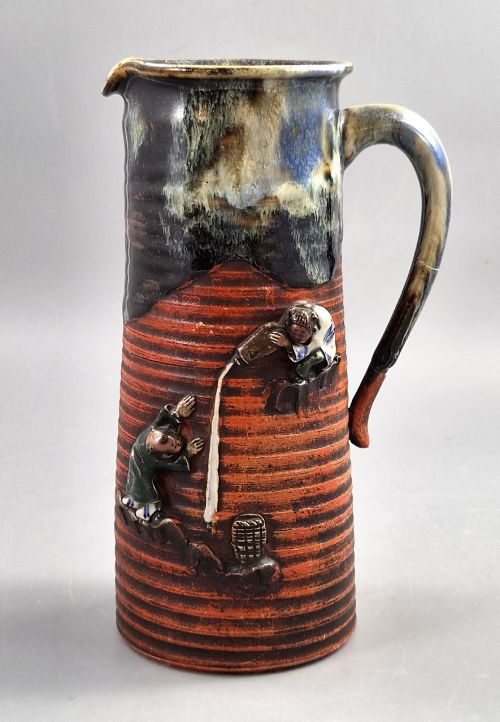
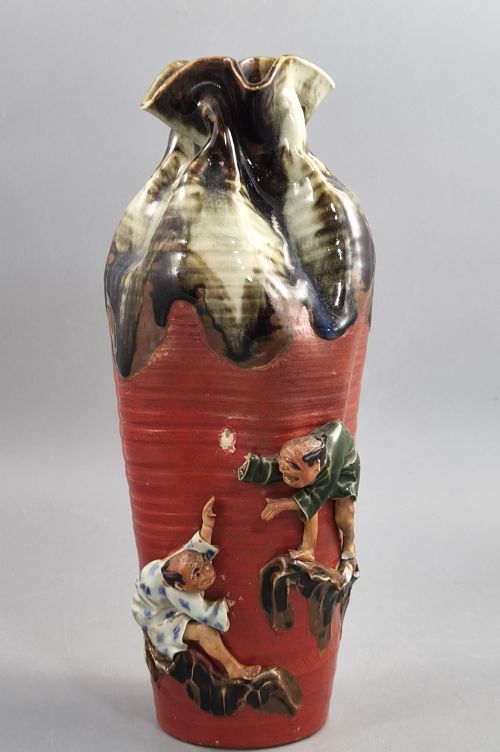
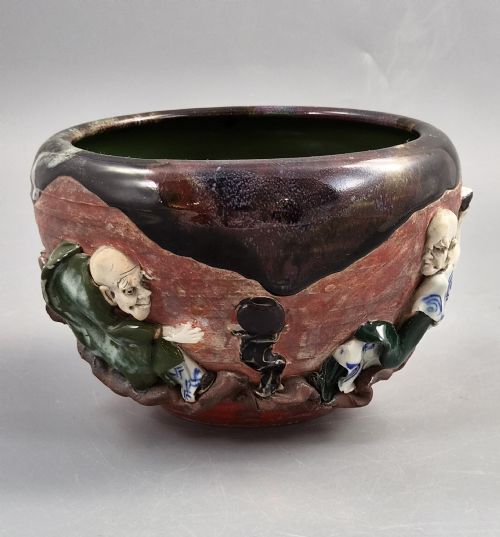
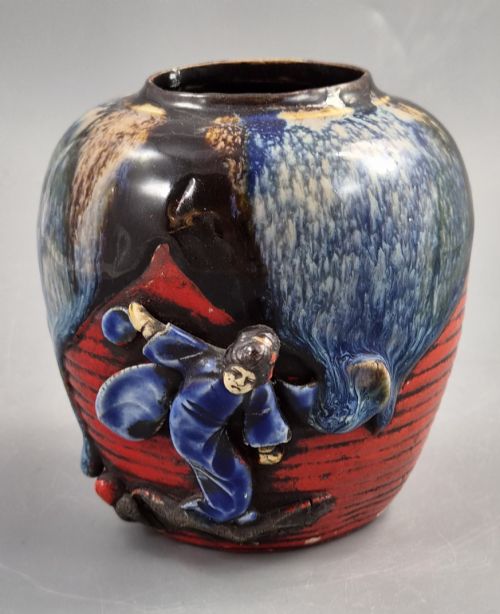
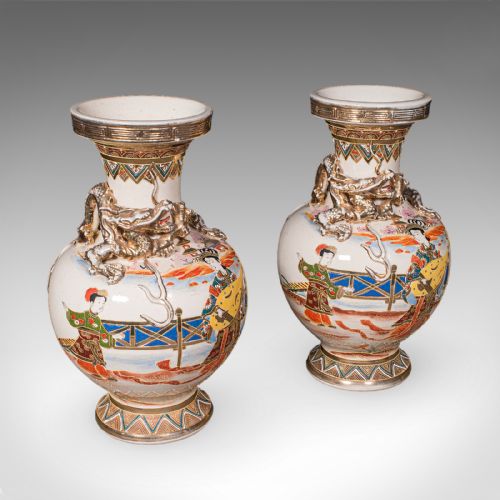
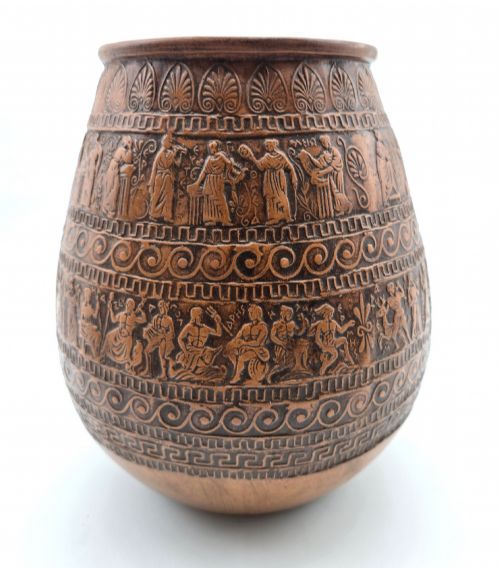
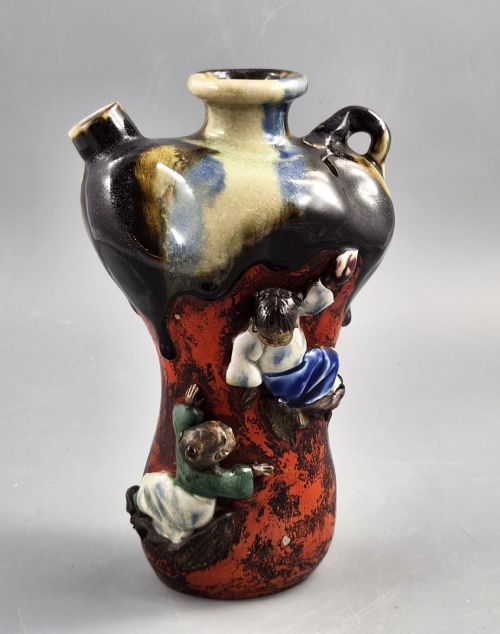
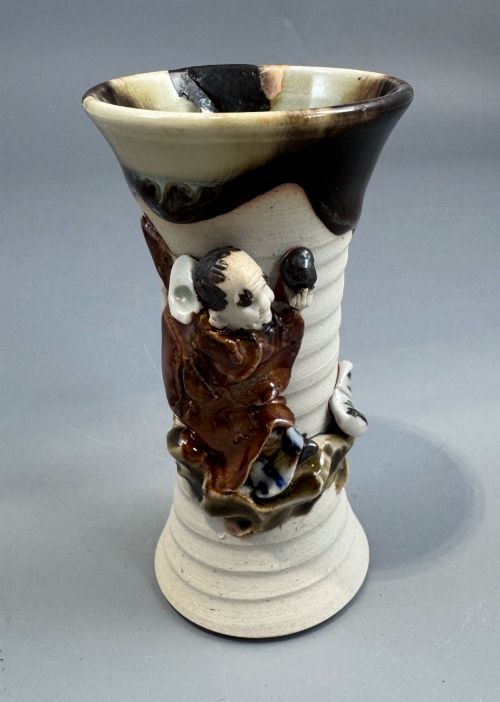
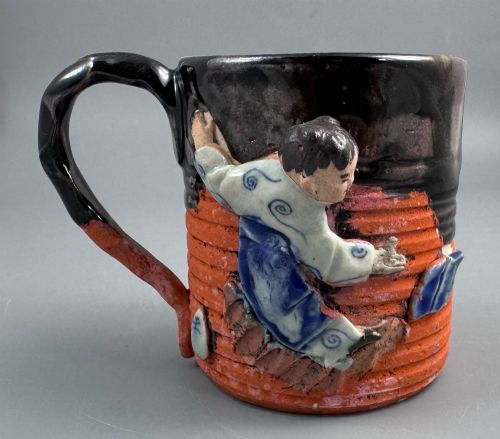
Relief figure pottery encompasses a diverse selection of decorative items, with Japanese Sumida Gawa wares forming the largest group encountered on this page. These pieces date principally from the Meiji and Taishō periods, alongside Victorian European interpretations of classical antiquity.
The objects span practical vessels and display items, including vases, pitchers, jugs, teapots, mugs, and decorative bowls. Japanese examples typically display applied figures modelled in high relief, while European works lean towards neoclassical or Greek revival styles.
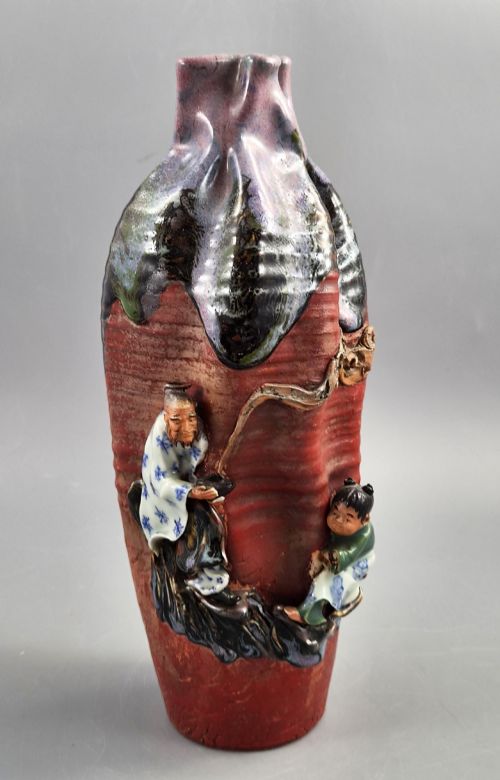
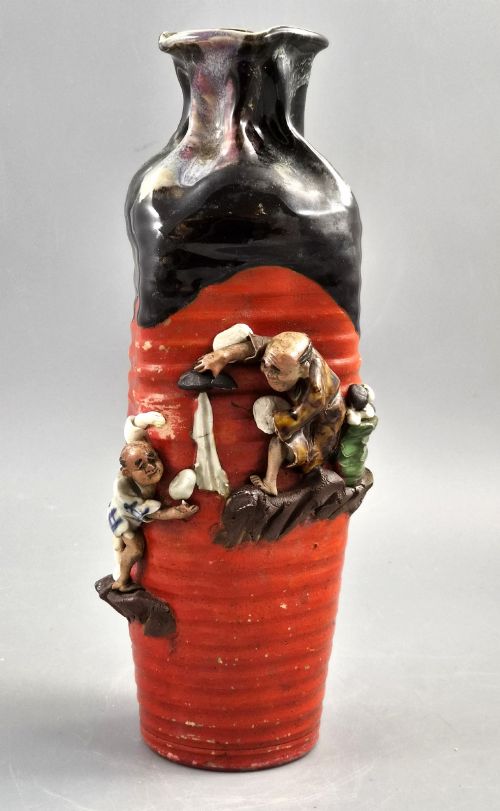
Makers such as Inoue Ryōsai and Ishiguro Kōko dominate the Japanese pieces, producing distinctive wares featuring sages, children, and climbing figures. European contributions include crisp bisque and jasper designs drawn from classical mythology and Danish artistry.
Materials and Technique
Potters utilised earthenware, stoneware, terracotta, and porcelain as the structural bodies for these items. Artisans applied figures separately to the vessel walls before firing, building up distinct three-dimensional scenes by hand.
Glazes play a defining role, particularly the distinctive flambe, oxblood, and blue runs seen on Sumida Gawa pottery. European works rely instead on the matte contrast of unglazed bisque or the crisp profile of contrasting jasperware.
Several vases feature miniature figures caught mid-climb, stubbornly scaling the ceramic walls as if trying to escape the glaze.
Craftsmanship and Execution
Quality rests in the sculptural precision of the applied figures and the control of the surrounding glaze. Stronger pieces show animated expression and secure attachment of limbs and clothing against the vessel body.
Signatures by recognised makers like Inoue Ryōsai or Kōko elevate certain examples through documented studio origin. The complexity of the modelled scene and the successful interaction of runny flambé glazes also distinguish finer output.
Inoue Ryōsai·Ishiguro Kōko·P. Ipsens Enke·Wedgwood·Royal Copenhagen
The Relief Figure Pottery Glossary
- Sumida Gawa
- A distinctive type of Japanese pottery originating from the banks of the Sumida River near Tokyo. These pieces are easily identified by their thick, dripping glazes and heavily modelled figures climbing the exterior.
- Flambé glaze
- A streaky, variegated glaze that pools and separates during high-temperature firing. It creates dramatic shifts in colour from deep reds to blues.
- Bisque
- Unglazed ceramic fired once to create a porous, matte white surface. It allows sculptural detail to remain crisp without the softening effect of a glassy coat.
- Jasperware
- A fine-grained stoneware developed in the eighteenth century, famously associated with contrasting white applied reliefs against a coloured ground. It draws heavily on neoclassical motifs.
- Karako
- A traditional Japanese art motif depicting Chinese children at play. They appear frequently among the applied figures on Japanese ceramic wares.
Relief Figure Pottery: Frequently Asked Questions
What is Sumida Gawa pottery?
Sumida Gawa pottery refers to Japanese wares produced around Tokyo during the Meiji and Taishō periods. They are defined by heavily textured surfaces and figures modelled in high relief.
These pieces often feature distinctive flambe or oxblood glazes that drip across the body. Artisans such as Inoue Ryōsai signed many of the finest examples.
How do I identify a maker?
Makers and studio artists often pressed seals or signed directly into the clay near the base of the vessel or within the relief scene itself. Japanese pieces frequently carry the signature of individual modellers.
European works rely on factory stamps or impressed marks underneath the base. Comparing these against known studio signatures confirms the origin.
Where were these pieces made?
The Asian items originate from Japanese workshops active during the late nineteenth and early twentieth centuries. Many were produced specifically for export.
European examples come from established potteries in England and Denmark. These reflect a broader Victorian fascination with classical antiquity and revival styles.
How should I clean my relief pottery?
Dust these pieces gently with a soft, dry brush to protect the delicate applied figures. Avoid using liquid cleaners or soaking the vessels, as moisture can damage older ceramic bodies.
Textured surfaces catch dust easily in the crevices around the relief work. Regular, gentle maintenance keeps the glaze and clay safe.