




Relief Figure Ceramic
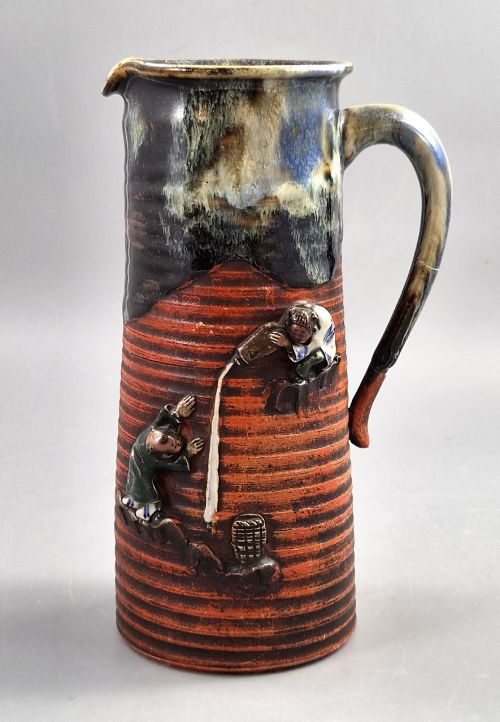
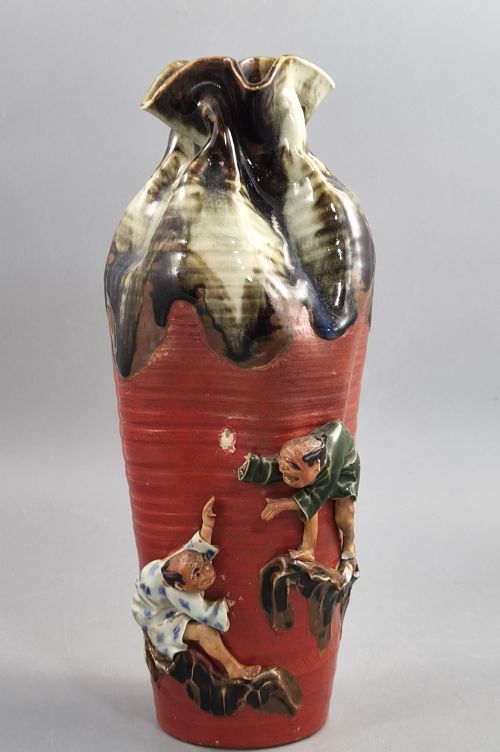
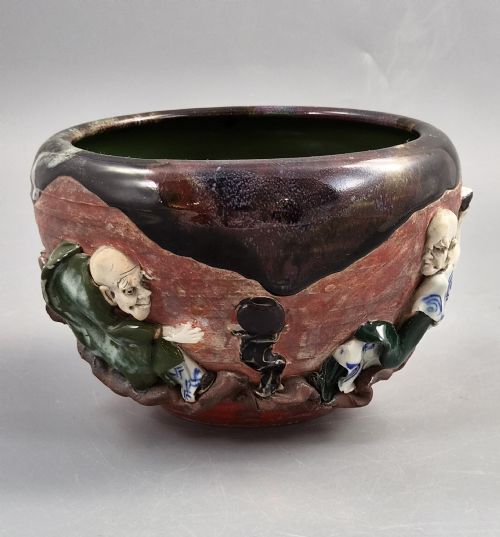
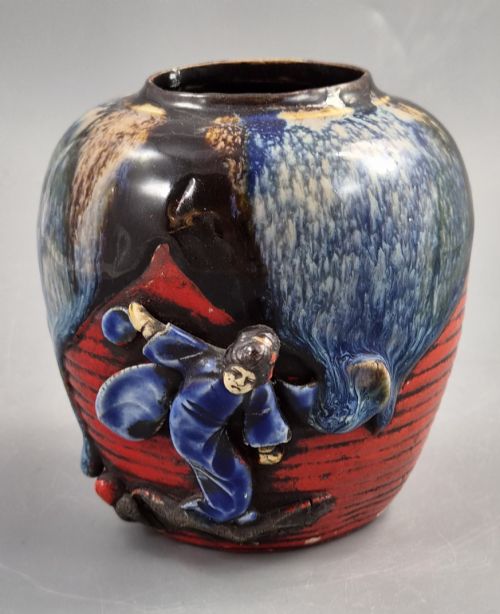
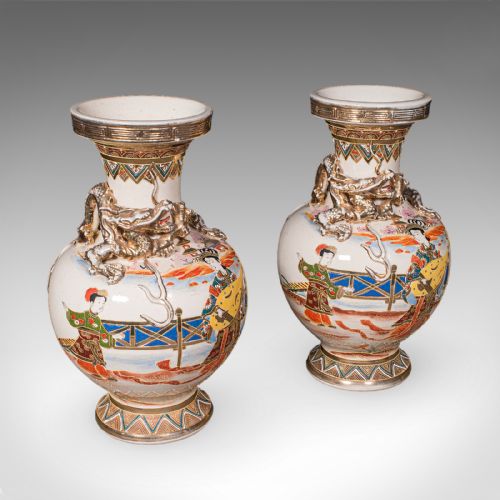
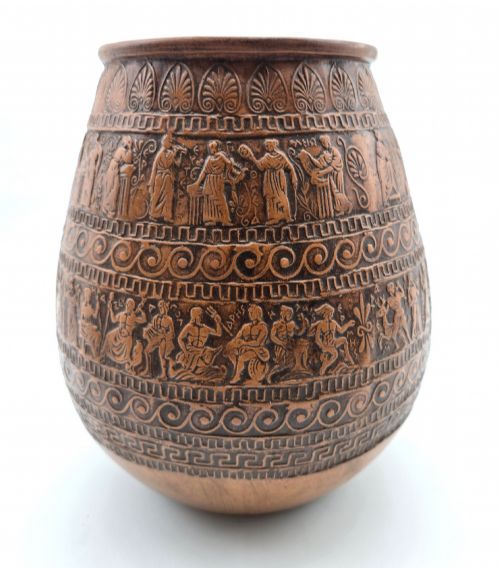
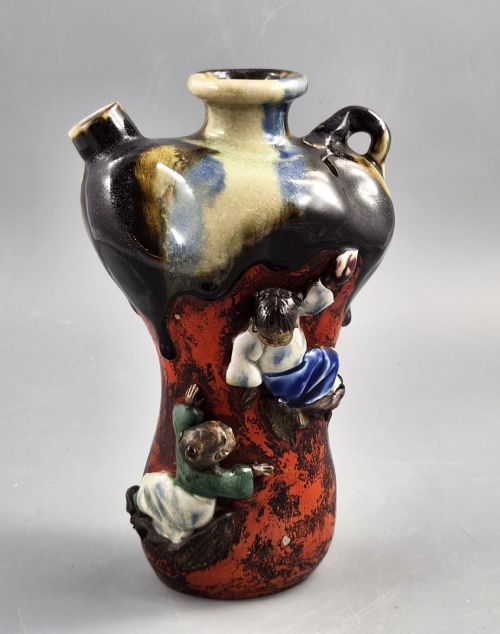
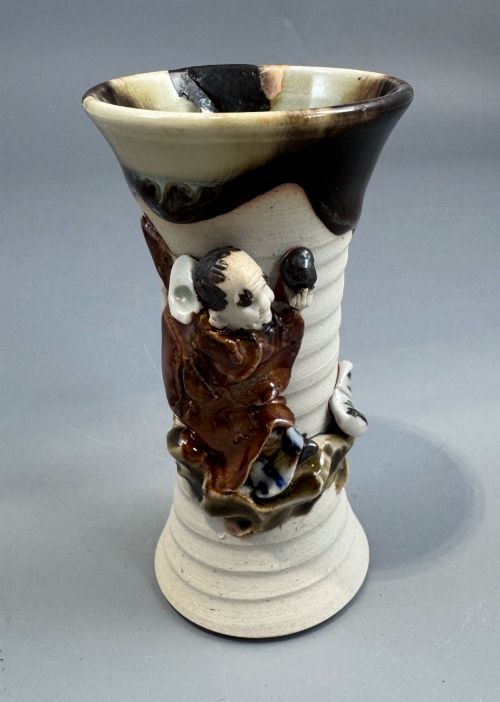
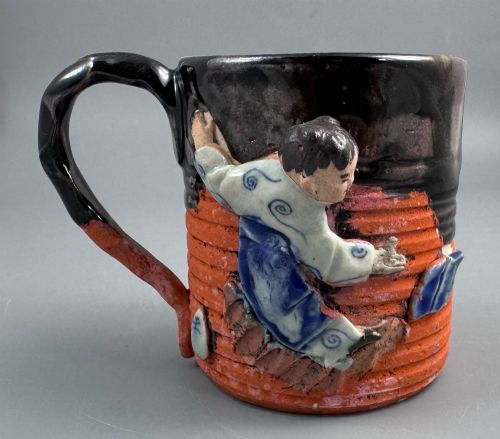
Relief figure ceramic pieces bring sculptural narrative to pottery through applied or moulded forms, ranging from Japanese Sumida Gawa vessels to Victorian jasperware.
Relief Figure Ceramic
Relief figure ceramic items span diverse forms such as vases, pitchers, jugs, teacups, mugs, bowls, and teapots created across the nineteenth and early twentieth centuries.
Buyers encounter distinct regional traditions, from the distinct flambe glazes and applied figures of Japanese workshops to neoclassical British and Danish biscuit pieces.
How they were made
Makers utilised earthenware, stoneware, terracotta, and porcelain as bodies, applying figures by hand or moulding them separately before attaching them to the wet clay.
Glazes play a defining role, utilising rich blue, lavender, and oxblood flambé finishes on Japanese pottery, alongside traditional matte jasper and white biscuit surfaces in European works.
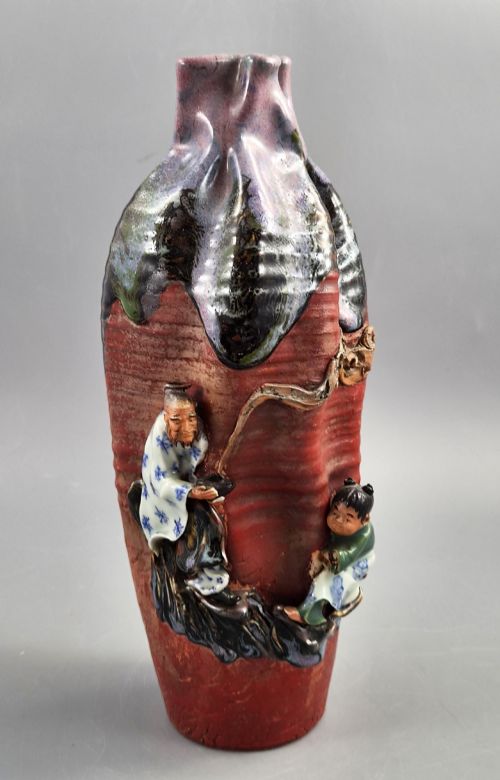
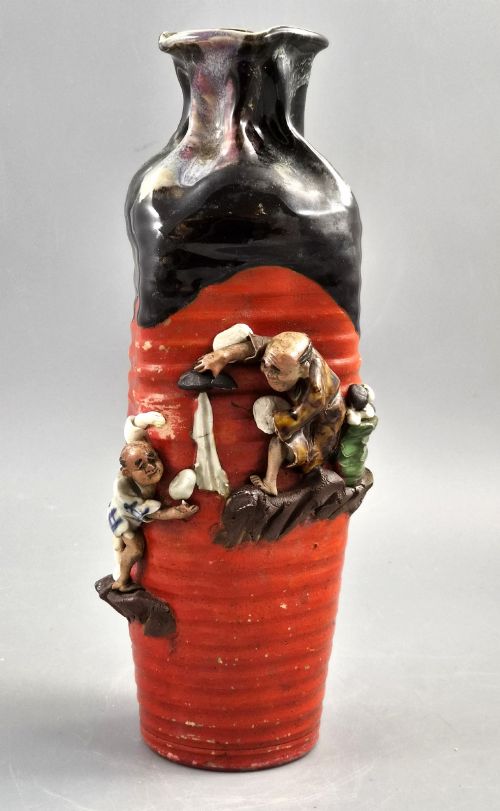
Several Sumida Gawa vessels feature tiny modelled children persistently climbing up the sides of teapots and pitchers.
What varies in quality
Quality rests in the crispness of the modelled figures and the skill of their integration with the vessel body, particularly where applied figures climb or interact with the surface.
The depth and control of the glaze execution differentiate standard production from masterworks signed by prominent makers such as Inoue Ryōsai or Kōko.
Inoue Ryosai·Ishiguro Koko·P Ipsens Enke·Wedgwood·Hans Henrik Hansen·Mintons
The Relief Figure Ceramic Glossary
- Sumida Gawa
- A type of Japanese pottery originating from the banks of the Sumida River in Tokyo, known for heavy glazes and heavily modelled applied figures.
- Jasperware
- A type of fine stoneware developed by Wedgwood, characterised by a matte unglazed surface with contrasting applied white classical relief decoration.
- Flambé glaze
- A rich, streaked ceramic glaze originating from Chinese techniques, producing dramatic colour variations like oxblood, lavender, and deep blue.
- Bisque
- Unglazed ceramic fired once to create a porous, matte white surface resembling marble, popular for neoclassical figures and vases.
- Karako
- A traditional decorative motif depicting Chinese children or boys at play, frequently found on Japanese export ceramics.
Relief Figure Ceramic: Frequently Asked Questions
What is Sumida Gawa pottery?
Sumida Gawa pottery is a distinctive style of Japanese ceramics produced around Tokyo during the Meiji and Taisho periods. It is instantly recognised by its rough, textured surfaces and three-dimensional figures applied directly to the body.
These pieces often feature striking flambé glazes in oxblood, blue, or lavender. Artisans modelled sages, children, and animals climbing up the sides of vases, teapots, and mugs.
How do I identify Wedgwood jasperware?
Wedgwood jasperware is a fine, unglazed stoneware typically coloured in shades of blue, sage green, or black. It is defined by crisp, white moulded neoclassical relief figures applied to the contrasting background.
First created in the eighteenth century, Victorian examples continue this tradition on vases, biscuit barrels, and candlesticks with sharp detailing derived from classical mythology.
Where were these ceramics made?
The pieces originate from distinct global traditions, primarily bridging Japanese Meiji and Taisho period workshops with European potteries in England and Denmark.
Japanese examples come from Tokyo kilns, while European works represent industrial and studio output from Staffordshire, Copenhagen, and classical revival centres.
How should I display relief ceramics?
Relief figure ceramics require good lighting from the side to cast shadows across the modelled surfaces and highlight the depth of the applied figures.
Because the decoration is three-dimensional and stands proud of the main vessel, place them where they can be viewed closely without risk of accidental contact.