


Relief Carved Chest
A relief carved chest brings deep texture and functional storage into a room, offering robust construction alongside elaborate surface ornamentation.
Relief Carved Chest
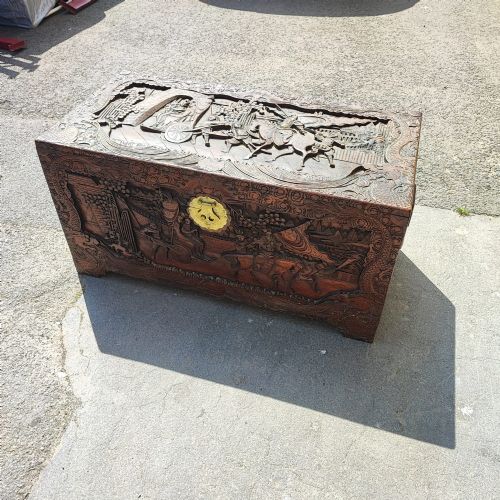
A relief carved chest is a substantial storage piece defined by sculptural woodwork projecting from its surfaces. When you search for a relief carved chest, you encounter a diverse range of forms including camphor trunks, blanket boxes, storage chests, and occasional cabinets originating from various global traditions.
The pieces appearing on this page span several centuries, with a strong representation of nineteenth-century examples alongside earlier Georgian works and twentieth-century items. You will frequently find Oriental camphor wood trunks and traditional oak coffers featuring figurative or floral carving.
Makers and regional workshops utilised native timbers to construct durable boxes that doubled as travel luggage or domestic storage. These items range from small caskets and tea boxes to large hall settles and monumental oak display cabinets.
What varies in quality
The depth, crispness, and complexity of the carving separate standard storage boxes from exceptional examples. Skilled carvers produced intricate scenes with undercut details and balanced proportions, whereas simpler pieces relied on repetitive shallow stamping.
The choice of material and the stability of the timber construction also determine overall standard. Heavier seasoned hardwoods and intact original brass mountings indicate superior craftsmanship across nineteenth-century and earlier workshops.
Listings include timber and hardware variations ranging from traditional oak and camphor wood to brass and glass.
Gillows
The Relief Carved Chest Glossary
- Relief carving
- A sculptural technique where figures or patterns project from a flat background surface. This method creates dramatic shadow and three-dimensional depth on the front and sides of storage boxes.
- Camphor wood
- An aromatic timber frequently utilised for trunks and blanket boxes due to its insect-repellent properties. The natural scent helps protect stored garments and textiles over long periods.
- Chinoiserie
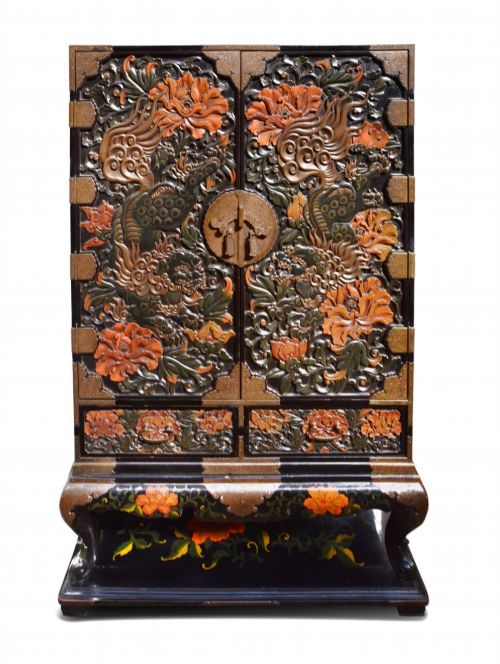
- European decorative style reflecting Chinese artistic influences, popular during the eighteenth and nineteenth centuries. It appears on lacquered cabinets and trunks with stylised Oriental landscapes and figures.
- Cabinet on chest
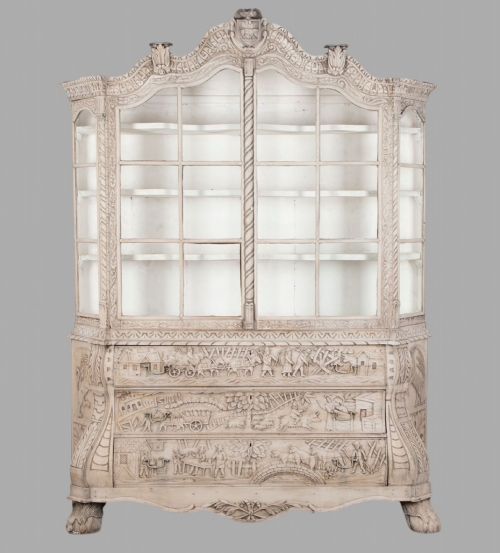
- A two-part furniture form featuring an upper display or storage cabinet mounted upon a lower chest base. These architectural pieces often incorporate glazed doors or extensive panel carving.
- Tea caddy
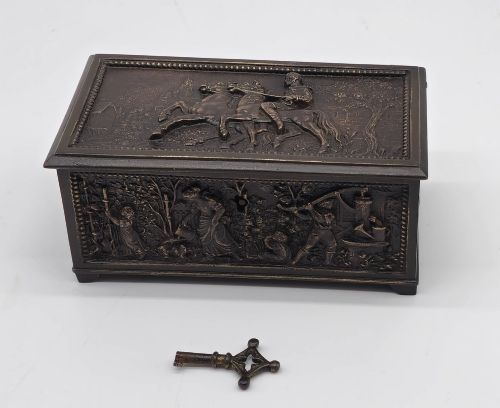
- A small lidded box designed for storing precious tea leaves securely. Fine nineteenth-century examples often feature interior compartments and decorative surface carving.
Relief Carved Chest: Frequently Asked Questions
What were relief carved chests used for?
These pieces served primarily for domestic storage, holding heavy blankets, winter garments, and household linens securely within the bedroom or hall. Many functioned as sturdy travel luggage for long sea voyages, particularly the camphor wood trunks.
Smaller boxes and caskets were dedicated to holding valuables, tea leaves, or jewellery on tabletops. Over time, larger chests also doubled as casual seating benches when placed in corridors or living spaces.
How do I identify the period of a carved chest?
Examine the timber species, construction joints, and stylistic motifs to determine the likely era of manufacture. Nineteenth-century examples often feature dense camphor wood or heavily carved oak with revival styles, whereas Georgian and earlier pieces display hand-cut dovetails and distinct regional joinery.
Stylistic clues such as Chinoiserie lacquer or Renaissance Revival strapwork point directly to specific nineteenth-century revival movements. Hardware elements like hand-beaten brass handles also offer reliable dating evidence.
Where should I place a storage chest at home?
A large camphor wood or oak chest functions effectively at the foot of a bed for storing extra bedding and pillows. They also anchor entrance halls well, providing both a surface for decorative items and a place to sit.
Smaller caskets and cabinets suit tabletops, sideboards, or dedicated display stands where their detailed carving remains visible. Ensure wooden trunks are kept away from direct heat sources to prevent timber splitting.
How do I care for antique camphor wood?
Maintain the natural condition of camphor wood by dusting regularly with a dry cloth and avoiding harsh chemical cleaning agents. The timber naturally retains its protective aroma over decades without requiring artificial oils.
Keep the chest in a room with stable humidity levels to prevent the wood from warping or shrinking. Periodically check brass hinges and fasteners to ensure they remain secure.