




Regimental Military Artwork
Regimental military artwork brings history to life on your wall, offering authentic glimpses into past campaigns and portraits of officers through centuries of service.
Regimental Military Artwork
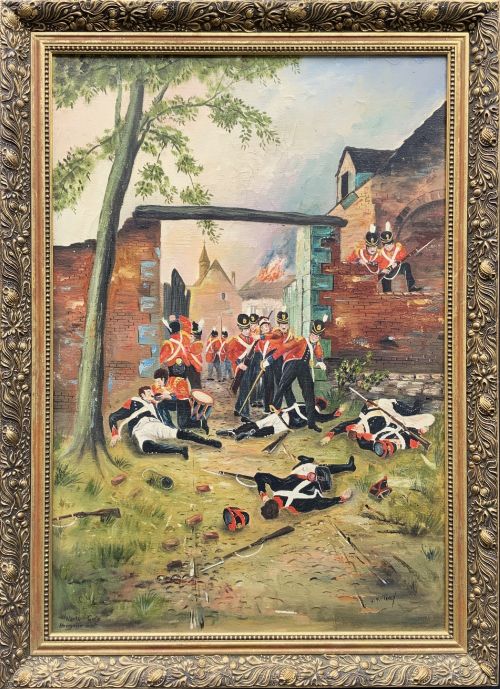
When you search for regimental military artwork, you encounter historical pieces ranging from grand battle scenes to individual portraiture. These works span multiple eras, capturing the changing uniforms and equipment of armed forces.
You are most likely to meet nineteenth-century oil paintings and portraits on this page, reflecting an era when military commissions routinely commissioned likenesses of their officers. These pieces often record specific regiments, such as the 5th Royal Lancashire Militia or the 15th King's Hussars.
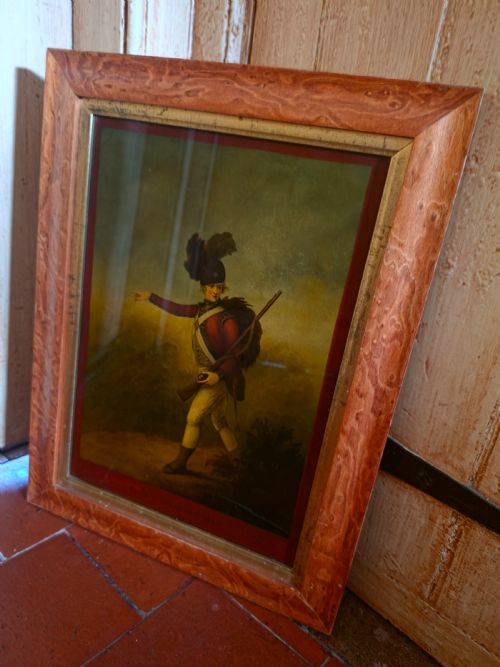
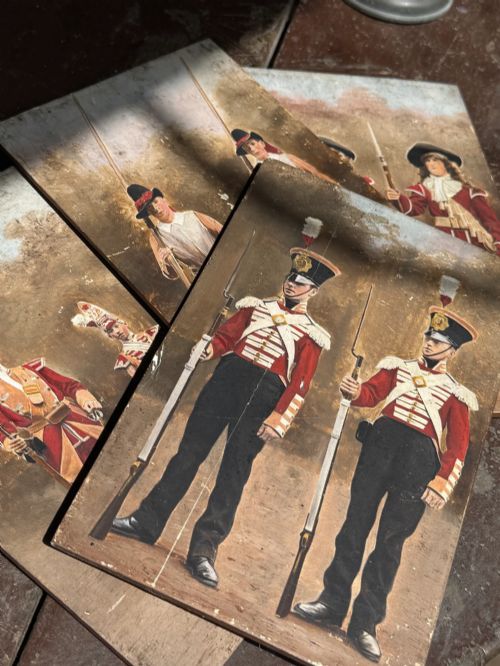
Alongside large canvases, the selection includes diverse formats like reverse glass pictures and painted panels depicting soldiers. Works attributed to named artists and military specialists add considerable depth to the available selection.
Materials and Techniques
Frames play a significant structural and aesthetic role, frequently employing gilt wood to complement the dignity of the portraiture within. Alternative techniques such as reverse glass painting demonstrate specialised craftsmanship designed to protect the pigment beneath a glossy surface layer.
Regimental Military Artwork Retail Price Guide 2026
Typical asking prices for regimental military artwork among the pieces listed under this phrase on Sellingantiques today, from the lower quarter to the upper quarter. They describe what is for sale here now, not the wider market.
Listings feature works spanning from the eighteenth century to the mid-twentieth century, utilising canvas, glass, and wood.
Assessing Quality and Execution
The distinction between ordinary and superior pieces rests upon the precision of the uniform details and the anatomical accuracy of the figures and horses. Master painters capture the precise regimental facings and medal ribbons with rigorous observation.
Condition and provenance further define the upper tier of these works, particularly when a subject or regiment can be definitively identified through contemporary inscriptions. Original framing and undisturbed surfaces contribute significantly to historical integrity.
Snaffles·Henry Walton·Sir Richard Westmacott
The Regimental Military Artwork Glossary
- Reverse glass painting
- A technique where the image is painted directly onto the back of a glass panel to be viewed from the front. This method creates a luminous surface finish.
- Military realism
- An artistic style focused on accurate depiction of military life, uniforms, and equipment without romantic exaggeration. It serves as a visual record of historical military standards.
- Oil on canvas
- Pigments bound in a drying oil medium applied to a stretched woven fabric support. This combination allows for rich blending of tones and long-term durability.
- Panel painting
- Artwork executed on a flat piece of wood rather than canvas or paper. This traditional support provides a rigid ground for detailed miniature or figure work.
Regimental Military Artwork: Frequently Asked Questions
How do I identify a regimental portrait?
Look for specific uniform details, cap badges, and collar insignia that correspond to historical army lists. Inscriptions on the reverse or frame often record the officer's name and regiment.
Matching these visual cues with archival records allows collectors to pinpoint the exact military unit and occasionally the campaign depicted.
Where should I hang military artwork?
These works suit traditional reception rooms, studies, or hallways where their historical subject matter can be appreciated up close. Ensure they are placed away from direct sunlight to protect sensitive pigments and paper elements.
Proper lighting using picture lamps enhances the rich tones of oil on canvas and highlights fine uniform details.
What periods do these pieces cover?
The available selection spans from the eighteenth century through the Victorian era and into the twentieth century. Each period displays distinct artistic conventions and uniform designs.
Earlier works tend toward formal portraiture, while twentieth-century pieces often incorporate varied media like printed cards and panels.
How do I care for antique oil paintings?
Maintain a stable room temperature and humidity level to prevent the canvas from slackening and the oil paint from cracking. Dust the surface gently with a soft, dry brush without applying pressure.
Avoid using commercial cleaning sprays or water on the painted surface or gilt frames to preserve the original finish.