
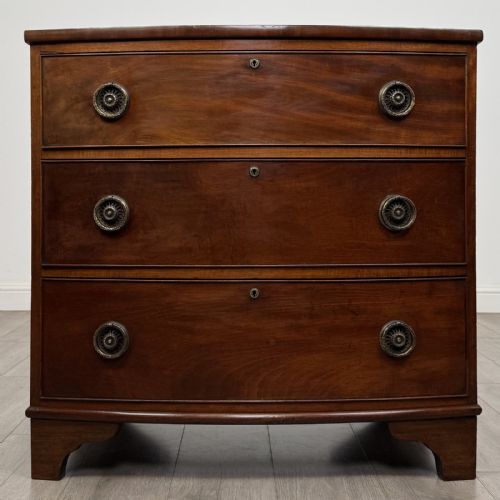
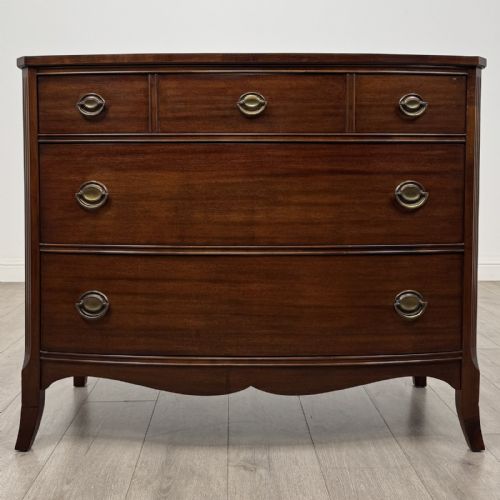
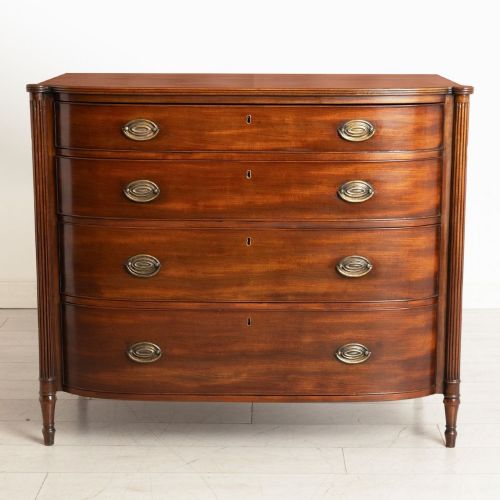
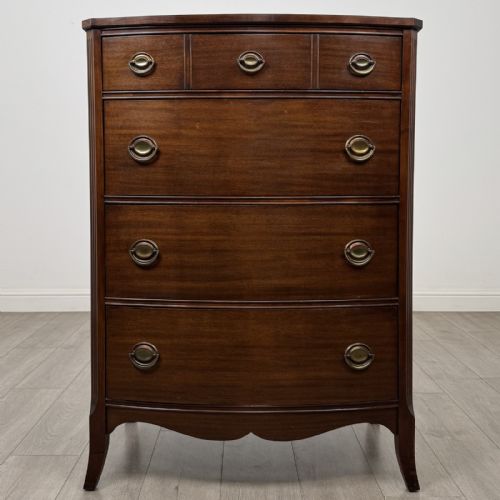

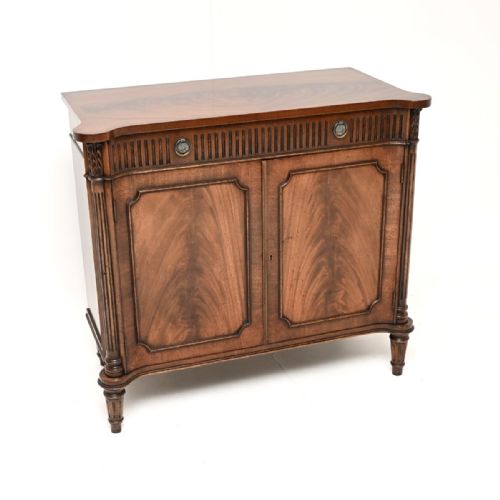
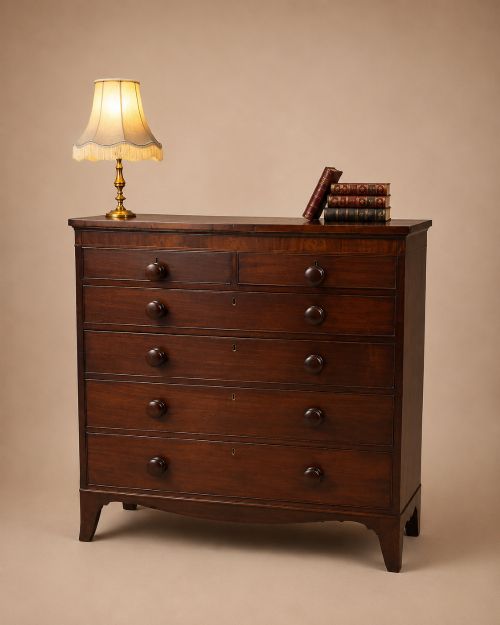
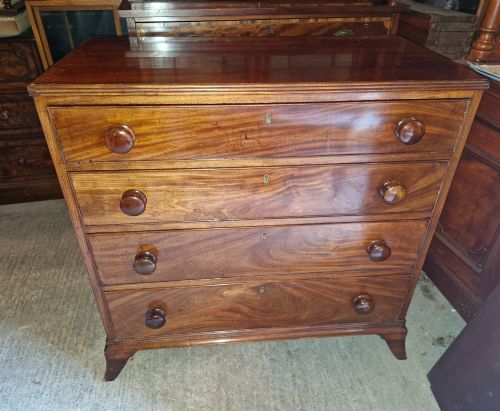
Regency Wooden Commode
A regency wooden commode brings solid architectural presence into a room, offering generous storage through disciplined proportion and rich timber grain.
Regency Wooden Commode
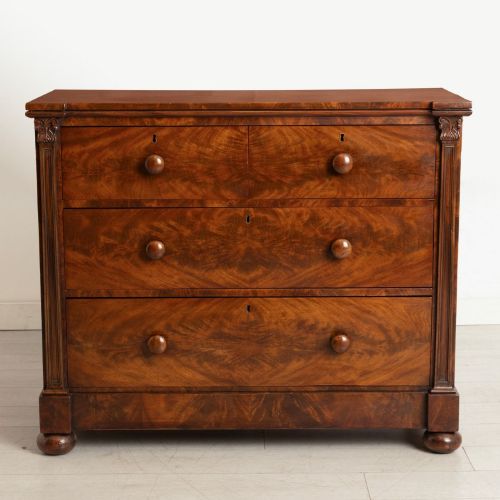
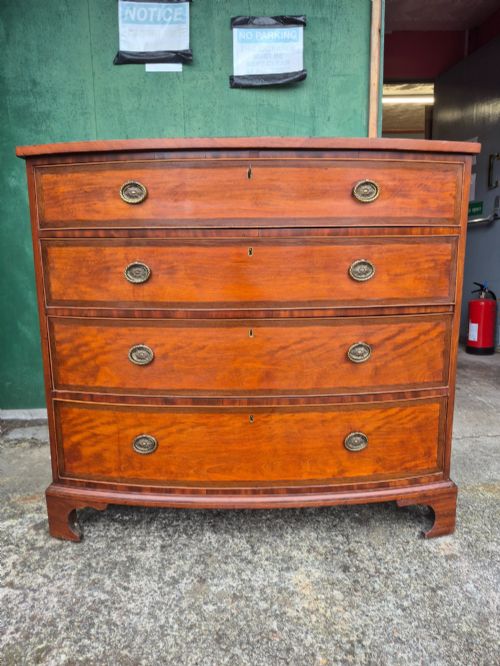
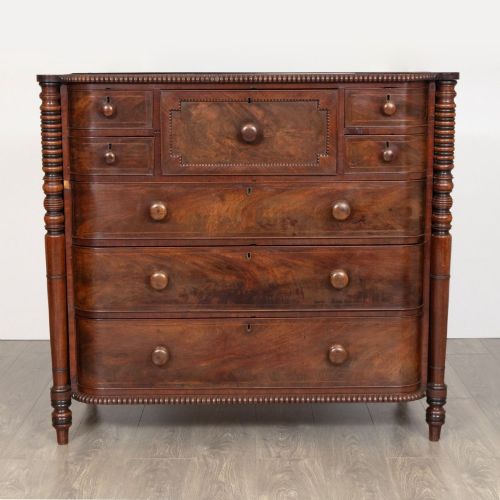
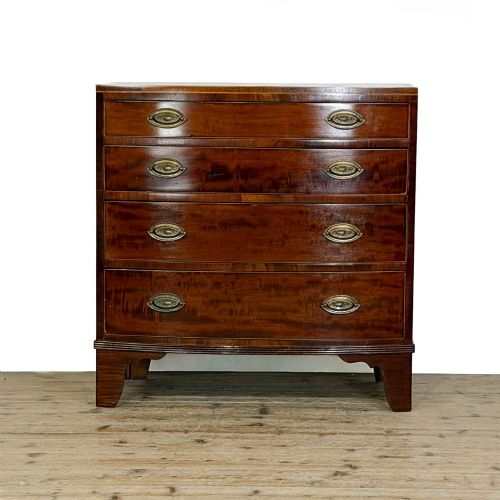
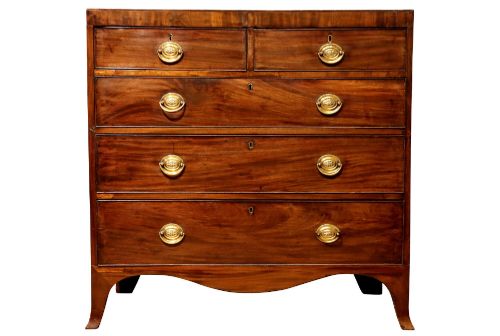
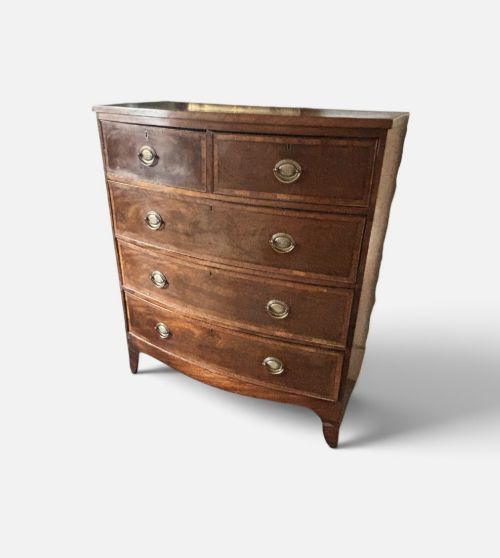
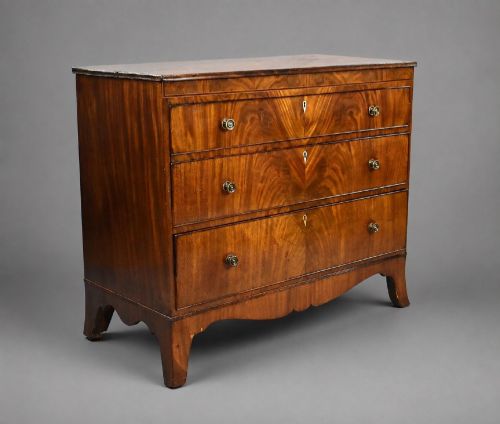
When searching for a regency wooden commode, buyers encounter sturdy storage furniture primarily configured as chests of drawers, alongside occasional side cabinets, bedside tables, and bed steps. These pieces range across periods including the Regency, Georgian, and Victorian eras, though the distinctive curved fronts and linear drawer arrangements of the early nineteenth century dominate the selection.
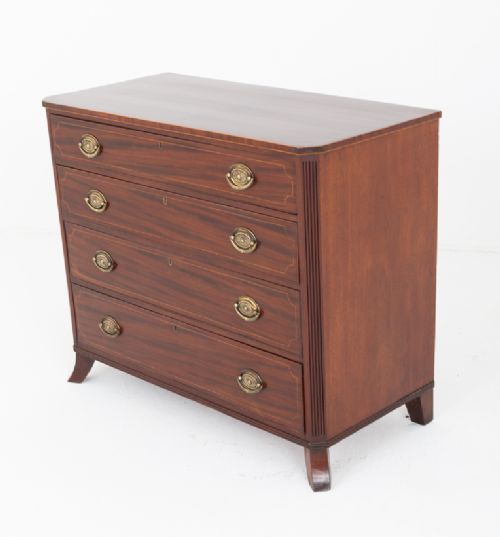
The objects take diverse physical forms, from narrow bow-fronted examples to large four-drawer or five-height chests, often constructed with mahogany or flame mahogany veneer. Craftsmanship spans English and Scottish regional variations, incorporating satinwood crossbanding or inlaid details that reflect the stylistic preferences of the period.
Materials and construction methods
Makers utilised solid timbers and decorative veneers, frequently applying flame mahogany veneer over secondary woods like pine and oak to achieve striking surface figures. Cabinetmakers employed precise wood veneers and crossbanding in satinwood to frame drawer fronts, combining structural durability with visual contrast.
Hardware integration relied on brass fittings to accent the dark timber, while drawer linings of oak indicate regional British workshop traditions. Construction techniques prioritised stable carcases and graduated drawer depths to support daily domestic utility.
The listings show a prevalence of mahogany and flame mahogany veneer, alongside accents in satinwood, oak, and pine.
Distinctions in craftsmanship and design
Quality rests upon the selection of timber figures, where symmetrical flame mahogany veneer and crisp satinwood crossbanding elevate a piece beyond standard utility. The subtlety of the bow front contour and the precision of the drawer dovetailing distinguish superior cabinet work.
Proportion and restraint define the finer examples, where brass hardware complements the timber without overwhelming the surface design. The integrity of the secondary woods, such as oak drawer linings, further indicates the standard of workshop execution.
The Regency Wooden Commode Glossary
- Bow front
- A convex curved front characteristic of many chests of drawers from this period. This shape softens the profile of heavy timber furniture.
- Flame mahogany
- A veneer cut from the fork of the mahogany tree, producing a dramatic, flickering grain pattern. Cabinetmakers utilised this figure on primary display surfaces.
- Crossbanding
- A border of veneer laid perpendicular to the surrounding grain, often executed in contrasting satinwood. This technique frames the drawer fronts.
- Caddy top
- A moulded lid edge resembling the profile of a tea caddy, found on specific chest designs. It adds a refined linear detail to the upper surface.
- Bed steps
- A set of small portable steps used to access high historical beds, occasionally incorporating storage. These diminutive items form part of the broader furniture group.
Regency Wooden Commode: Frequently Asked Questions
What defines a regency wooden commode?
These pieces comprise sturdy storage furniture from the early nineteenth century, predominantly taking the form of chests of drawers with straight or bow fronts.
They rely on rich timber grains like mahogany and flame mahogany to create visual impact through proportion rather than excessive ornamentation.
What woods were used in these cabinets?
Primary surfaces typically display mahogany, flame mahogany veneer, or satinwood accents, often supported by secondary timbers like oak and pine.
Cabinetmakers selected these materials for both structural stability and decorative grain appeal.
Where were these pieces made?
The furniture originates from English and Scottish workshops operating during the Georgian, Regency, and early Victorian periods.
Regional differences appear in the choice of secondary lining woods and subtle variations in hardware and moulding profiles.
How do I care for mahogany veneer?
Protect the timber surfaces from direct sunlight and excessive temperature fluctuations to prevent veneer lifting or fading.
Apply a traditional wax polish sparingly to maintain the natural lustre of the polished wood.