
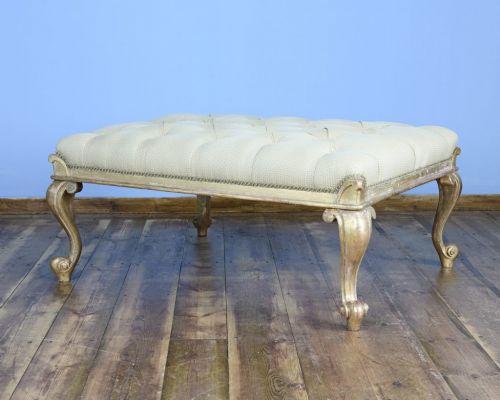
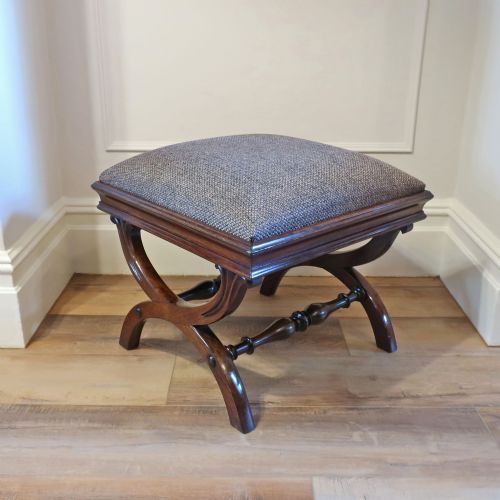
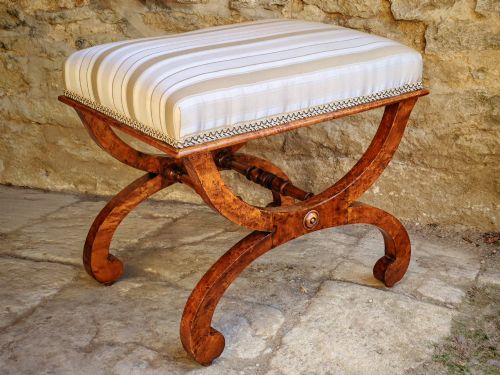


Regency Upholstered Footstool
A regency upholstered footstool brings firm timber frames and tactile textile coverings together in a compact seat designed for repose.
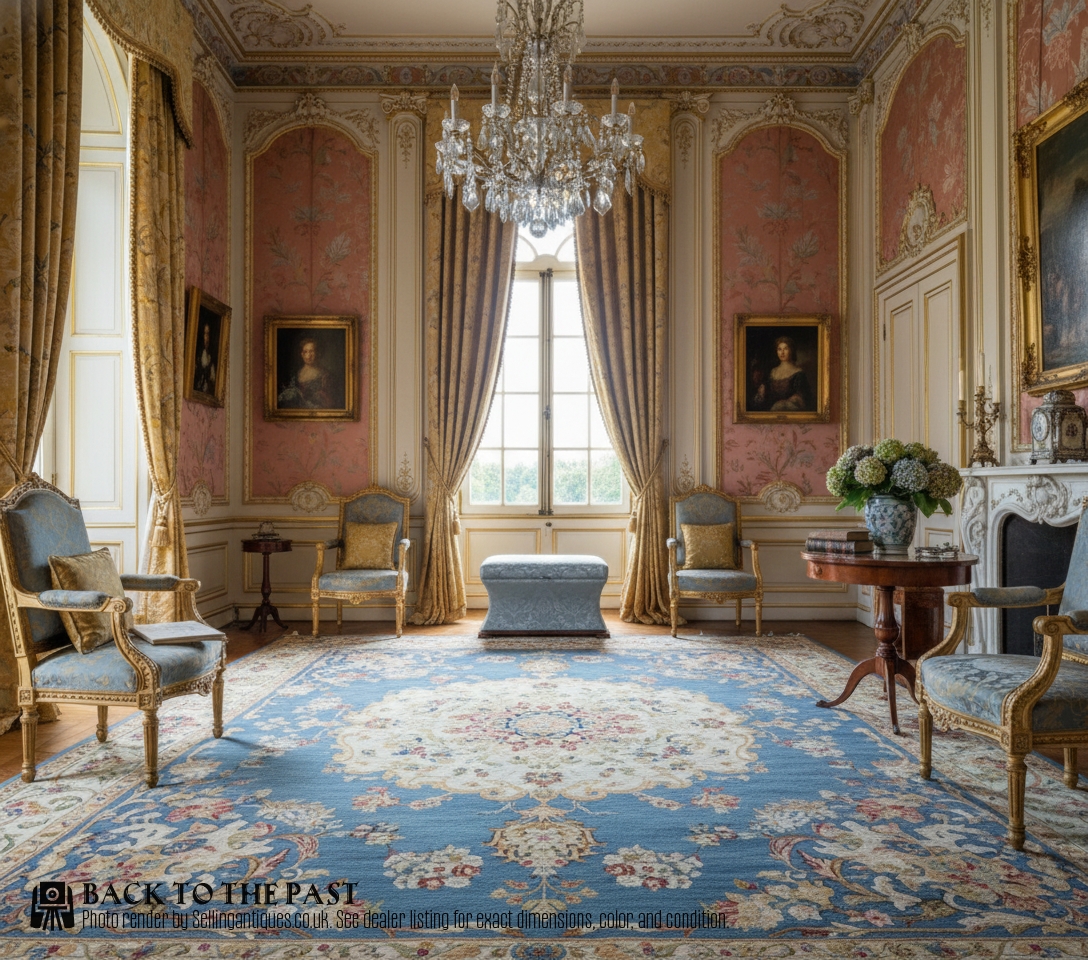
Regency Upholstered Footstool
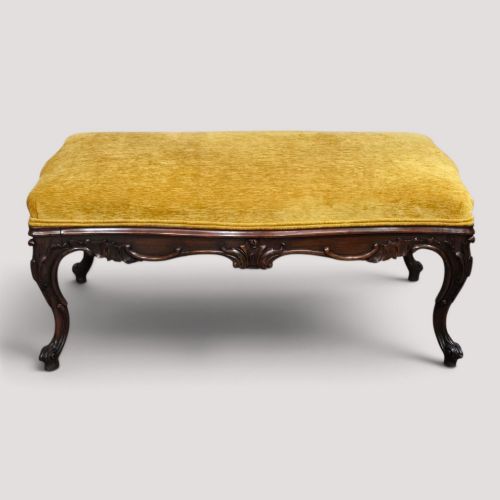
A regency upholstered footstool belongs to the broader category of low seating, including ottomans, window seats, and work box stools designed for the nineteenth-century interior. These pieces appear most frequently in mahogany and rosewood, spanning periods from the Georgian era through to the early Victorian years.
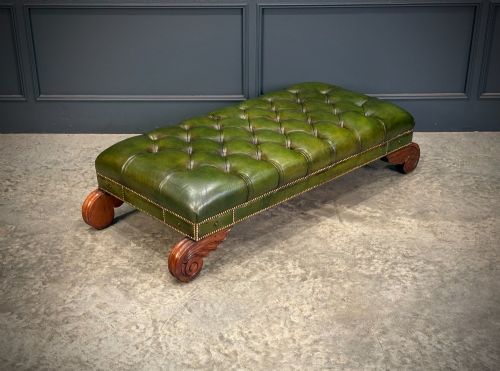
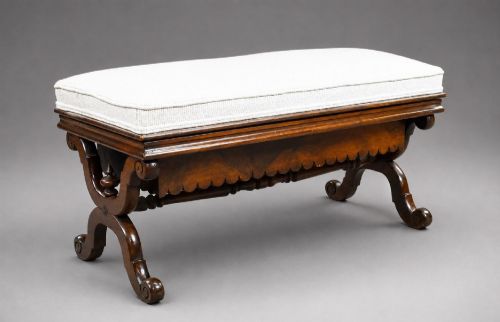
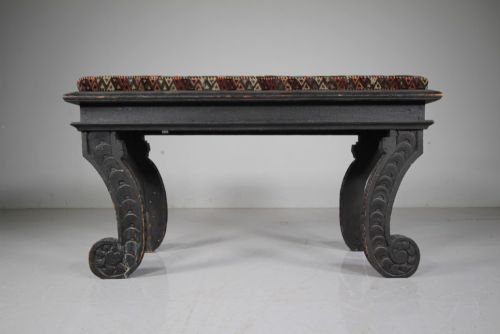
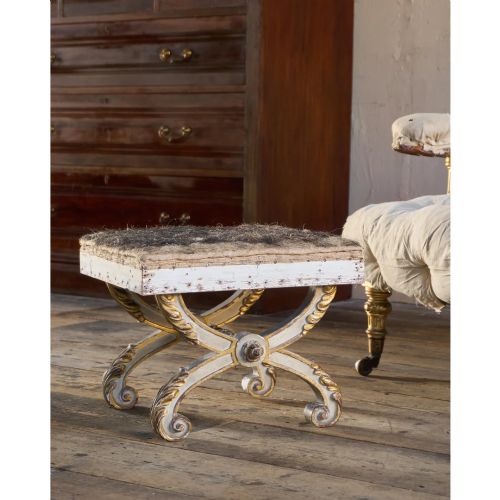
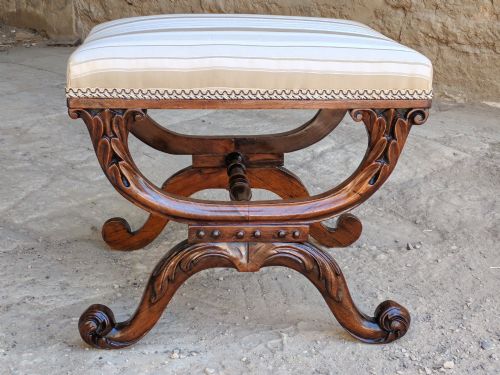
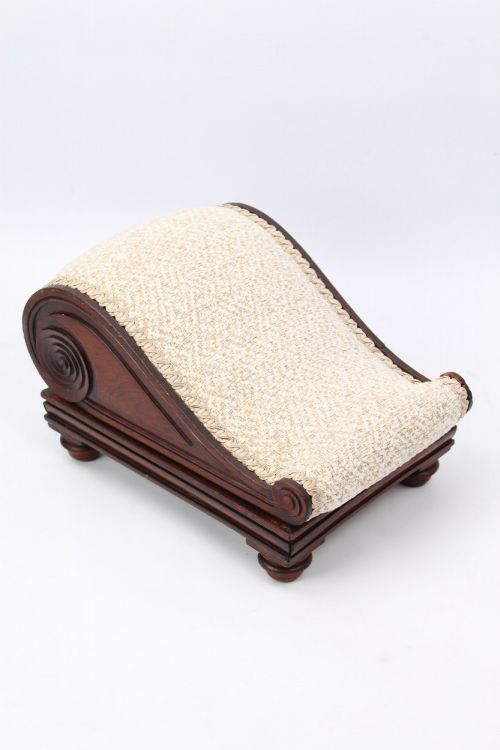
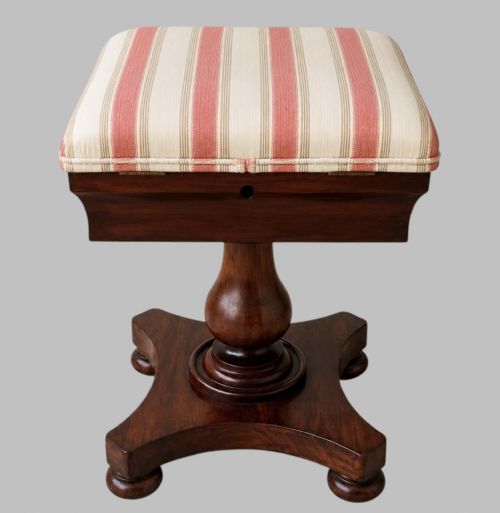
The silhouettes range from simple square frames on turned and tapered legs to X-framed curule designs, scroll tops, and waist-shaped ottomans. Many examples integrate practical storage compartments, serving as sewing boxes or box ottomans alongside standard low rests for the feet.
Materials and Construction
Construction relies heavily on dense hardwoods such as mahogany and rosewood, occasionally supplemented by painted pine, burr maple, and parcel gilt accents. Frames are joined securely to bear weight, while turned legs frequently incorporate brass castors for mobility.
Upholstery materials involve leather, velvet, chenille, and various other textiles, often secured with buttoning or decorative trim. Specialised forms utilise cross-framing in an X shape, drawing on classical curule inspiration to distribute weight evenly across the wooden supports.
Listings feature rosewood and mahogany predominantly, alongside alternative woods like burr maple and painted pine.
Distinctions in Execution
Quality rests on the selection of timber and the crispness of the joinery and carved details, such as lions paw feet or scroll ends. Denser grain timbers and well-figured rosewood or mahogany distinguish more ambitious workshop output from simpler domestic seating.
The integration of secondary functions, such as internal compartments for sewing or hinged box lids, demands precise carpentry that operates smoothly. Furthermore, the fidelity of revival styles and the harmony of proportion between the wooden frame and the upholstered top determine the standing of an individual piece.
Miles & Edwards
The Regency Upholstered Footstool Glossary
- Curule
- An X-shaped form of seating derived from classical Roman furniture. This design provides structural rigidity through intersecting curved or straight wooden members.
- Ottoman
- A low upholstered seat without a back or arms, sometimes featuring a hinged lid for interior storage. These pieces function equally as foot rests and supplementary seating.
- Giltwood
- Timber that has been coated with a thin layer of gold leaf or gilt finish. This treatment highlights carved decorative elements on formal reception pieces.
- Sabre leg
- A concave sweeping leg that tapers toward the foot, typical of furniture from the early nineteenth century. The profile mimics the curve of a cavalry sabre.
- Work box
- A lidded compartment integrated into the frame of a stool or small table, originally intended for sewing implements. These units combine utility with comfortable padding on the upper surface.
Regency Upholstered Footstool: Frequently Asked Questions
How do I spot a genuine piece?
Examine the timber species, construction methods, and wear patterns consistent with early nineteenth-century cabinet making. Dense hardwoods like mahogany and rosewood indicate the correct period materials.
Check for hand-cut joints and traditional upholstery foundations rather than modern staples or chipboard reinforcements. Consistent ageing across the wooden frame supports authenticity.
Were these always used for feet?
Many examples served multiple domestic functions beyond supporting the feet. Window seats, dressing stools, and hall seats provided low perches in various rooms.
Several variants include internal compartments for sewing or small storage, functioning as work boxes and ottomans alongside standard foot rests.
How do I clean the wooden frame?
Maintain finished hardwood surfaces using gentle dusting with a dry cloth to prevent grit accumulation. Avoid harsh chemical sprays that strip historic polish.
Apply traditional beeswax sparingly to nourish the grain of mahogany or rosewood surfaces. Buff gently with a soft brush to maintain a natural lustre.
Can I use these for daily seating?
Most sturdy frames handle everyday sitting comfortably, provided the internal joinery remains sound. Heavier construction in mahogany and rosewood offers reliable structural support.
Consider the condition of the upholstery webbing and padding before heavy daily use. Lighter decorative pieces with delicate X-frames require more careful handling.