




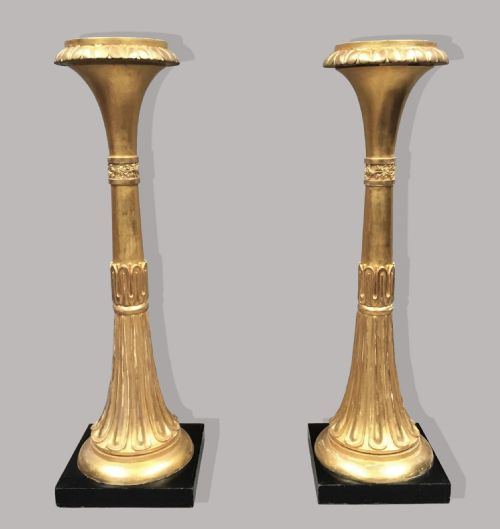


Regency Torcheres
Regency torcheres are upright stands for lamps or figures, built with architectural columns and tripod bases that bring height and focus to any room.
Regency Torcheres
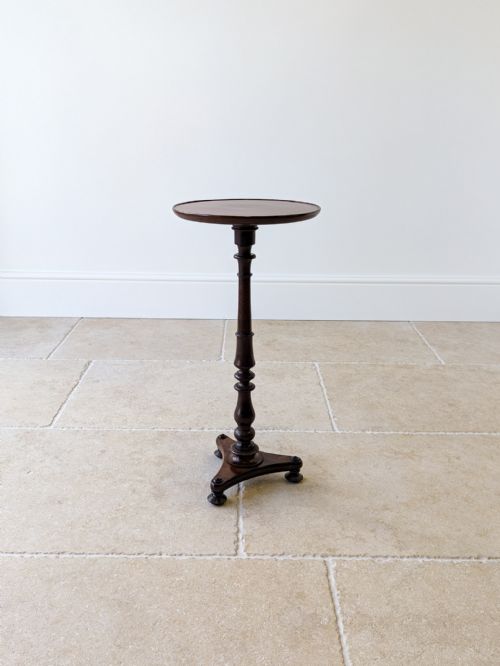
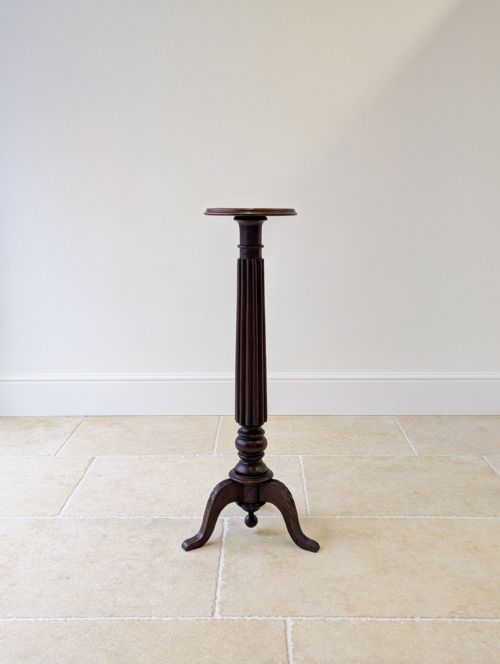
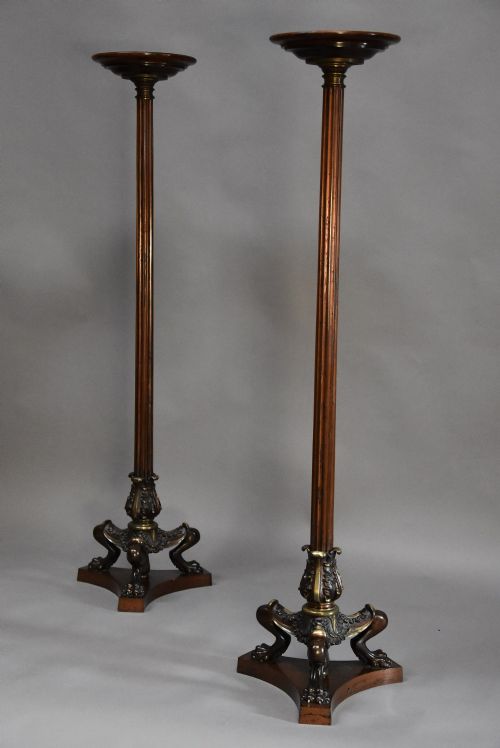
Regency torcheres take the form of tall, slender stands and pedestals designed to elevate lamps, plants, and decorative objects. The pieces appearing here span the Regency period itself alongside later 19th-century interpretations and Georgian examples.
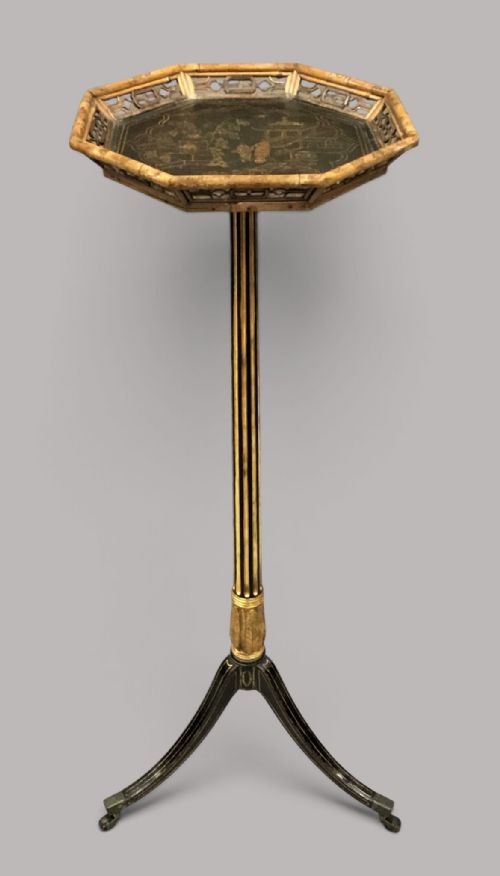
Most examples function as plant stands, jardiniere tables, or candle supports, standing on slender legs or column bases. Forms range from simple mahogany columns to elaborate lacquered or giltwood pedestals intended for prominent display in a room.
How they were made
Cabinetmakers built these stands using dense timbers such as mahogany, walnut, rosewood, and amboyna, often turning them on a lathe to create slender columns. Finer pieces incorporate brass mounts, marble tops, or ebonised wood details to create contrast.
Alternative constructions utilise pine painted to simulate marble, plaster for sculpted figures, and giltwood finishes. Joinery involves sturdy pedestal bases and tripod supports designed to balance the height of the shaft.
Regency Torcheres Retail Price Guide 2026
Typical asking prices for regency torcheres among the pieces listed under this phrase on Sellingantiques today, from the lower quarter to the upper quarter. They describe what is for sale here now, not the wider market.
Some stands double as silent sentinels for plastic ferns while occasionally holding unusually tall candles.
What varies in quality
Quality rests in the crispness of the turned woodwork, the selection of figured timber veneers, and the stability of the column and base joint. Finer examples show precise carving and well-fitted marble or wood tops.
The choice of materials dictates the standing of a piece, with solid rosewood, amboyna, and giltwood finishes representing higher levels of workshop output compared to simpler pine or standard mahogany.
Gillows·Humphrey Hopper·George Smith·Thomas Hope
The Regency Torcheres Glossary
- Torchere
- A tall stand or pedestal originally intended to hold a torch or candle, later used for lamps and decorative plants. These upright forms provide height in room layouts.
- Jardiniere stand
- A specialised piece designed to hold a plant container, frequently featuring a lined top or inset marble insert to protect the wood from moisture. They share the tall, upright format of torcheres.
- Neoclassical
- A style drawing on ancient Greek and Roman design, characterised by balanced proportions, columns, and classical motifs. It dominates the decorative vocabulary of this period.
- Giltwood
- Timber treated with a thin layer of gold leaf or gilt finish to create a bright, reflective surface. This treatment highlights carved architectural details.
Regency Torcheres: Frequently Asked Questions
What is a regency torchere used for?
These tall stands support lamps, urns, and decorative plants, elevating objects to eye level within a room.
They serve as accent furniture in corners or beside seating areas where vertical presence is required.
How do I identify a regency torchere?
Look for architectural column forms, tripod bases, and classical details dating from the early nineteenth century.
Materials typically include mahogany, rosewood, and giltwood, often reflecting neoclassical design influences.
Where should I place a torchere stand?
They suit empty corners, entrance halls, or spaces beside large pieces of furniture that need vertical balance.
Ensure the base sits firmly on the floor to support whatever lamp or plant you place on top.
Are these stands suitable for plants?
Many examples function specifically as jardiniere stands, equipped with surfaces designed to hold planters and pots.
Check the top material to ensure it handles occasional moisture if you plan to use real plants.