
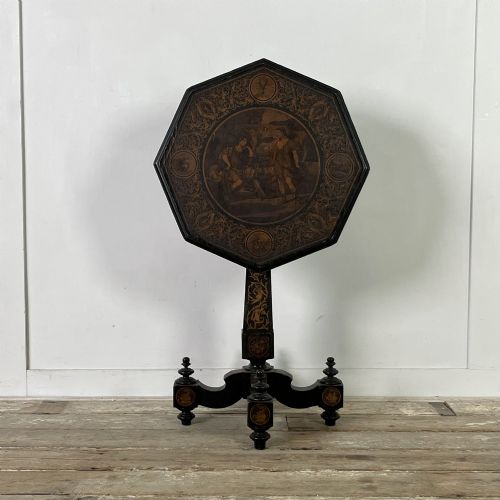


Regency Tilt Top Tea Table
A regency tilt top tea table is a flexible piece designed to fold away when not in use, offering stability and clean period lines.
Regency Tilt Top Tea Table
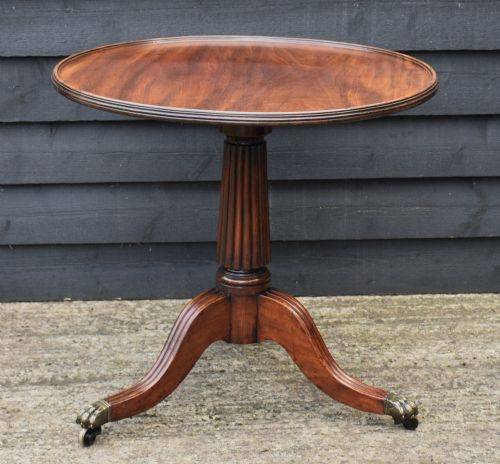
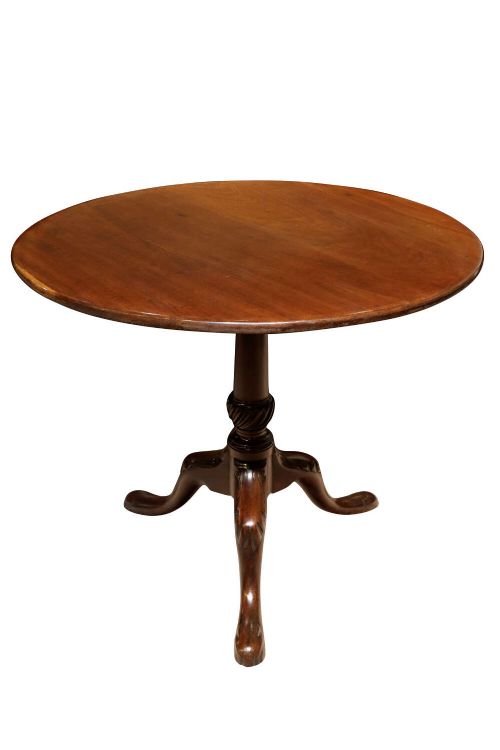
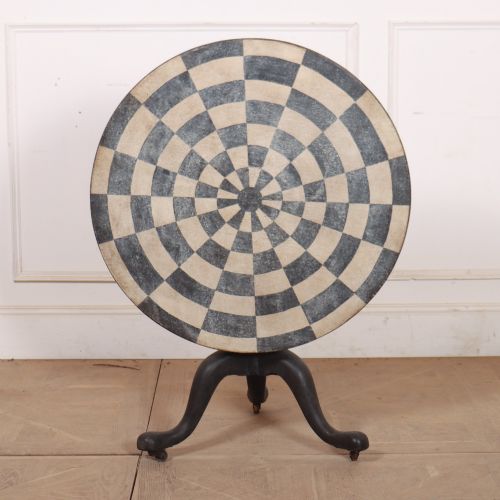
A regency tilt top tea table is a compact surface built to stand on a pillar and tripod base, pivoting vertically via a clever catch mechanism. These pieces served primarily for evening refreshments in period drawing rooms before being pushed against the wall to clear the floor space.
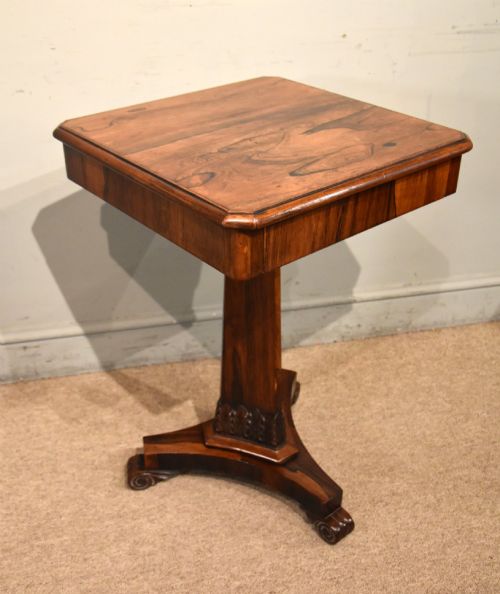
The versions most commonly met on this page belong to the nineteenth century, spanning the Regency, George IV, and William IV eras. Mahogany remains the dominant timber, though examples in rosewood, burr yew, and lacquered wood appear frequently among the listings.
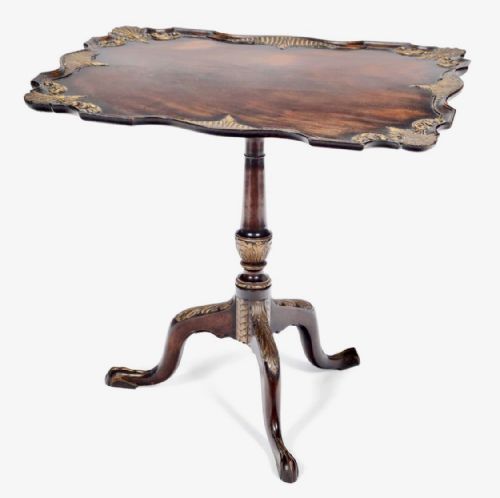
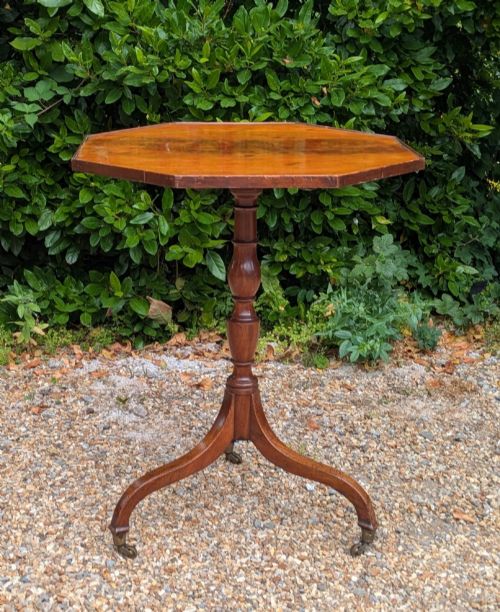
Makers of the period favoured circular, square, and octagonal tops supported by column pedestals and moulded legs. While some retain simple timber surfaces, others feature intricate painted details or parcel gilding reflecting the aesthetic tastes of the early eighteen hundreds.
How they were made
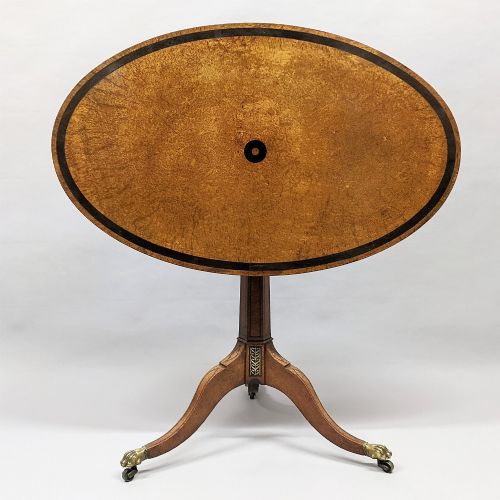
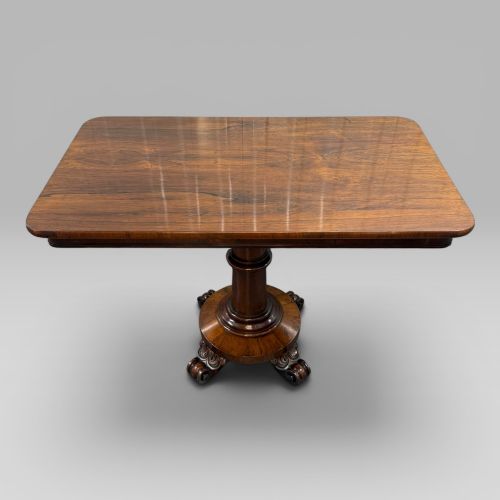
Cabinet makers built these tables using dense hardwoods such as mahogany and rosewood, often selecting figured veneers like plum pudding mahogany or burr yew for the table top. The timber was seasoned carefully to prevent warping on the pivoting surfaces.
The tilting mechanism relied on a brass catch or block beneath the top, allowing the surface to snap flat or fold vertical. Turned central pedestals met three splayed legs, frequently fitted with brass paw castors for mobility.
Listings feature woods spanning mahogany, rosewood, burr yew, birch, cherrywood, and lacquered wood.
What varies in quality
Quality rests heavily on the selection of timber figures and the crispness of the carved details on the pillar and tripod base. Finer examples display symmetrical veneers and well-proportioned turned columns rather than plain, unfigured boards.
The integrity of the tilting mechanism and the snugness of the catch dictate how securely the top locks into position. Original brass fittings and untouched surface patination separate standard examples from finer works.
The Regency Tilt Top Tea Table Glossary
- Tilt top
- A table mechanism allowing the surface to pivot ninety degrees for storage against a wall. This space-saving design defined many nineteenth-century occasional and tea tables.
- Tripod base
- A support structure featuring three splayed legs radiating from a central pillar. It offered stability on uneven floorboards.
- Parcel gilt
- Partially gilded with gold leaf to highlight carved details or mouldings. It appears frequently on Regency and Chinoiserie pieces.
- Snap top
- An alternative term for a tilt top table utilising a spring or latch mechanism. It secures the top firmly in the horizontal position during use.
Regency Tilt Top Tea Table: Frequently Asked Questions
How do you use a tilt top table?
These tables function as standard occasional surfaces for lamps, books, or tea service when locked in the horizontal position. Releasing the brass under-catch allows the top to tilt flat against the pedestal for compact storage.
Placing the folded table against a perimeter wall preserves floor space, mirroring how Regency households cleared their parlours between social gatherings.
How can I date a Regency table?
Dating relies on observing timber choices, leg profiles, and hardware characteristics recorded across the nineteenth century. Regency and George IV pieces frequently utilise figured mahogany, brass castors, and turned pedestal columns.
Earlier Georgian examples lean towards plain tripod legs, while later Victorian variations introduce cherrywood or alternative secondary timbers alongside different turning styles.
What woods were used for these tables?
Cabinet makers utilised dense imported hardwoods, most notably mahogany and rosewood, for their strength and rich natural colour. Finer tables incorporated decorative veneers including burr yew, amboyna, and plum pudding mahogany.
Some pieces depart from natural wood finishes entirely, employing black lacquer and hand-painted Chinoiserie decoration in the manner of the early nineteenth century.