




Regency Tiered Sideboard
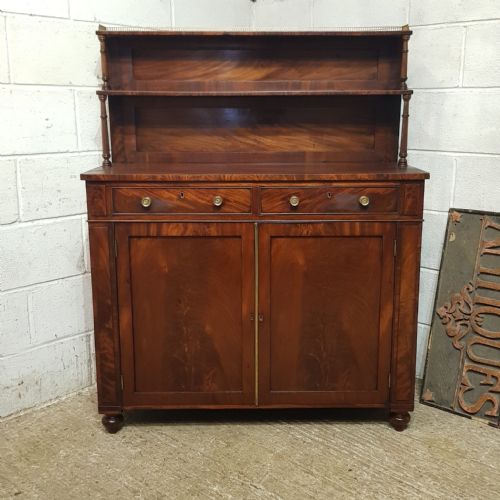
A regency tiered sideboard offers a striking multi-level silhouette designed for elegant dining rooms, combining practical display space with refined cabinet storage.
Regency Tiered Sideboard
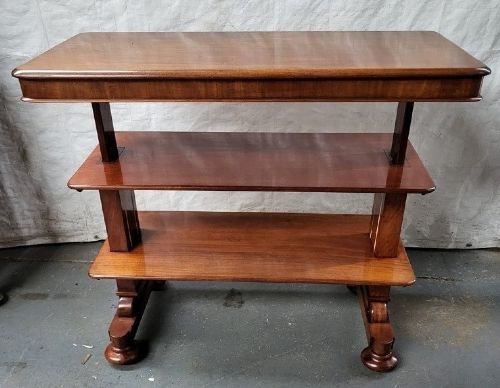
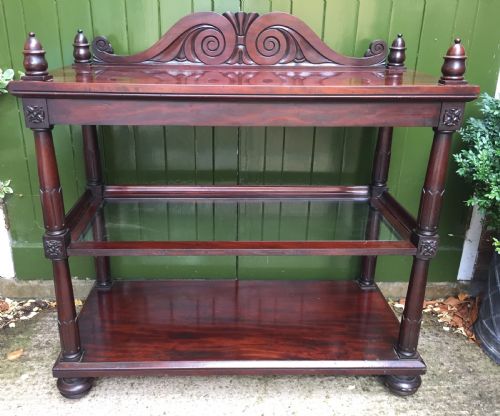
When searching for a regency tiered sideboard, buyers encounter a variety of multi-tiered dining furniture including buffets, chiffoniers, and etageres. Most examples found here originate from the nineteenth century, particularly the Regency, George IV, and William IV periods, showcasing classic architectural proportions.
These pieces typically feature graduated upper shelves supported by columns or spindles above a lower cabinet or serving surface. Mahogany remains the predominant timber, often enhanced by brass inlay, ebonised details, or rich palisander veneers, serving both functional dining room storage and display roles.
Materials and construction
Cabinet makers utilised dense native and imported timbers, primarily solid and veneered mahogany, alongside rosewood, satinwood, and palisander. Construction relied on traditional joinery techniques, ensuring sturdy vertical tiers and stable lower carcases.
Decorative embellishments involved fine brass inlay, parcel gilt accents, and delicate gold leaf detailing. Upper shelving structures were securely fixed with turned wooden columns or brass rods, supporting the tiered architectural arrangement.
Some nineteenth century dining pieces double as metamorphic writing desks, proving our ancestors loved secret compartments as much as dinner parties.
Distinctions in craftsmanship
Superior examples display exceptional selection of figured mahogany veneer and precise cabinet maker joinery. Finer pieces incorporate refined details such as fine brass stringing, well-turned supports, and integrated writing drawers.
Construction weight and the balance of the graduated tiers separate standard items from superior workshop production. Original brass hardware, careful timber matching, and crisp carving elevate the standing of individual pieces.
Gillows of Lancaster and London
The Regency Tiered Sideboard Glossary
- Chiffonier
- A small sideboard or low cabinet equipped with shelving above, commonly utilised in nineteenth-century dining rooms for serving and display. These pieces evolved from simpler side cabinets to feature decorative upper tiers.
- Buffet
- A side table or low cupboard intended for food service and tableware storage. In nineteenth-century variants, multi-tiered shelving was added to display silver and porcelain.
- Etagere
- A piece of furniture consisting of a set of open shelves for displaying small objects or serving. Tiered sideboards often incorporate etagere principles in their upper structures.
- Palisander
- A dense, dark exotic timber akin to rosewood, utilised for distinctive grain patterns in high-status cabinet work. It provided a dramatic contrast when combined with lighter brass inlay.
- Brass inlay
- The technique of embedding thin strips or geometric shapes of brass into timber surfaces for ornamentation. This decorative method frequently highlights the borders of Regency cabinet doors and tiers.
Regency Tiered Sideboard: Frequently Asked Questions
What is a tiered sideboard?
A tiered sideboard is a multi-level serving and display furniture form featuring shelves above a cabinet base.
Cabinet makers designed these pieces for nineteenth-century dining rooms to hold silverware, porcelain, and serving dishes.
How do I identify a Regency piece?
Regency items exhibit classical architectural lines, often incorporating turned supports, brass inlay, and rich mahogany timbers.
These characteristics distinguish them from later Victorian interpretations through leaner proportions and restrained ornamentation.
Where were these pieces used?
Dining rooms and formal entertaining spaces housed these multi-tiered cabinets for serving meals and displaying valuables.
The upper shelves held decorative items while the lower cupboards stored dining room linen and tableware.
What woods were used?
Cabinet makers predominantly selected solid mahogany and figured mahogany veneers for their strength and rich dark tone.
Alternative materials like palisander, rosewood, and satinwood appeared in specific workshop designs alongside decorative brass accents.