


Regency Teapoy Table
A regency teapoy table is a fitted chest for loose tea elevated on a stand, offering sophisticated storage and classic form for any room.
What a regency teapoy table is
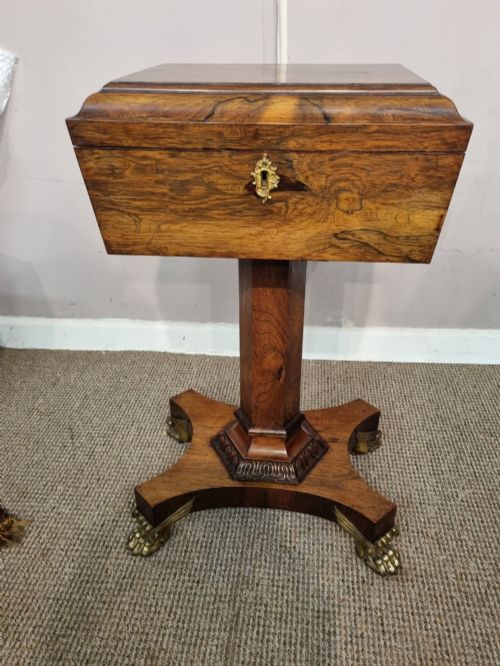
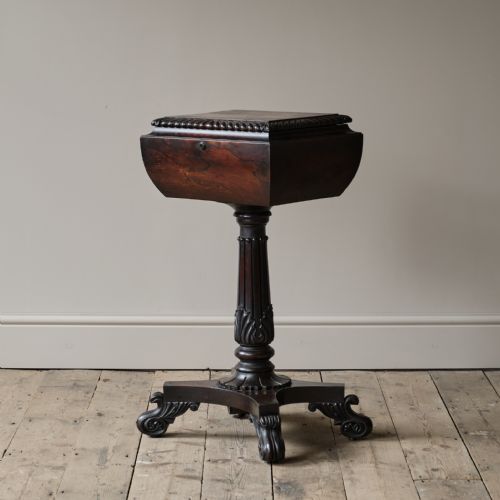
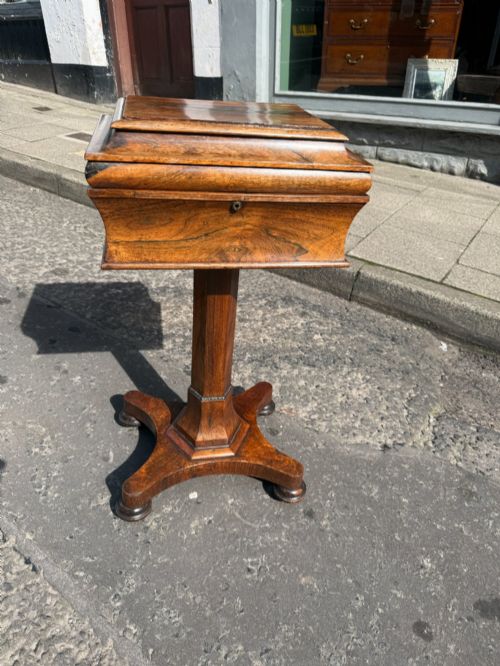
A regency teapoy table combines the function of a tea container with a sturdy support, emerging during periods spanning the Georgian, Regency, and Victorian eras. These pieces often serve double duty as work boxes or glasses stands alongside their primary purpose of tea storage.
The design reflects the immense social importance of tea in British domestic life, providing a secure and decorative receptacle for valuable tea leaves. Many surviving examples date from the Regency period through to the William IV and later nineteenth century.
How they were made
Cabinet makers utilised dense timbers such as mahogany and rosewood, often applying fine veneers like burr maple or burr elm to the exterior surfaces. Interior compartments frequently housed caddies and glass mixing bowls for preparing the brew.
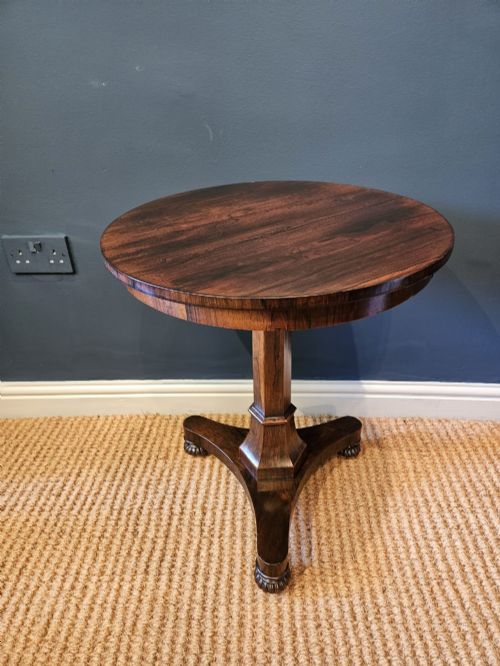
Support structures include carved pillars, tripod bases, and brass details, demonstrating sophisticated joinery and turning techniques. Individual pieces show the hand of skilled workshops through detailed woodwork and fitted interiors.
Retail Price Guide 2026
Typical UK retail prices for regency teapoy table, calculated from the Sellingantiques database of over a million retail prices indexed since 2003. This retail price guide relies exclusively on Sellingantiques data; no external sources or auction records are used, so the figures do not describe the wider market.
The records show materials spanning brass, rosewood, mahogany, burr maple, hardwood, glass, and fabric across multiple nineteenth-century styles.
What varies in quality
The distinction between standard and superior pieces rests on the choice of timber and the complexity of the interior fittings. Richly figured rosewood and burr veneers denote a higher grade of manufacture than plain hardwoods.
The finesse of the carving on the pedestal and the presence of original brass mounts or glass components elevate an example above simpler utilitarian versions. Maker attribution, such as stamps by Gillows or Irish workshops, further distinguishes exceptional pieces.
Gillows·Strahan of Dublin
The Regency Teapoy Table Glossary
- Teapoy
- A small chest designed specifically for holding loose tea, mounted on a pedestal or legs. This form evolved to protect precious tea leaves from dampness and theft in historic households.
- Caddy
- A small container or compartment within the teapoy designed to hold different varieties of tea leaves. Multiple caddies allowed hosts to offer guests a choice of blends.
- Veneer
- A thin layer of highly figured wood, such as rosewood or burr maple, applied over a secondary timber base. This technique displayed decorative grain patterns while maintaining structural stability.
- Tripod base
- A three-legged support structure commonly found beneath the central pillar of smaller tables and teapoys. It provided steady footing on uneven historic floorboards.
Frequently Asked Questions
What was a regency teapoy table used for?
These tables stored precious loose tea leaves in secure internal caddies away from humidity and light. They also functioned as work boxes or stands for glasses in the drawing room.
Hosts used the internal compartments to mix and dispense tea blends for guests during formal social gatherings.
Where should I place a teapoy table at home?
A teapoy table works well as an accent piece beside a sofa or chair in a living room or study. Its compact footprint allows it to function as a small lamp table or display surface.
Keeping the piece away from direct sunlight and heat sources protects delicate wood veneers and historic finishes.
What timbers were used for these tables?
Cabinet makers predominantly used mahogany and rosewood for the main structure and exterior surfaces. Exotic grains like burr maple and burr elm provided decorative contrast on lids and panels.
Secondary woods formed the internal partitions and hidden framing beneath the fine exterior veneers.