

Regency Table Top Desk
A regency table top desk provides a compact, writing surface suited for correspondence, frequently found in mahogany and rosewood.
Regency Table Top Desk
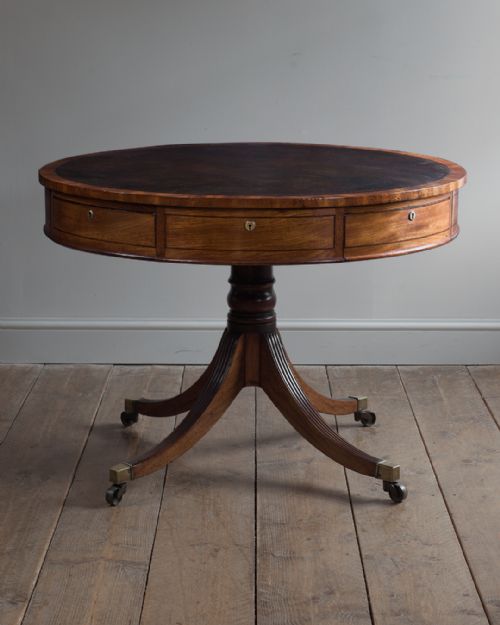
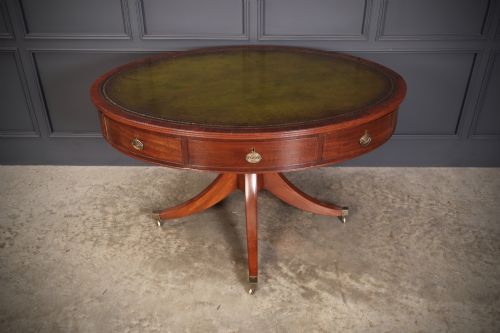
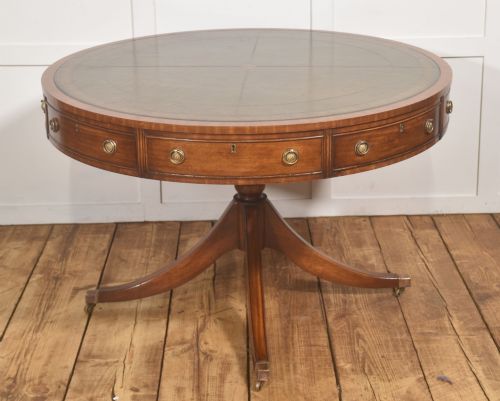
A regency table top desk encompasses writing tables, drum tables, and library tables originating from the nineteenth century alongside later revival pieces. Mahogany and rosewood form the primary bodies of these writing surfaces.
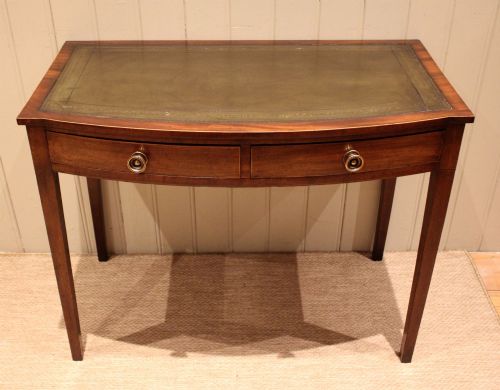
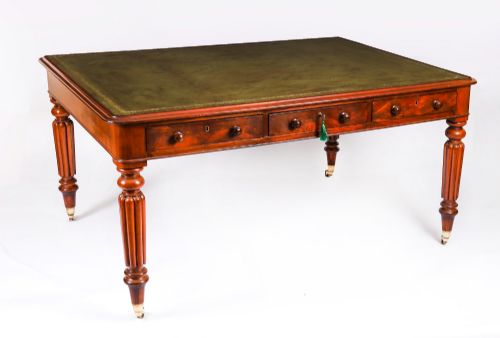
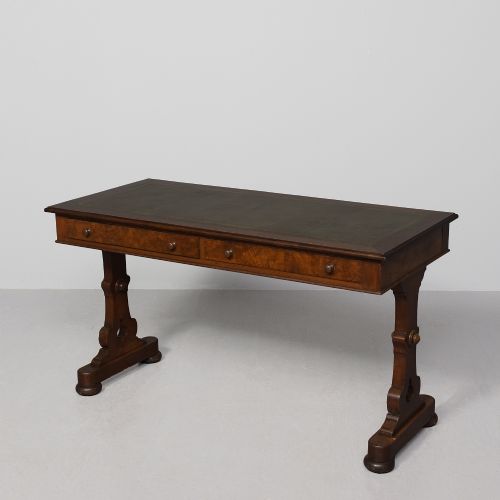
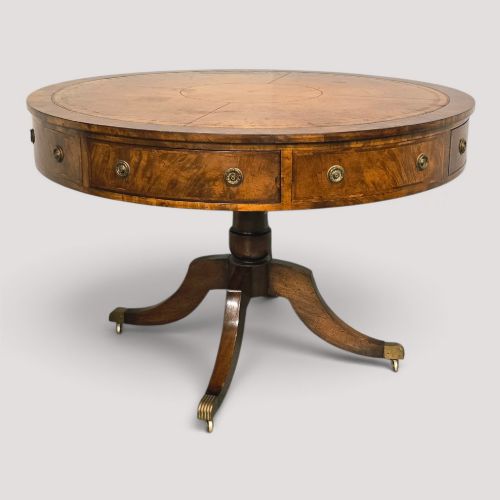
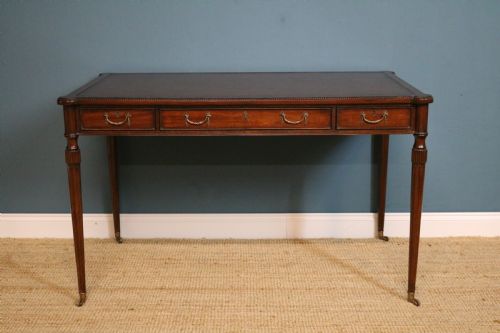
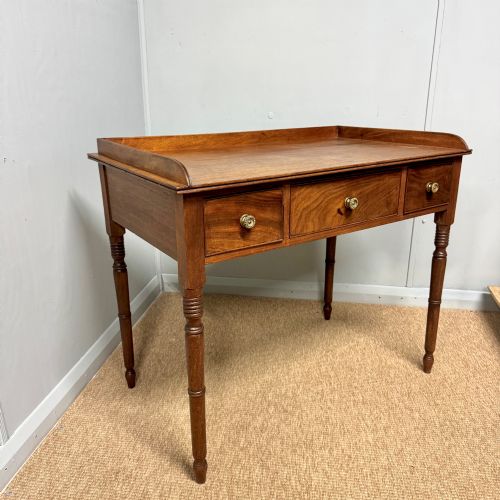
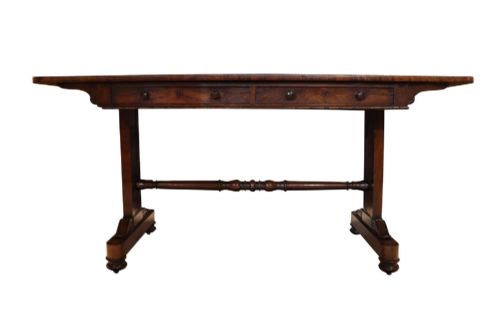
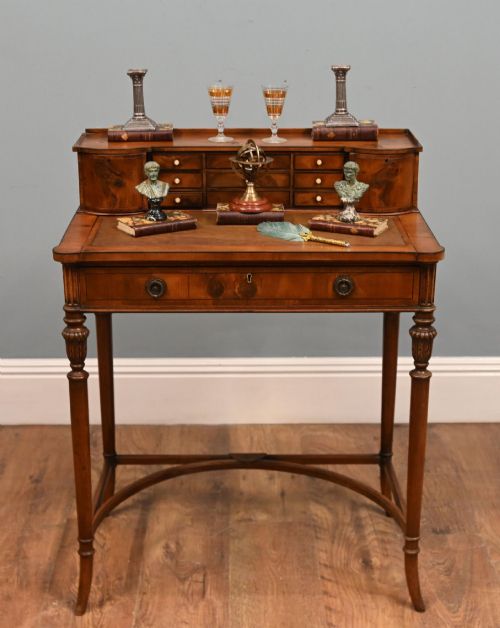
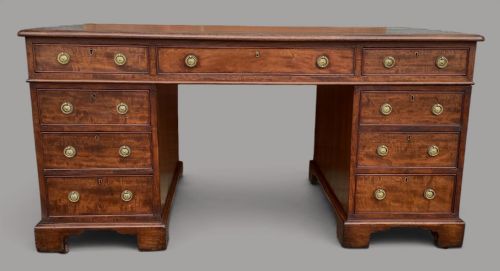
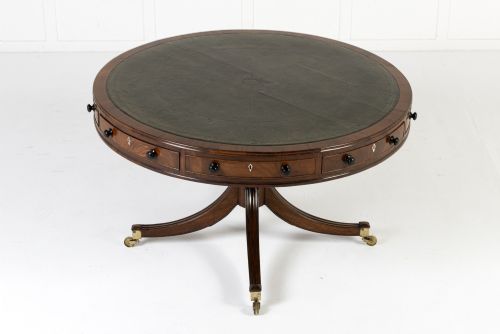
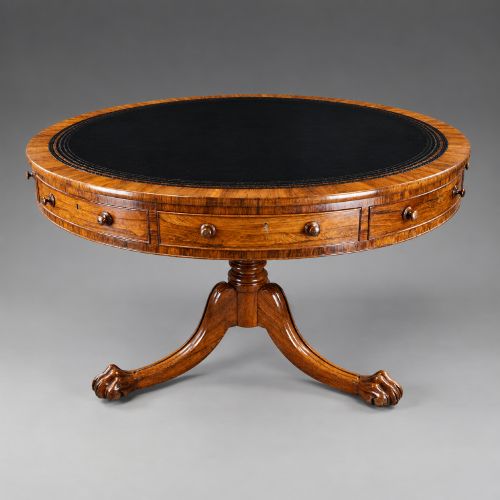
The selection ranges from pedestal desks and drum tables to writing and side tables equipped with drawers. Many examples incorporate leather inserts on the writing surface, alongside gallery tops or brass details.
Pieces span multiple periods including Georgian, Regency, William IV, and later revival eras dating into the twentieth century. These objects served domestic writing and study needs in period homes.
How They Were Made
Cabinet makers utilised dense hardwoods such as mahogany and rosewood, frequently incorporating oak for secondary framing and internal drawer construction. Brass mounts, handles, and gallery rails provided functional and decorative accents.
Writing surfaces were typically inset with tooled leather panels to provide a smooth plane for quill and ink. Construction methods involved traditional joinery suited to freestanding library tables and pedestal desks.
Regency Table Top Desk Retail Price Guide 2026
Typical asking prices for regency table top desk among the pieces listed under this phrase on Sellingantiques today, from the lower quarter to the upper quarter. They describe what is for sale here now, not the wider market.
Listings feature woods such as mahogany, rosewood, oak, and painted wood, alongside brass and glass elements across nineteenth-century and revival periods.
What Varies in Quality
The choice of timber grain and the depth of the natural patina distinguish superior examples from simpler ones. Figured mahogany or rosewood veneers reflect greater initial expenditure by the original maker.
Execution of secondary details, including brass fittings, carved giltwood, and the quality of the leather inlay, separates standard utilitarian pieces from workshop productions attributed to makers like Gillows.
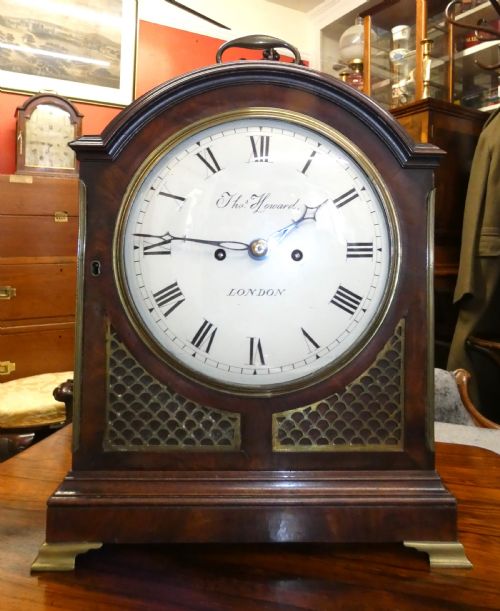
Thomas Howard·James Mein of Kelso·Gillows
The Regency Table Top Desk Glossary
- Drum Table
- A circular library table with a deep top containing alternating drawers and dummy drawers around the perimeter. These tables often stand on a central pedestal with branching legs.
- Pedestal Desk
- A freestanding writing desk featuring two banks of drawers supporting a rectangular top. They allow access from multiple sides when placed in the centre of a room.
- Gallery Top
- A low raised rim of brass or wood running along the edge of a table or desk top. This feature prevents items from rolling off the surface.
- Library Table
- A large freestanding table utilised for reading and writing rather than dining. They often incorporate multiple drawers beneath the primary surface.
- Partners Desk
- A large writing table designed for two people to work opposite one another, featuring drawers on both longitudinal sides.
Regency Table Top Desk: Frequently Asked Questions
What is a regency table top desk?
A regency table top desk is a compact writing surface or portable writing box designed for correspondence. These pieces date primarily from the early nineteenth century and utilise hardwoods like mahogany.
They sit upon existing tables or desks rather than standing independently on the floor. Many feature fitted compartments for ink and paper inside.
How were these tables used?
These tables served primarily for letter writing, reading, and managing household accounts. Gentlemen and ladies utilised them in libraries, drawing rooms, and studies.
Freestanding library and drum tables allowed books and writing implements to be kept close at hand in the middle of a room.
How do I identify the period?
Dating relies on timber selection, construction methods, and stylistic details associated with Georgian, Regency, and William IV eras. Early nineteenth-century pieces often feature solid mahogany or rosewood with hand-cut dovetails.
Later revival pieces from the twentieth century utilise similar forms but often display different secondary woods and modern hardware fixings.
Where should I place one?
These writing tables suit studies, living rooms, and bedrooms as functional accent furniture. Freestanding library and drum tables work well positioned in the centre of a room.
Smaller side tables and desks fit neatly against walls or beneath windows to receive natural light for writing.