

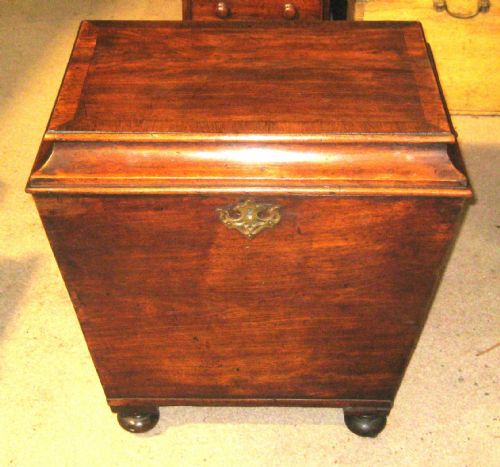

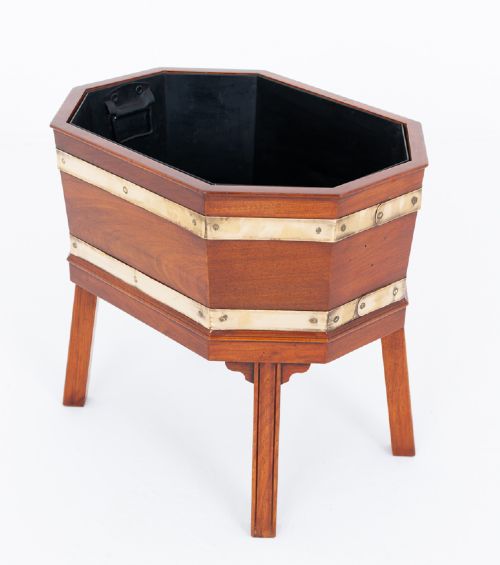


Regency Style Wine Cooler
A regency style wine cooler brings classic neoclassical proportion and rich mahogany to a room, serving as a striking focal point for hospitality.
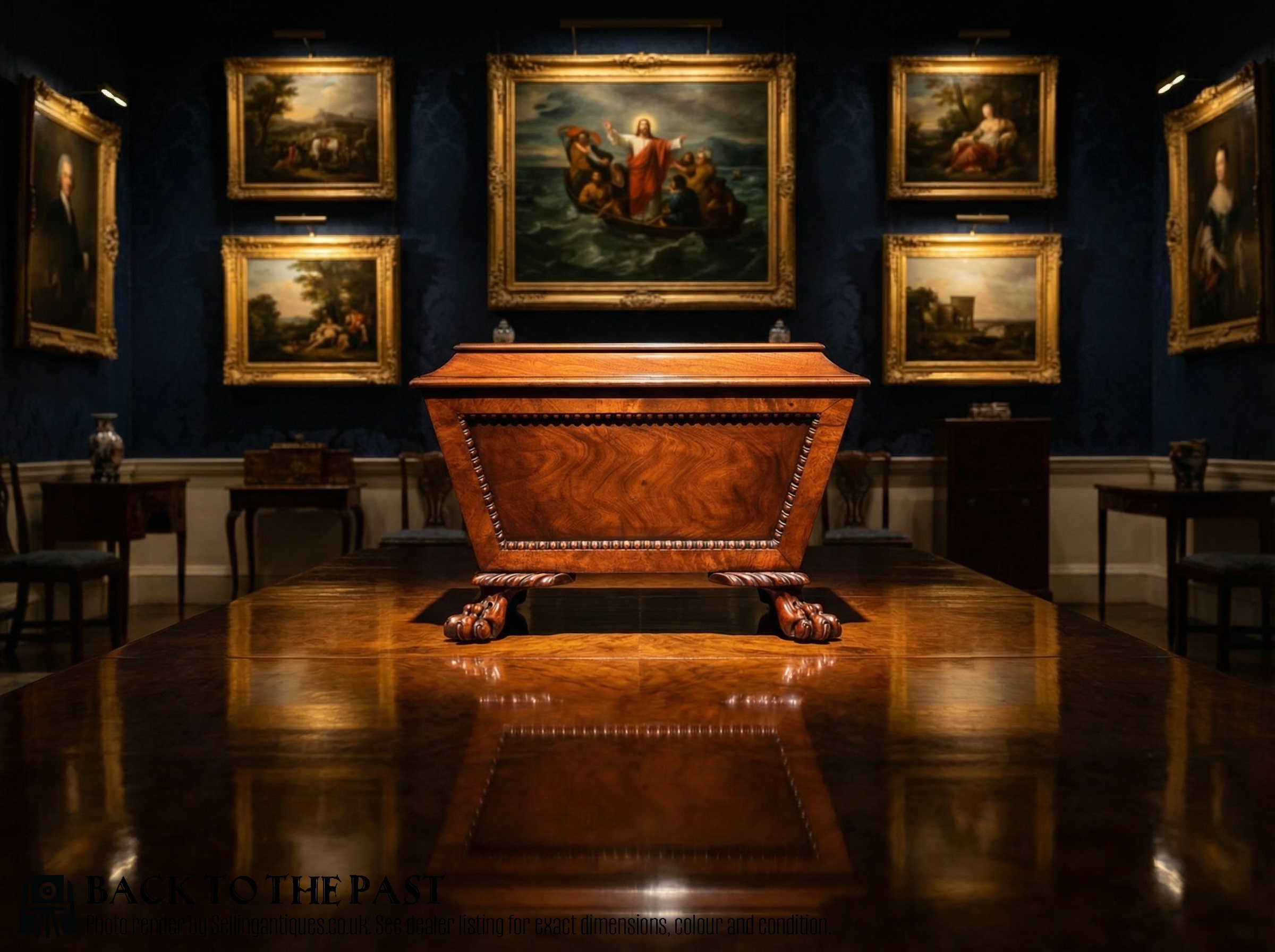
Regency Style Wine Cooler
A regency style wine cooler draws upon the architectural dignity of the Georgian and Regency periods, adopting forms such as the sarcophagus, the urn, and the grand cistern. These vessels served originally to chill bottles at the dining table or to hold plants, combining utility with formal display.
The pieces on this page span the early nineteenth century and later revivals from the nineteen-twenties and nineteen-thirties. Mahogany predominates alongside occasional examples in faux marble, brass, and porcelain.
Buyers frequently encounter mahogany wine coolers executed in the Regency or Dutch Empire style, often fitted with brass bands or handles. Alongside traditional wine coolers, related forms like jardinières, ice pails, and peat buckets appear in the selection.
How they were made
Makers utilised solid and veneered mahogany, frequently selecting timber with deep grain patterns to build the primary bodies of these coolers. Brass was commonly employed for drop handles, lion mask mounts, and reinforcing hoops.
Surface ornamentation relied on fine inlay work, gold leaf highlights, and painted faux marble effects to emulate ancient stone and bronze. Joinery techniques ensured sturdy construction for vessels intended to hold heavy loads of ice and liquid.
Regency Style Wine Cooler Retail Price Guide 2026
Typical asking prices for regency style wine cooler among the pieces listed under this phrase on Sellingantiques today, from the lower quarter to the upper quarter. They describe what is for sale here now, not the wider market.
The inventory spans the nineteenth century, including Georgian and Dutch Empire pieces, alongside nineteen-twenties and thirties revivals.
What varies in quality
Quality rests upon the selection of the mahogany timber and the crispness of any inlaid details or carved neoclassical motifs. Finer examples display meticulous attention to proportion, particularly in grand scale pieces such as faux marble cisterns.
The integrity of the metal mounts, whether brass bands or handles, contributes significantly to the overall presence of the cooler. The handling of secondary materials, from enamel to porcelain in associated ice pails, marks the distinction between standard workshop production and superior output.
Chamberlain Worcester
The Regency Style Wine Cooler Glossary
- Sarcophagus style
- A low, heavy box form with a sloping lid, mimicking ancient stone coffins. This shape was favoured for large mahogany wine coolers during the Georgian era.
- Jardiniere
- An ornamental pot or stand designed to hold plants or flowers. These often share the same grand scale and materials as wine coolers.
- Ice pail
- A smaller vessel used specifically for holding ice at the table. Examples from factories such as Chamberlain Worcester exhibit fine porcelain and patterned decoration.
- Peat bucket
- A deep wooden bucket with a metal liner, historically used for carrying peat to the fireplace. They frequently appear alongside wine coolers due to their similar coopered construction.
- Neoclassical
- A style inspired by the classical art and architecture of ancient Greece and Rome. It defines much of the Regency aesthetic seen in these pieces.
Regency Style Wine Cooler: Frequently Asked Questions
What is a regency style wine cooler?
A regency style wine cooler is a decorative container modeled after early nineteenth-century forms, designed to hold bottles and ice during dining.
They draw on neoclassical design principles, featuring mahogany, brass mounts, and classical shapes like the sarcophagus or urn.
How were these coolers originally used?
In the dining room, these vessels were filled with ice or cold water to chill wine and champagne before serving.
Over time, many similar forms were adapted to serve as planters, jardinières, or general display pieces within reception rooms.
How do I tell an original period piece from a later revival?
Dating relies on examining the timber grain, construction methods, and wear patterns native to the early nineteenth century versus twentieth-century revivals.
Pieces from the nineteen-twenties and thirties often replicate Regency and Georgian styles with different internal wear and modern finishing techniques.
What materials are most common in these pieces?
Mahogany is the primary wood seen across the selection, often complemented by brass handles, hoops, and decorative mounts.
Alternative materials include porcelain for ice pails, enamel, satinwood, and faux marble finishes on grand scale cisterns.