


Regency Style Glass Pendant
These regency style glass pendant fixtures bring classic brilliance to rooms through cut crystal drops, brass mounts and tiered silhouettes.
Regency Style Glass Pendant
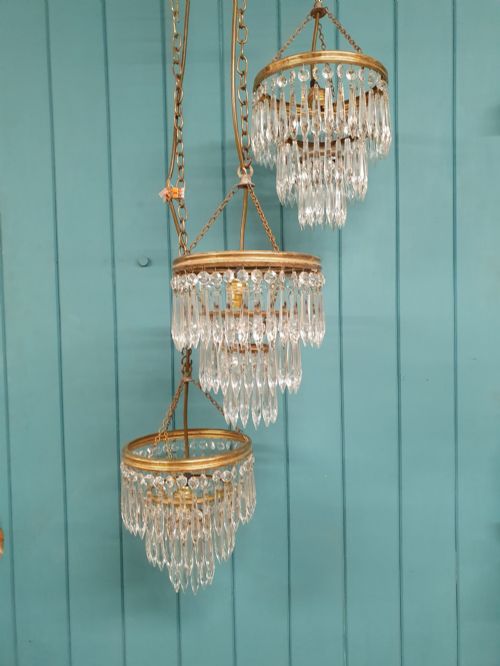
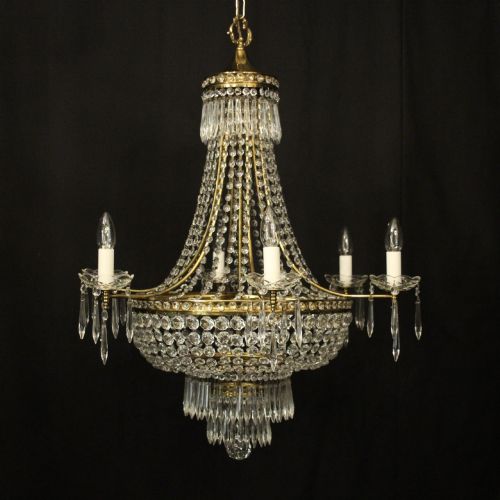
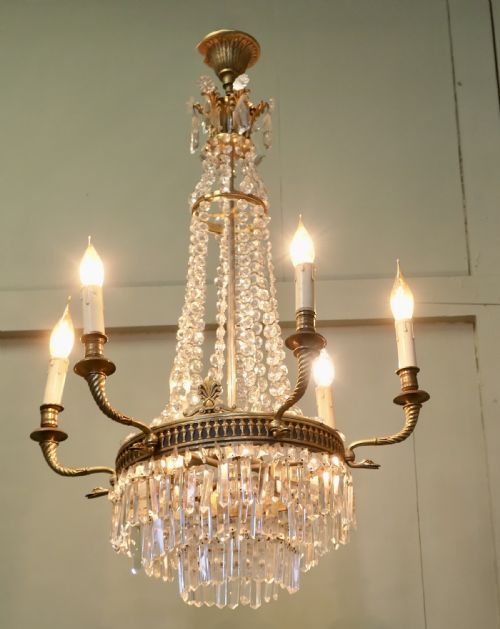
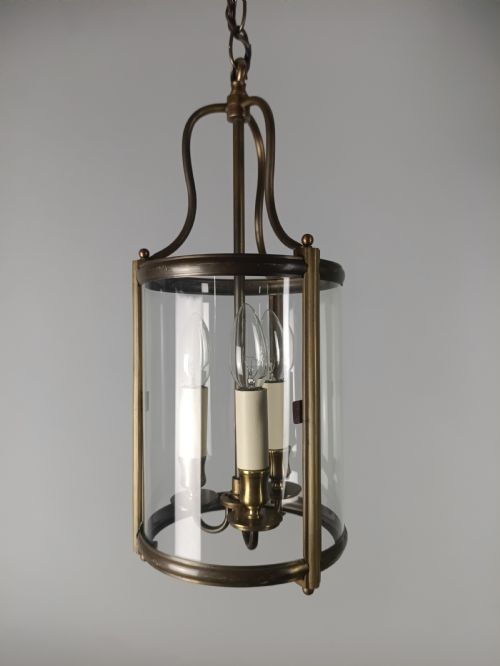
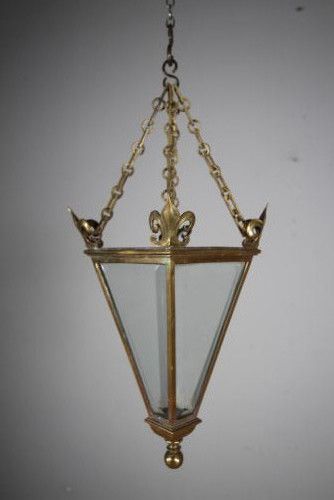
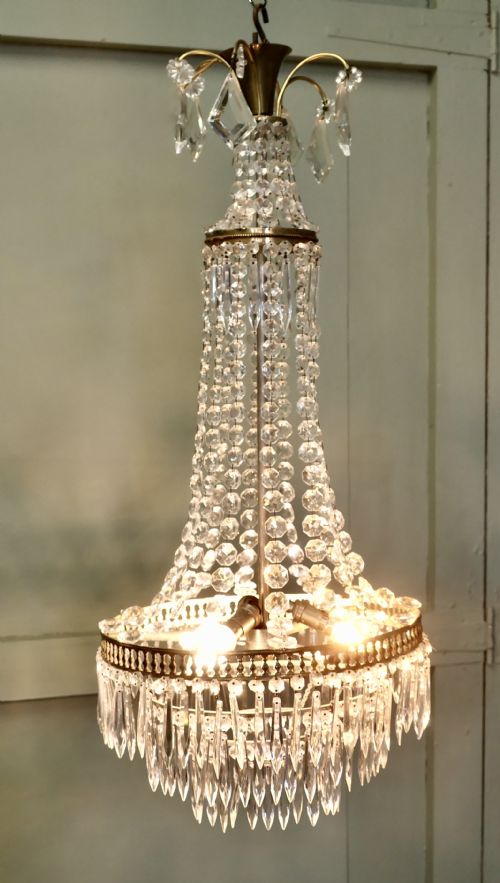
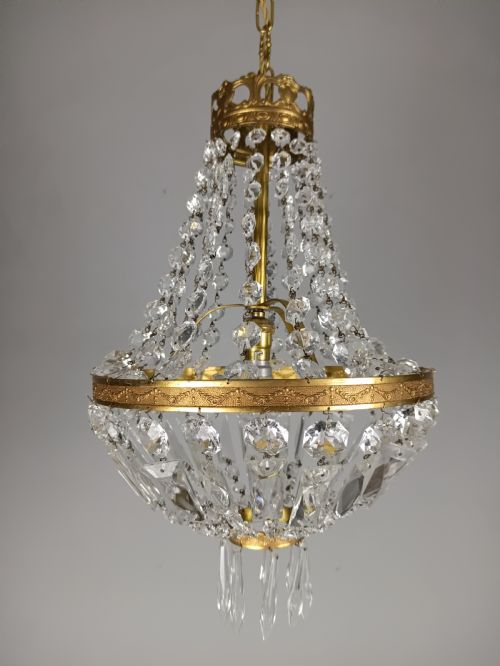
When you search for a regency style glass pendant, you are looking at ceiling lights that draw upon nineteenth century lighting traditions, often taking the form of bag or basket chandeliers, hall lanterns, and tent and waterfall configurations. The examples you encounter on this page span from the nineteenth century through the Edwardian era and into the 1930s, reflecting enduring classical tastes.
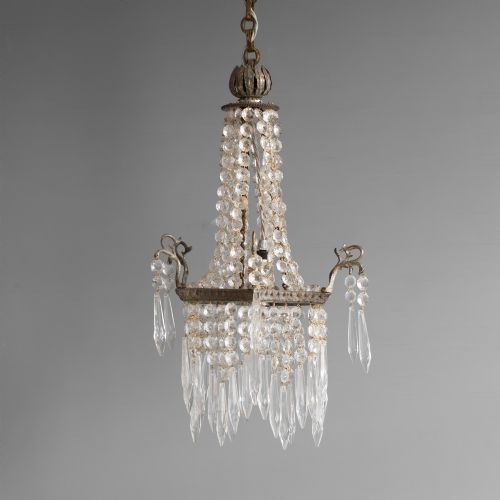
These fixtures frequently incorporate brass or gilded metal frames combined with extensive cut glass and crystal components. The forms range from compact single light lanterns and small spike chandeliers to grand multi tier arrangements suitable for larger spaces.
The style borrows heavily from French Empire and Grand Regency aesthetics, utilising structural tiers, swags, and drops to catch and refract light. While some pieces originate from the nineteenth century, many available examples date from the early decades of the twentieth century while faithfully maintaining historical proportions.
Distinguishing quality factors
Quality in these fixtures rests on the crispness of the glass cutting and the weight and finish of the metal mounts. Finer pieces display heavily faceted crystal that refracts light cleanly, paired with substantial cast brass or gilt bronze frames rather than pressed thin sheet metal.
The density and complexity of the glass dressing also separate tiers of execution, with superior examples featuring multi tier arrangements, dense bead swags, and matching cut drops rather than sparse or simplified glass assemblies.
Listings feature brass, gilded brass, and bronze alongside cut crystal and glass across nineteenth century and 1930s periods.
Wedgwood
The Regency Style Glass Pendant Glossary
- Tent and waterfall
- A chandelier configuration featuring an upper conical section of glass strings surmounted by a crown, dropping down into a cascading arrangement of crystals below.
- Bag chandelier
- A lighting form where strings of glass drops gather from a top metal ring down to a lower central point, creating an enclosed bag or basket profile.
- Cut glass
- Glass that has been mechanically ground and polished with wheel cuts to create sharp facets that maximise light refraction.
- Gilded brass
- Brass coated with a thin layer of gold leaf or gilt finish to impart a rich, decorative metallic surface.
- Spike chandelier
- A vertical lighting design terminating in a central spike or finial, often decorated with horizontal tiers of glass swags.
Regency Style Glass Pendant: Frequently Asked Questions
How do I hang a heavy glass chandelier safely?
Hanging these fixtures requires securing them directly into ceiling joists or structural noggin pieces using a rated ceiling hook capable of supporting the combined weight of the metal frame and glass components.
Professional installation by an electrician ensures the electrical box and wiring can safely carry the weight of multi tier brass and crystal lighting.
What rooms suit a bag or tent chandelier?
These pieces work well in hallways, dining rooms, and high ceilinged living spaces where their downward projection and reflective glass can be fully appreciated. Smaller single light versions fit comfortably in compact entryways or bedrooms.
Matching the scale of the fixture to the room dimensions ensures the proportionate balance intended by the original design.
How do I clean cut glass drops?
Cleaning involves wiping individual glass and crystal pieces with a mild soapy solution and a soft cloth while the fixture remains supported, or removing them entirely for a thorough wash.
Careful handling prevents chipping the faceted edges of nineteenth and early twentieth century glass components during maintenance.
How can I tell an Edwardian piece from a nineteenth century one?
Distinguishing periods relies on examining the casting quality of the brass mounts, the wiring methods if original, and the specific composition of the glass drops. Earlier nineteenth century examples often feature hand finished bronze or heavy brass components.
Edwardian and 1930s interpretations frequently utilise standardised mounting hardware alongside traditional cut crystal configurations.