
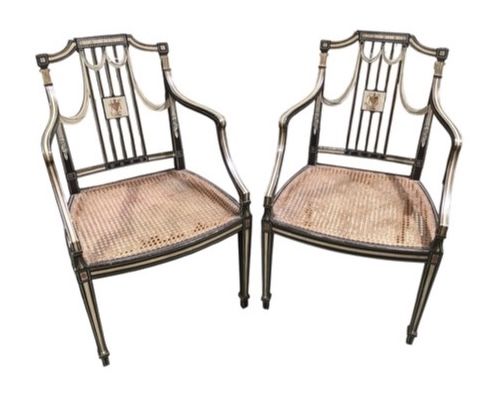
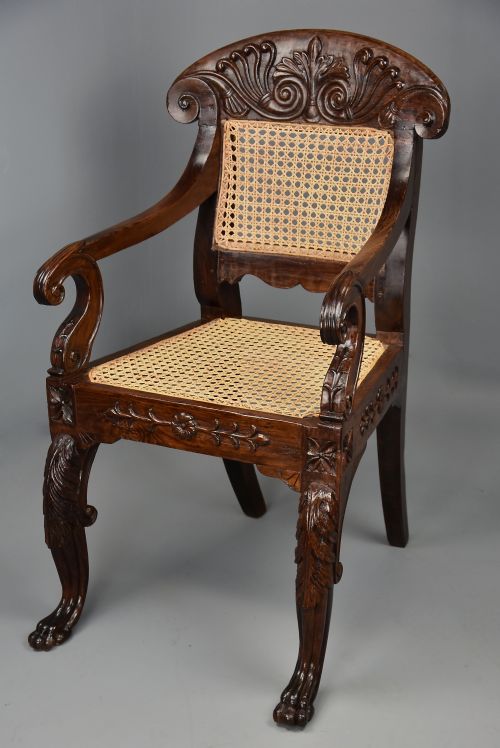


Regency Style Cane Chairs
Regency style cane chairs bring classical architectural lines and woven seating together, offering light frames and resilient panels for everyday rooms.
Regency Style Cane Chairs
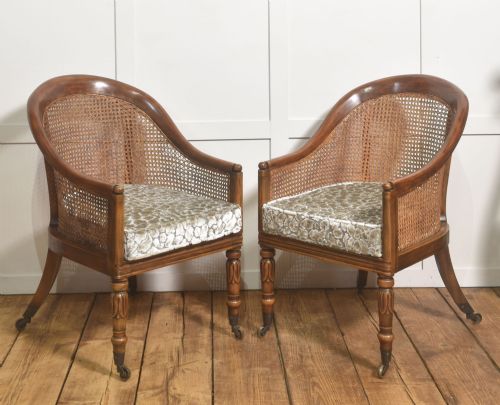
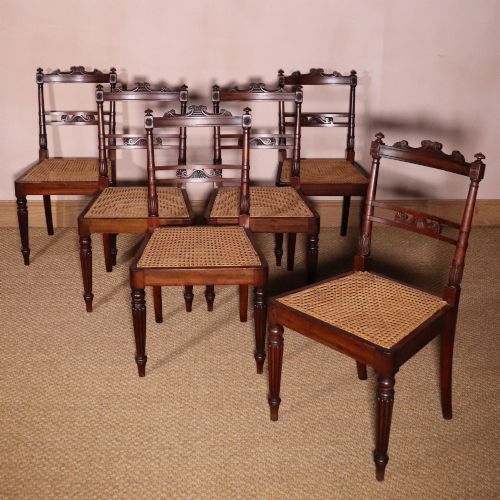
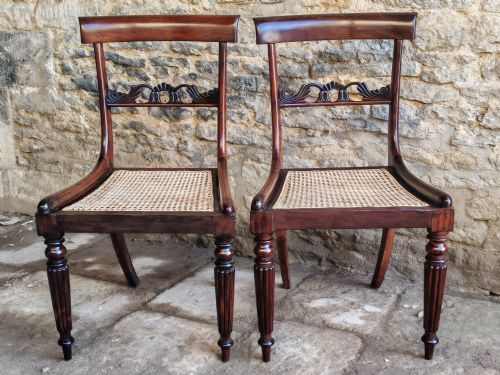
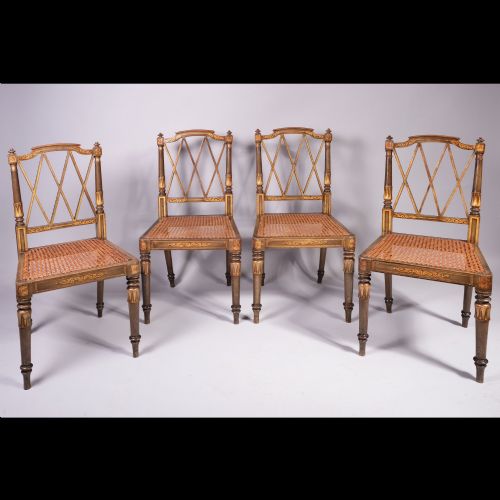
Regency style cane chairs draw on the classical forms of the early nineteenth century, mixing upright side chairs, library armchairs, and matching sets for the dining room. When buyers search for regency style cane chairs, they encounter pieces ranging from period originals to revival pieces made across the following century.
The inventory on this page spans dining chairs, armchairs, and hall chairs alongside larger forms such as settees and window seats. Construction dates stretch from the Georgian and Regency periods through Victorian decades and into revival eras including nineteen ten and nineteen twenty.
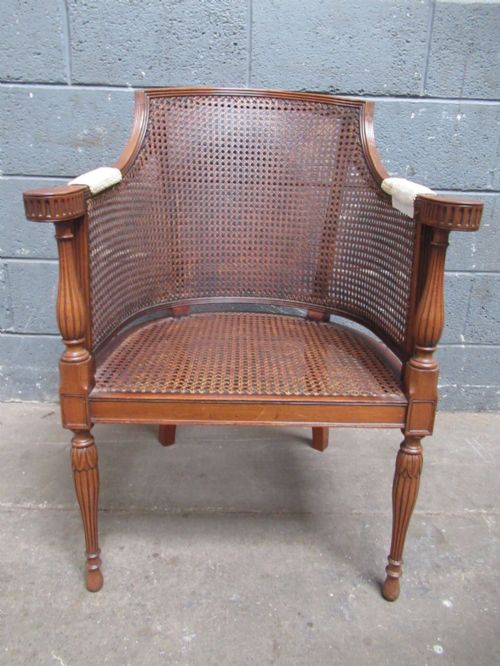
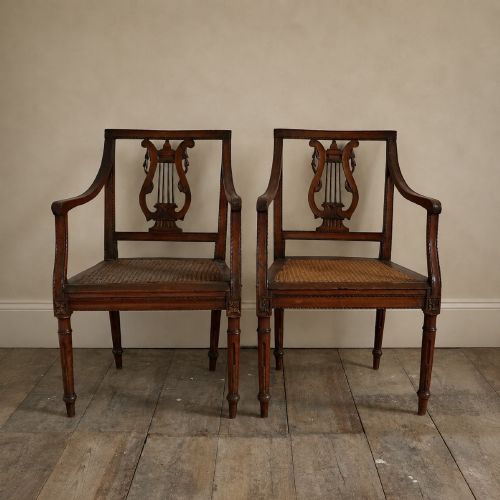
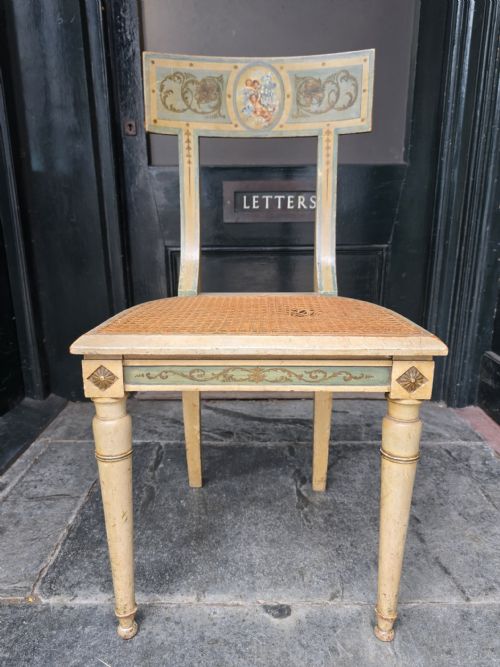
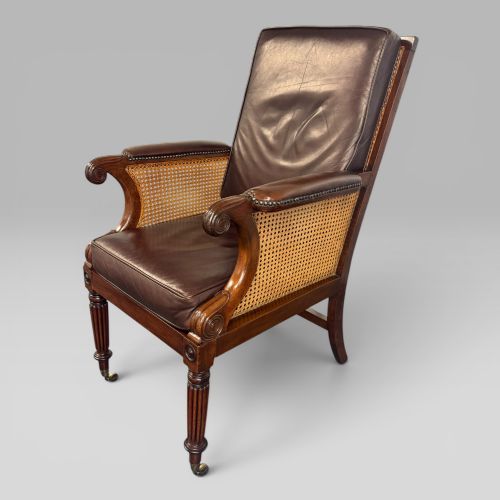
Structural variations include open armchairs, tub shapes, and lyre backs alongside specialised pieces like library bergères and children's chairs. Woods vary from native mahogany and oak to exotic padouk, ebony, and satinwood, often enhanced with paint, ebonising, or gilding.
How they were made
Cabinetmakers built these frames from timbers like mahogany, walnut, and oak, frequently employing ebonised wood, simulated rosewood, or painted finishes to mimic costlier materials. Skilled turners shaped bamboo-turned members and curved rails, whilst joiners secured classical elements such as curule bases and lyre splats.
Woven cane forms the characteristic seat and back panels, offering a flexible and durable surface that holds tension across the frame. Metal components like brass add subtle highlights, while secondary materials such as leather, fabric, and squab cushions provide additional padding where specified.
Listings span the nineteenth century, Regency, and Georgian periods, alongside twentieth-century revivals from nineteen ten, nineteen twenty, and nineteen thirty.
What varies in quality
The refinement of the carving and the purity of the neoclassical proportions dictate the visual success of the piece. Crisp detailing on elements like lyre backs, turned legs, and painted decoration separates master cabinet work from simpler workshop output.
The integrity of the woven cane work and the selection of timber grain heavily influence the overall standard. Denser hardwoods and tightly woven cane panels demonstrate superior construction that endures across generations of use.
Gillows·Richard Hicks Bridgens
The Regency Style Cane Chairs Glossary
- Bergère
- An enclosed upholstered armchair with closed sides, frequently fitted with cane panels in the Regency style. This form provides a deep, comfortable seat suited to libraries and drawing rooms.
- Cane
- Woven material made from the split outer bark of rattan palms, utilised for resilient and lightweight chair seats and backs. It offers flexibility while maintaining structural support.
- Ebonised
- Wood treated with a dark finish to imitate expensive ebony. Cabinetmakers employed this technique to achieve stark contrast against gilt highlights or light cane panels.
- Curule
- An ancient Roman X-shaped magistrate's chair style adopted by Regency designers for elegant open armchairs. The crossed legs create a dynamic silhouette.
- Lyre back
- A chair splat shaped in the exact contour of a classical stringed musical instrument. This motif defines many fine Regency dining and side chairs.
Regency Style Cane Chairs: Frequently Asked Questions
What defines a regency style cane chair?
These pieces draw inspiration from early nineteenth century classical design, featuring clean architectural lines, curved wooden frames, and woven cane inserts.
They appear in forms ranging from simple side chairs to elaborate library armchairs with painted or ebonised surfaces.
How do I care for cane seats?
Keep the woven cane hydrated by wiping it occasionally with a damp cloth to prevent the natural fibres from becoming brittle.
Avoid placing these chairs in direct sunlight or beside intense heat sources which can dry out the rattan.
Are all these chairs from the nineteenth century?
The selection includes genuine period antiques from the early nineteenth century alongside twentieth century revival pieces made in nineteen ten and nineteen twenty.
Craftsmen across different eras reproduced these classical styles to match changing interior tastes.
Where were these chairs used historically?
Dining chairs populated formal dining rooms, while larger bergère armchairs found places in quiet libraries and drawing rooms.
Lighter hall chairs and window seats were positioned in corridors and alcoves to provide occasional seating.