

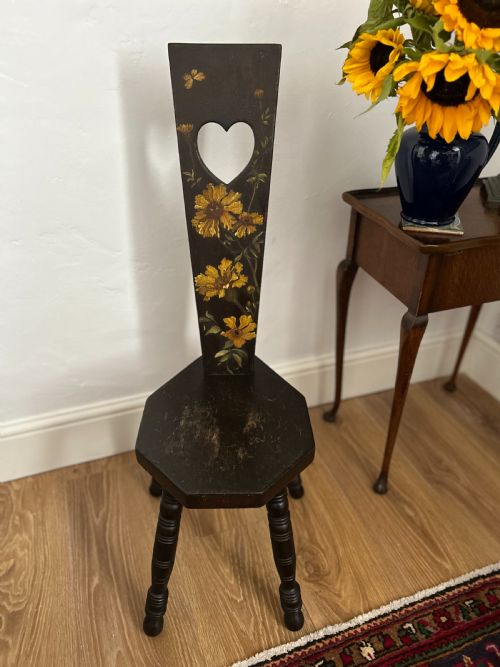


Hand Painted Wooden Chairs
Hand painted wooden chairs bring colour and narrative to a room, offering functional seating finished with applied decoration.
Hand Painted Wooden Chairs
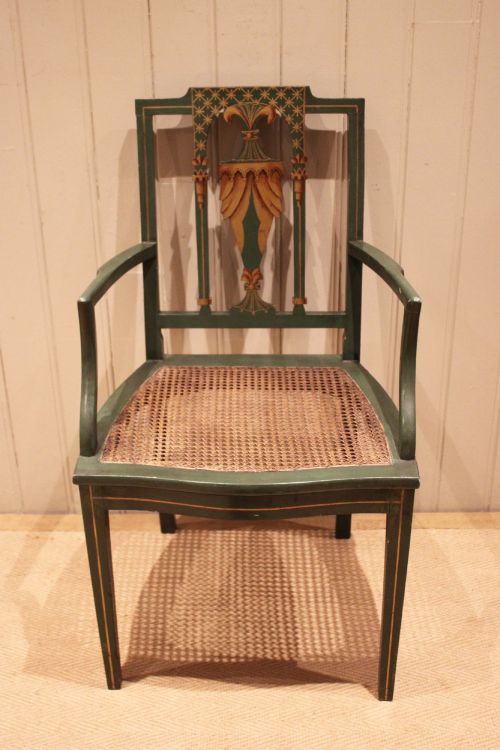
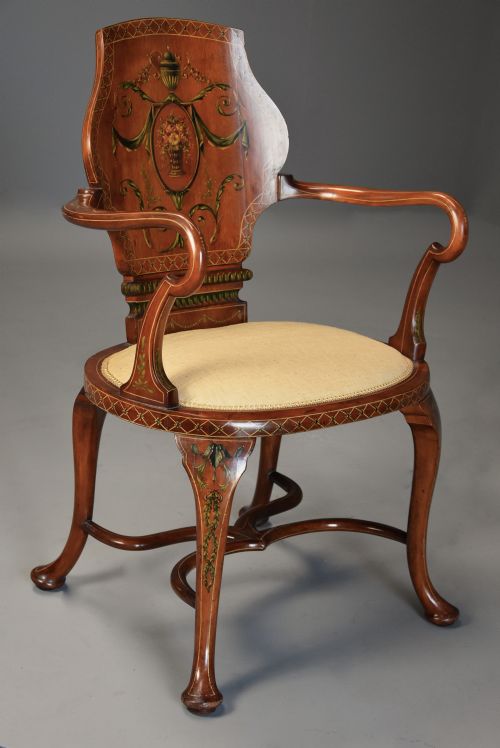
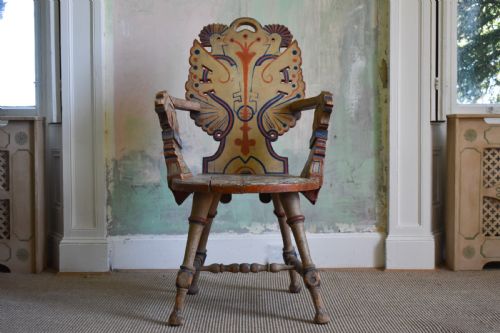
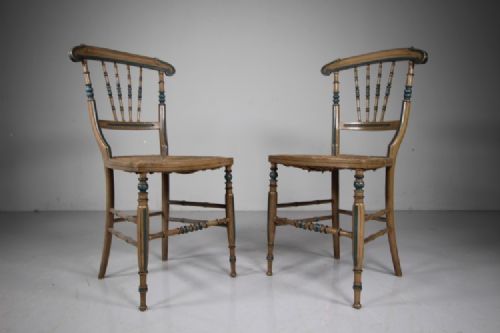
Hand painted wooden chairs encompass a diverse range of forms, from Regency dining sets and elbow chairs to folk art armchairs and childs high chairs. When you browse hand painted wooden chairs, you encounter pieces spanning the eighteenth century through to the early twentieth century, drawing on English, Scandinavian, Welsh, Venetian, Moroccan, French, and Indian traditions.
The selection on this page leans heavily toward nineteenth-century examples and Edwardian interpretations of earlier Georgian and Regency styles. You will find single accent chairs, pairs, and matched sets designed for occasional use, dining, or decorative display.
How they were made
Makers utilised native and exotic timbers such as pine, satinwood, and various hardwoods, often combining turned or carved wooden frames with woven cane seats or upholstered fabric pads. Structural joinery relies on traditional methods appropriate to each period, supporting the decorative surfaces above.
Decoration was applied directly to the wood using paint, frequently incorporating hand-painted botanical details, folk motifs, or classical Regency taste patterns. Some surfaces employ layered pigments and protective varnishes to withstand daily use while preserving the delicate artwork.
Spinning chairs were traditionally low-seated and narrow, built to allow women to sit close to the spinning wheel while working.
What varies in quality
Quality rests primarily in the execution and preservation of the painted surface, where crisp brushwork and original decorative schemes elevate a piece significantly. Finer examples display deliberate proportions and sophisticated stylistic references, whether adhering to Hepplewhite lines or provincial folk art traditions.
The integrity of the underlying wooden frame and the tightness of any cane work also determine overall standard. Pieces retaining their early or original paint layers command greater interest than those subjected to later overpainting.
The Hand Painted Wooden Chairs Glossary
- Satinwood
- A durable timber with a characteristic natural sheen, highly favoured in the eighteenth and nineteenth centuries for decorative cabinetwork and fine painted chairs.
- Cane seat
- A seating surface woven from peeled rattan strips, offering lightweight flexibility. It appears frequently on formal dining and elbow chairs across the Georgian and Regency periods.
- Folk art
- Artistic production stemming from cultural traditions rather than academic training. In these listings, it encompasses provincial Scandinavian, Welsh, and continental European decorative painting.
Hand Painted Wooden Chairs: Frequently Asked Questions
How do I date an old painted chair?
Dating relies on assessing the timber species, construction joints, and the ageing characteristics of the paint layer beneath any surface dirt. Comparing the stylistic silhouette against documented period designs provides further chronological context.
Examining tool marks and the wear patterns on the seat and feet helps confirm whether the piece originates from the eighteenth, nineteenth, or early twentieth century.
Can I use these chairs for everyday dining?
Many of these chairs served as functional seating historically, particularly the dining sets and sturdy elbow chairs. Assessing the structural firmness of the joints ensures they can support regular weight.
Delicate satinwood or antique folk art pieces with fragile painted surfaces are often better suited for occasional use or accent placement to preserve the artwork.
How do I care for painted wooden surfaces?
Maintaining painted furniture requires keeping pieces away from direct sunlight and extreme humidity fluctuations to prevent the wood from moving and the paint from flaking. Dusting gently with a dry, soft cloth is sufficient for routine upkeep.
Avoid chemical polishes and modern solvents, as these can strip or soften historic paint layers and varnish.
What is a childs high chair in this context?
Childs high chairs are smaller domestic seating pieces raised on longer legs or designed with enclosed safety barriers for infants. They reflect the same decorative styles and painting traditions as adult furniture from their respective periods.
European and continental examples often incorporate folk painting or turned wooden spindles characteristic of rural workshops.