


Regency Silver Plate Candlesticks
Regency silver plate candlesticks bring genuine neo-classical elegance to a table, combining copper and silver fused together through traditional methods.
Regency Silver Plate Candlesticks
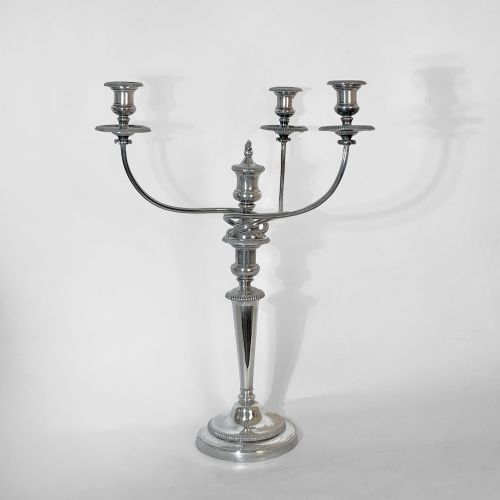
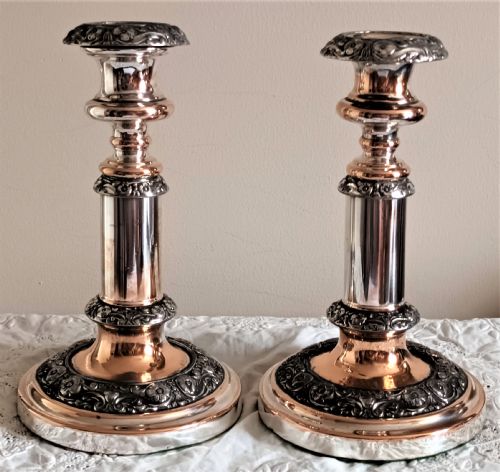
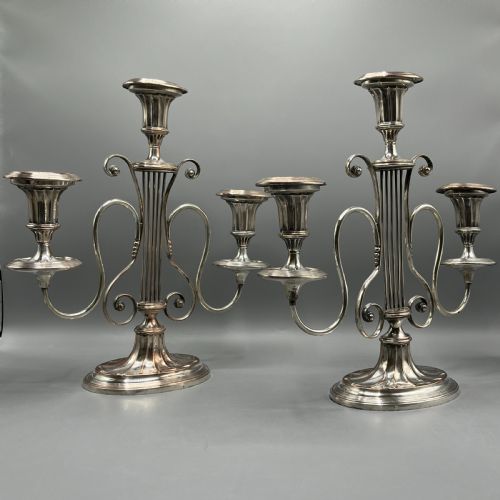
When you search for regency silver plate candlesticks, you encounter lighting designed for the dining tables and drawing rooms of the nineteenth century. The examples on this page are predominantly paired items shaped in the neoclassical style, ranging from simple columnar designs to telescopic forms and three-light candelabra.
Beyond standard sticks, the selection includes chambersticks intended for bedroom use and larger extending pieces. Most pieces date from the Georgian and nineteenth-century periods, with older eighteenth-century items and later nineteenth-century adaptations also appearing among the copper and silver plated forms.
How they were made
Makers produced these items by fusing a thin sheet of silver to a thicker copper ingot through heat and pressure, a technique known as Old Sheffield plating. This process created a durable material that allowed craftsmen to shape intricate sockets, bases and drip pans without using solid silver.
Workshops also employed silvered metal and applied distinct neoclassical motifs, such as reeding and gadrooning, to the cast components. Telescopic versions required precise metalworking to ensure the inner columns slid smoothly within the outer tubes.
Chambersticks often include a tiny matching silver cone snuffer resting neatly in the saucer to extinguish the flame without smoke.
What varies in quality
Quality in these pieces rests upon the crispness of the cast ornamentation and the preservation of the original plated surface. Superior items retain their thick silver layer without excessive copper show-through on the high points of the relief decoration.
The weight and balance of the base also distinguish finer examples from standard production, as does the mechanical integrity of telescopic mechanisms and screw-fit candelabra branches.
Blagden Hodgson And Co
The Regency Silver Plate Candlesticks Glossary
- Old Sheffield Plate
- A material made by fusing silver and copper together before rolling them into sheets. This technique predates electroplating and creates a distinct layered edge.
- Telescopic candlestick
- An adjustable lighting form featuring concentric sliding tubes. This design allowed the user to alter the height of the light source.
- Candelabra
- A branched lighting fixture holding multiple candles. Many regency examples utilise detachable branches to function as single candlesticks.
- Chamberstick
- A low candleholder fitted with a saucer base and a handle. It was traditionally used to light a person's way through a house at night.
- Neoclassical
- A design style inspired by classical Greece and Rome. It prioritises symmetry, clean lines and geometric ornament such as fluting.
Regency Silver Plate Candlesticks: Frequently Asked Questions
How do I clean old plated candlesticks?
Use a soft cloth and a gentle, non-abrasive silver cleaner designed for plated items. Avoid heavy rubbing to protect the thin silver layer over the copper base.
Regular dusting with a dry microfibre cloth prevents tarnish build-up without removing the historical patina accumulated over the centuries.
Are telescopic candlesticks fragile?
The sliding mechanism requires careful handling to prevent jamming or straining the inner brass and copper tubes. Lift them by the lower section rather than the sliding stem.
Gentle operation preserves the internal stop components that prevent the top section from separating entirely from the base.
What is the difference between Old Sheffield Plate and later plating?
Old Sheffield Plate involves mechanically fusing solid silver to copper under high heat before shaping. Later nineteenth-century methods relied on chemical electroplating.
You can often spot the older fused technique by looking at exposed edges where the darker copper shows beneath a distinct line of silver.
Can I use standard candles in these sticks?
Most antique sockets were made for specific taper sizes that are narrower than modern mass-market candles. You may need to pare down the base of a candle to ensure a secure fit.
Using beeswax tapers or proper adapter inserts prevents the candle from tilting and dropping hot wax onto the metal surface.
How do I identify a Regency period piece?
Regency items typically display clean neoclassical lines, reeded columns, and classical motifs such as acanthus leaves and gadrooned borders. They date from the early nineteenth century.
Comparing the construction methods, weight and base weighting to documented examples from the same era helps confirm the period.