
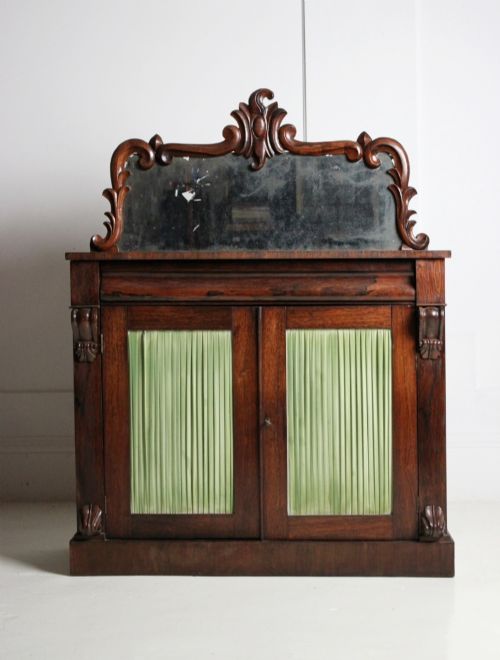
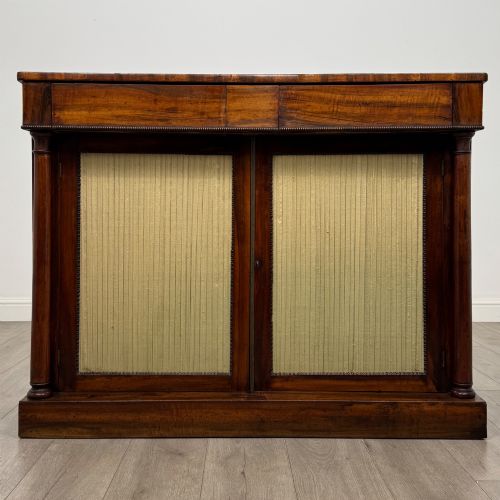
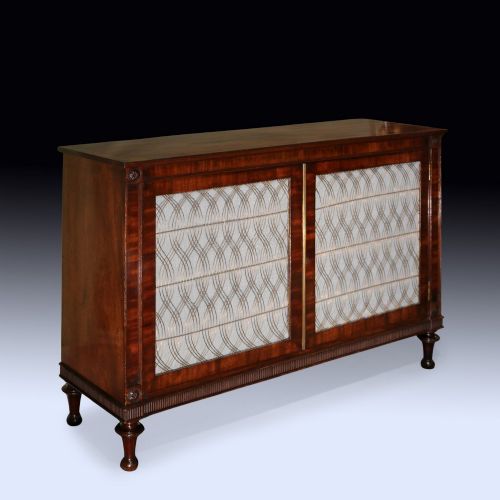


Regency Silk Pleated Cabinet
These regency silk pleated cabinet pieces are timber side cabinets with fabric-backed doors, offering concealed storage alongside delicate textures.
Regency Silk Pleated Cabinet
When you search for a regency silk pleated cabinet, you are looking at nineteenth-century storage furniture that combines rich woods with textile panels. These items typically manifest as side cabinets, chiffoniers, sideboards, and breakfront bookcases originating from the nineteenth century, including the Regency, George IV, William IV, and Victorian periods.
The most common examples on this page are rosewood or mahogany side cabinets and chiffoniers fitted with doors that feature pleated silk or fabric inserts. You will also encounter walnut pieces, sewing tables, and breakfront bookcases dating from around 1800 to 1890.
Originating in periods associated with grand Regency and classical revival styles, these cabinets served to display ornaments on top while keeping books or objects tucked behind fabric panels. The inclusion of silk pleating softens the dense timber architecture typical of nineteenth-century case furniture.
How they were made
Cabinet makers utilised dense hardwoods such as rosewood, mahogany, walnut, and simulated rosewood for the main carcase construction, often incorporating marble tops on specific chiffoniers. These woods provided a stable frame capable of supporting breakfront cornices and architectural mouldings.
Metalwork played a key structural and decorative role, with brass used for inlays, grilles, and mounts that accent the polished timber surfaces. Silk and fabric were pleated behind wooden or glazed door frames to create the signature textured panels recorded in the archive and current listings.
Periods represented span the nineteenth century, encompassing Regency, George IV, William IV, and Victorian eras alongside specific dates like 1800 and 1890.
What varies in quality
The selection of timber grain and the precision of cabinet construction set individual examples apart. Richly figured rosewood veneers and well-matched mahogany display a deeper visual harmony than plain or heavily restored surfaces.
Execution of decorative detailing dictates the standing of a piece. Finely fitted brass inlay work, intricate pen-work, and the careful mounting of marble tops demonstrate superior craftsmanship compared to standard production.
The Regency Silk Pleated Cabinet Glossary
- Chiffonier
- A low sideboard or cabinet featuring shelves and doors, popular during the nineteenth century. It typically includes a raised superstructure or gallery on the top surface.
- Breakfront
- A cabinet design where the central section projects forward from the flanking outer sections. This architectural arrangement adds depth and visual interest to side cabinets and bookcases.
- Palisander
- A dense tropical timber often referred to as rosewood, prized for its dark grain patterns. It was frequently utilised for high-status Regency furniture.
- Pen-work
- A decorative technique involving ink drawing directly onto a prepared timber surface to create detailed neoclassical motifs. This painstaking ornamentation appears on select Regency pieces.
Regency Silk Pleated Cabinet: Frequently Asked Questions
Where did people place these cabinets?
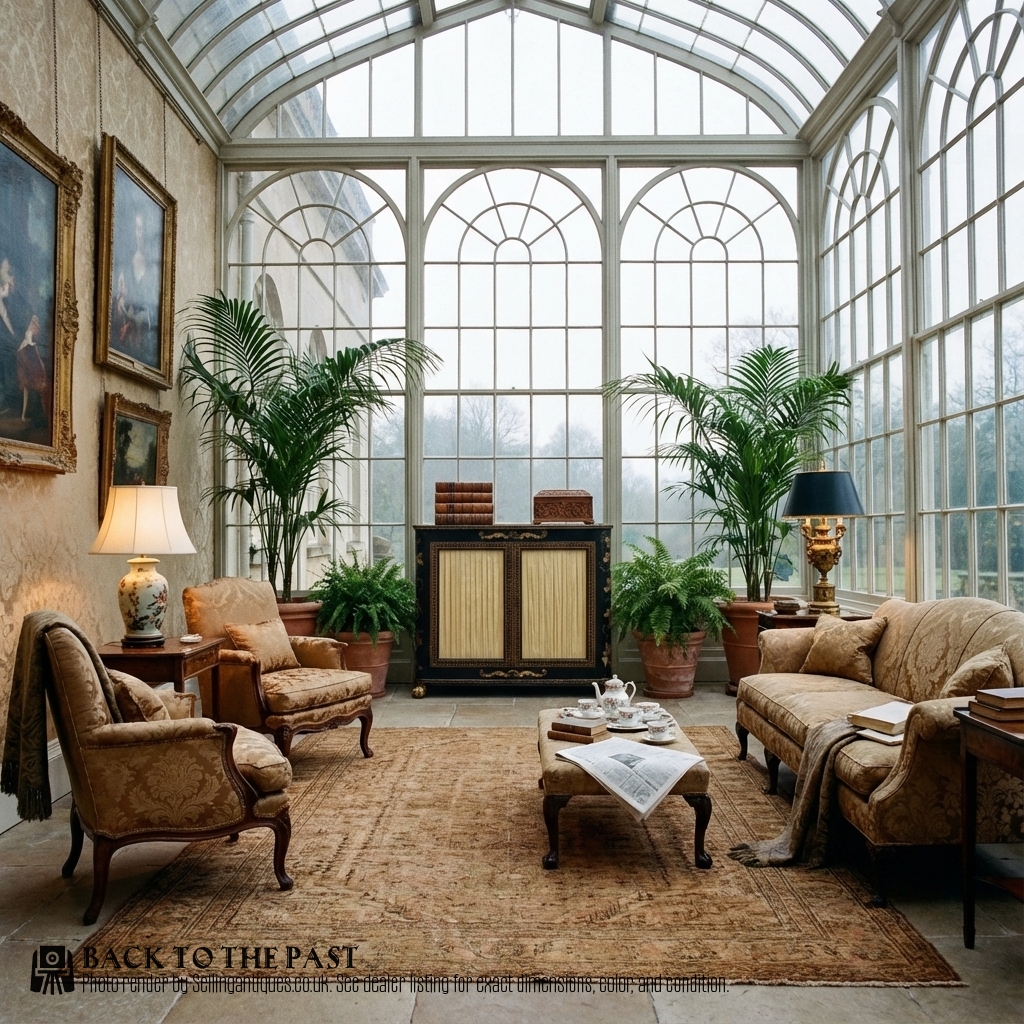
These pieces sat in principal reception rooms such as drawing rooms and dining parlours. They functioned as serving surfaces and enclosed storage for china or books.
The low profile allowed owners to place decorative urns, clocks, or candelabra on the top surface without obscuring wall art or windows.
How do I identify the wood used?
Rosewood displays a dark, heavily figured grain with distinct reddish-brown or black streaks. Mahogany offers a warmer, reddish-brown tone with straighter grain patterns.
Simulated rosewood involves painted grain applied to a secondary timber to imitate the expensive imported hardwood.
What is the purpose of the silk panels?
Silk panels behind wooden fretwork or glass doors softened the heavy appearance of timber furniture. They also concealed the contents of the cabinet from view.
The pleated fabric introduced a contrasting texture and colour to the polished mahogany or rosewood carcase.
How do I distinguish Regency from Victorian pieces?
Regency furniture dates from the early nineteenth century and draws heavily on classical Greek and Roman motifs. The lines tend to be restrained and balanced.
Victorian pieces from later in the century often incorporate heavier proportions and eclectic revival styles while retaining similar foundational forms.