



Regency Silhouette Art
Regency silhouette art offers a sharp glimpse into personal likenesses through delicate paper cutting and pigment.
Regency Silhouette Art
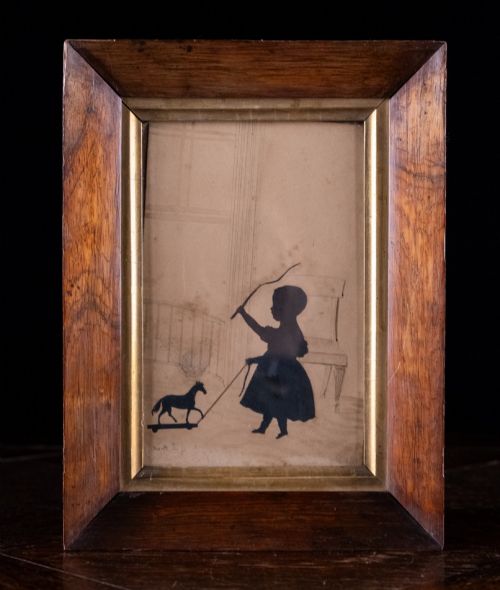
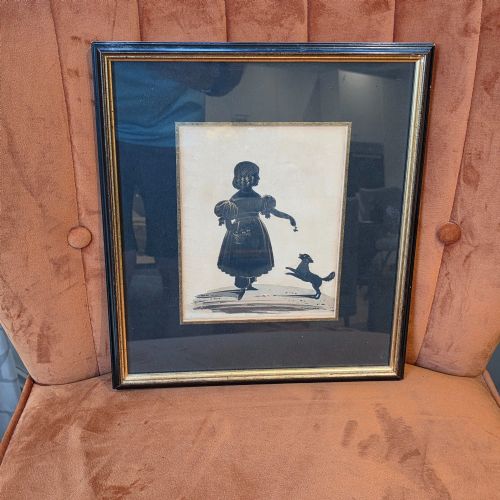
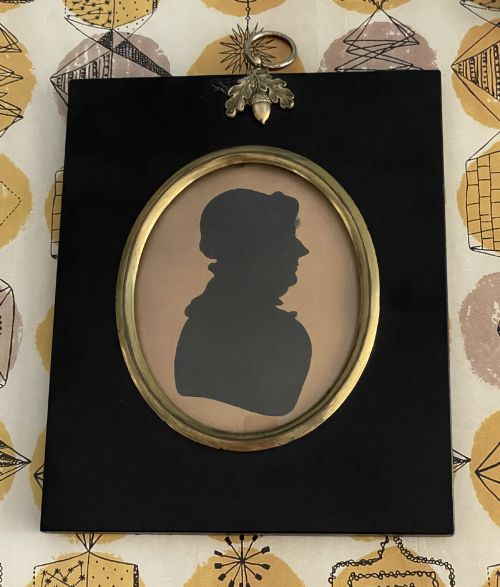
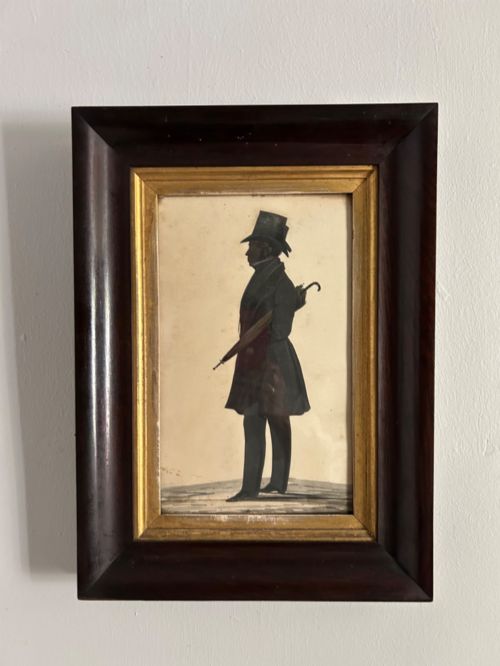
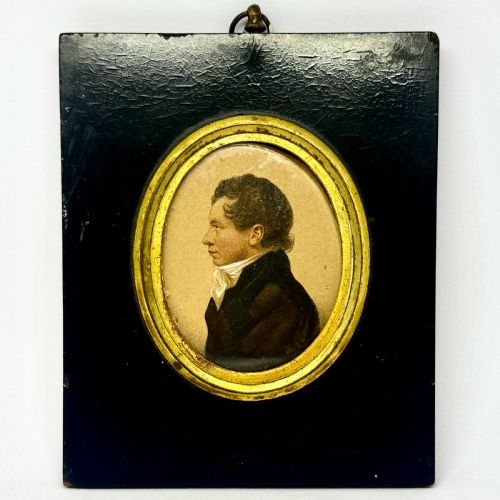
Regency silhouette art captures individual likenesses in crisp profile, typically framed for wall display or kept as miniature portraits. These works emerge from the Georgian and Regency periods, stretching into early Victorian times.
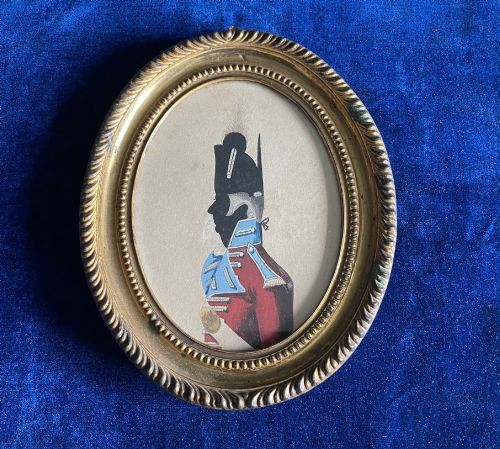
The most common forms on this page include cut paper profiles, painted miniatures on glass, and gilded details highlighting dress and hair. Subjects range from gentlemen and ladies in traditional attire to children and animals.
Makers recorded in these listings span professional profileists working across Britain during the nineteenth century. Pieces often arrive housed in ebonised wood, rosewood, or maple frames with brass fixtures.
Materials and Construction
Artists created these profile portraits using black paper cut with fine scissors or by painting directly onto glass with dark ink. Many examples incorporate gold leaf to accent jewellery, buttons, or clothing trims.
Backings of paper and card support the delicate cut work, while reverse painting on glass protects the pigment from dust and fading. Frames constructed from wood such as maple or ebonised timber complete the physical assembly.
Regency Silhouette Art Retail Price Guide 2026
Typical asking prices for regency silhouette art among the pieces listed under this phrase on Sellingantiques today, from the lower quarter to the upper quarter. They describe what is for sale here now, not the wider market.
Listings feature works spanning the eighteenth century, the Regency era, and the Victorian period, utilising glass, paper, ink, and gold leaf.
Evaluating Quality and Execution
Quality rests in the precision of the cutting and the crispness of the profile edge, which separates skilled handwork from simpler production. Fine brushwork or delicate bronze highlights on glass indicate a higher grade of portraiture.
The character of the framing and the preservation of the original backing paper contribute significantly to the overall integrity of the piece. Works bearing legible signatures or known attributions carry distinct weight in the range.
William James Hubard·Augustin Edouart·John Miers·J. Deacon·George Atkinson
The Regency Silhouette Art Glossary
- Silhouette
- A portrait profile filled in with a solid dark colour, typically black, against a pale background. This form relies entirely on outline and shadow to convey identity.
- Reverse painting on glass
- A technique where the artist paints the image on the rear side of the glass so the viewer observes it through the front pane. This method preserves the pigment and creates a glossy finish.
- Ebonised wood
- Timber treated with a finish to resemble ebony, frequently utilised for dark contrasting picture frames during the nineteenth century. It provides a sharp border for light paper cutouts.
- Portrait miniature
- A small-scale painting or silhouette designed for intimate viewing rather than large wall display. These pieces often feature delicate detailing and personal subjects.
Regency Silhouette Art: Frequently Asked Questions
How were silhouettes displayed?
These profile portraits were traditionally hung in parlours and private rooms, often arranged in clusters on walls alongside other small framed artworks. Their compact scale allowed families to group multiple likenesses together.
Many examples retain their original wooden frames, such as those made from rosewood or maple, complete with small brass hangers. This domestic presentation kept personal histories visible within the household.
How do I care for framed silhouettes?
Keep these framed works away from direct sunlight to prevent the paper from fading and the dark pigments from degrading over time. Stable indoor humidity levels protect both the wooden frames and the fragile internal paper elements.
Cleaning should be limited to gentle dusting of the exterior frame surface with a soft cloth. Avoid applying moisture directly to the glass or backing materials.
Are these works signed by artists?
Some pieces bear signature inscriptions left by the profileist, either on the reverse paper backing or directly on the front surface. Makers occasionally recorded names and dates with ink or gold script.
Unsigned examples remain common, attributed instead through stylistic traits, framing methods, or period characteristics. Provenance notes sometimes accompany these works to document their history.