




Regency Sewing Table Basket
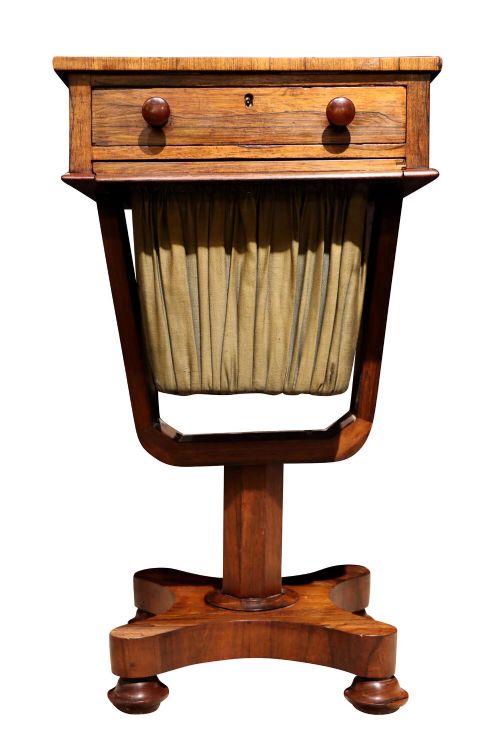
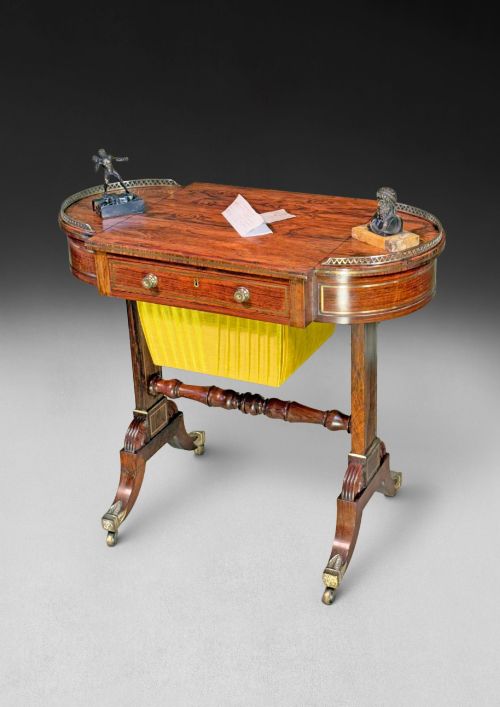
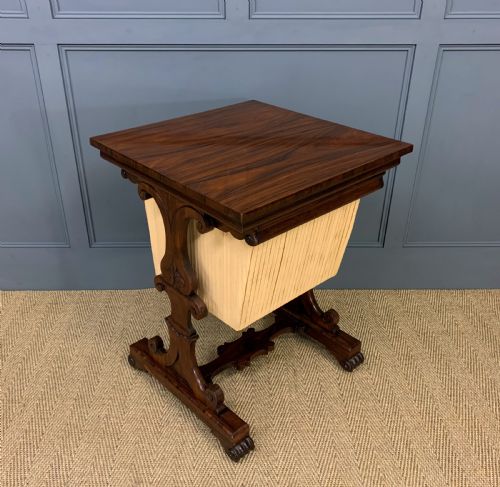
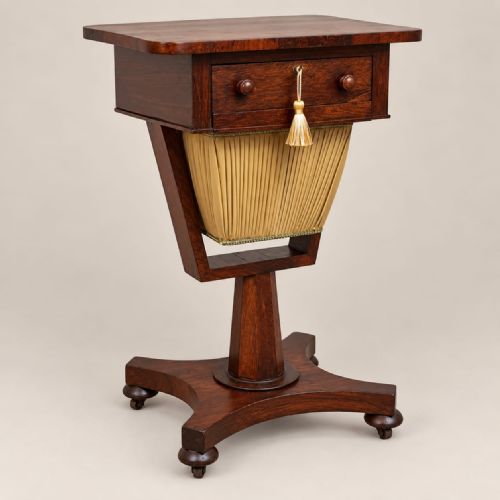
A regency sewing table basket combines neat utility with graceful proportions, offering a dedicated surface and a fabric catch-all for needlework.
Regency Sewing Table Basket
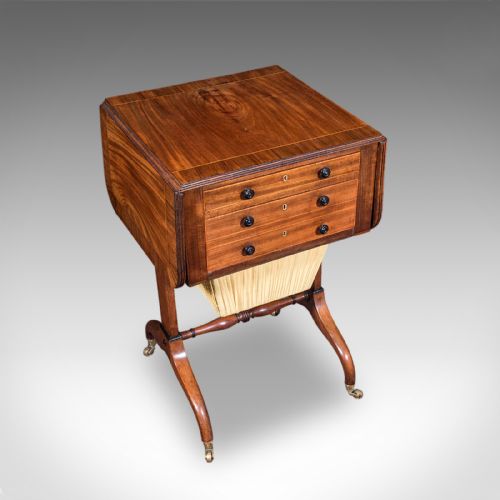
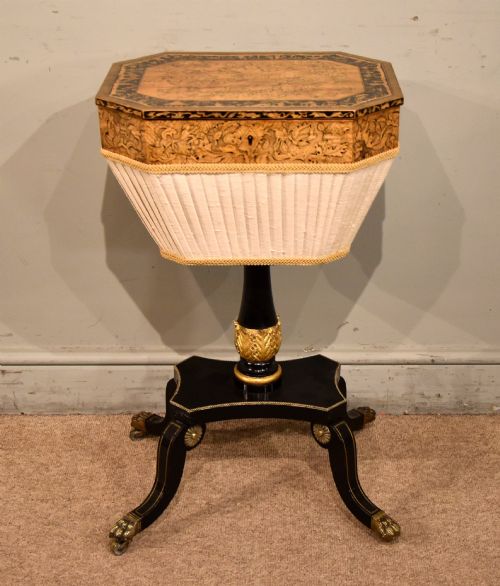
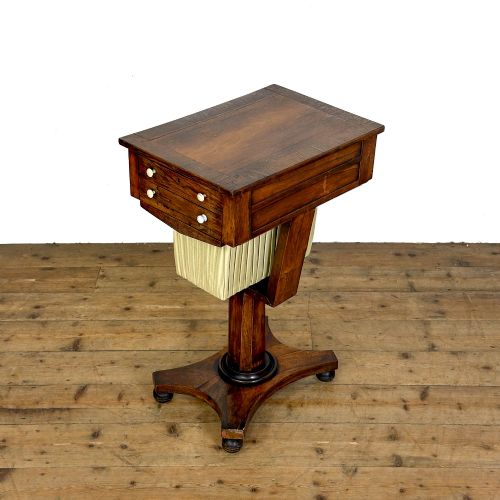
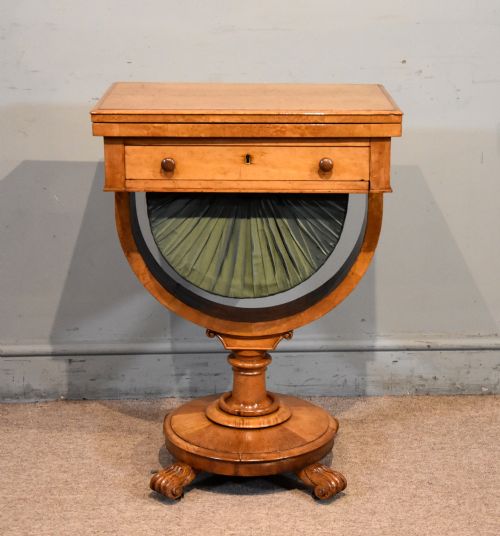
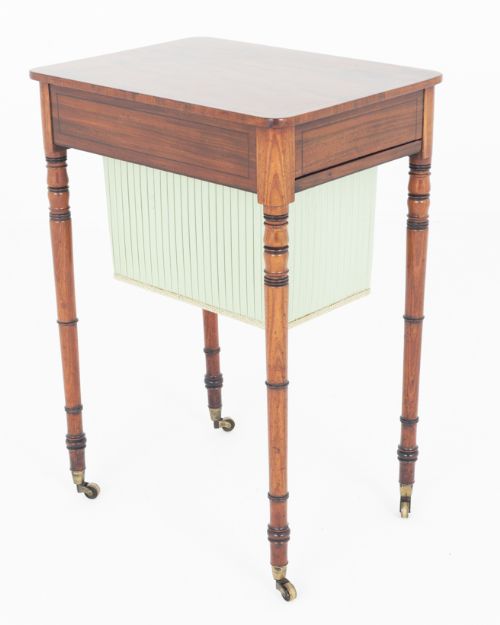
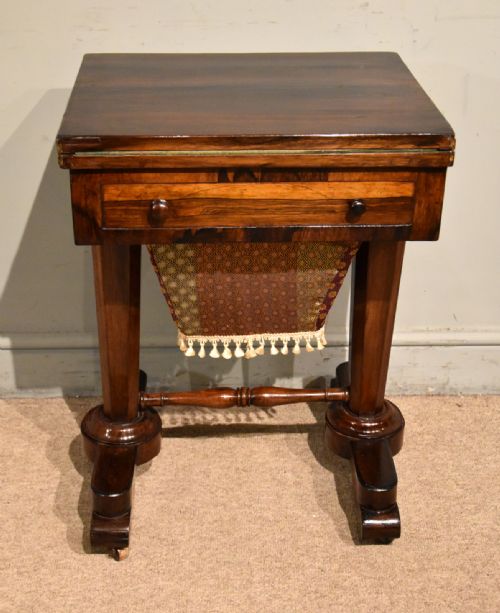
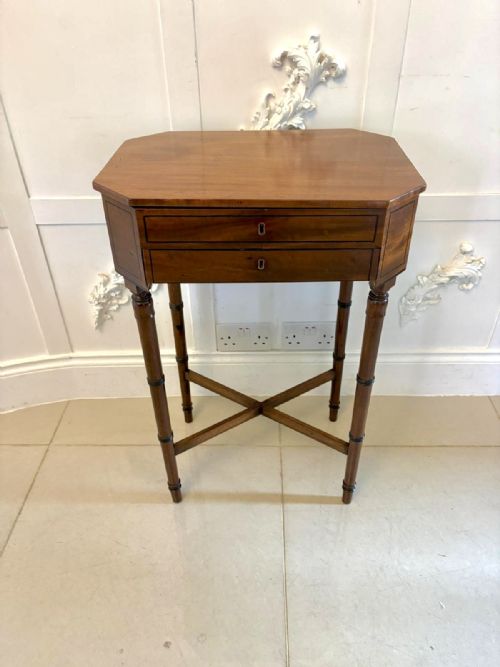
A regency sewing table basket functions as a versatile piece of furniture designed for needlework, writing, and occasional games. When exploring this selection, buyers encounter various forms such as drop-leaf work tables, occasional side stands, and foldover games tables from the nineteenth century.
The prevailing examples span the Regency, William IV, and Georgian periods, constructed predominantly in rich timbers like mahogany and rosewood. These pieces often feature fitted interiors and suspended silk or fabric bags to hold sewing implements.
Craftsmen of the era created multifunctional furniture that suited the drawing room and the boudoir alike. The inclusion of a sewing basket or workbag distinguishes these tables from standard lamp and side tables.
Assessing craftsmanship and condition
Quality reveals itself in the selection of figured timber veneers and the crispness of inlaid boxwood or brass details. Finer examples display robust joinery in the drawer framing and finely turned pedestals that support the weight without wobble.
The interior fitments and the integrity of the suspended fabric workbag also distinguish standard production from superior pieces. Well-executed lyre supports and stable drop-leaf mechanisms elevate the stature of a work table.
Regency Sewing Table Basket Retail Price Guide 2026
Typical asking prices for regency sewing table basket among the pieces listed under this phrase on Sellingantiques today, from the lower quarter to the upper quarter. They describe what is for sale here now, not the wider market.
Current selections include occasional, side, and games tables featuring drop leaves and brass inlay.
Gillows of Lancaster
The Regency Sewing Table Basket Glossary
- Work table
- A small occasional table equipped with drawers and a fabric bag for holding sewing materials. These items were essential accessories for ladies in nineteenth-century drawing rooms.
- Drop leaf
- A hinged flap on the side of a table that folds down when not in use. This feature allows the furniture to save space or expand for specific tasks.
- Rosewood
- A heavy, dark timber with distinct figuring, widely utilised during the Regency and William IV periods. Its rich colour made it a favourite for high-status cabinet work.
- Penwork
- A decorative technique using ink to draw delicate patterns directly onto wood surfaces. This method was often applied to small sewing boxes and tables.
- Pollard oak
- Oak timber taken from trees that were pollarded, resulting in a dense, knotted grain pattern. Cabinetmakers valued this wood for decorative veneering.
Regency Sewing Table Basket: Frequently Asked Questions
What is a regency sewing table basket used for?
These tables served primarily as mobile workstations for ladies undertaking needlework, embroidery, and correspondence in the home. The integrated fabric basket held yarns and fabrics while the top surface provided space for writing or games.
Today, they function as elegant bedside tables, lamp stands, or decorative accents in sitting rooms. Their compact size and hidden storage compartments make them practical for modern living spaces.
How do I identify a Regency period piece?
Regency furniture typically dates from the early nineteenth century, exhibiting classical influences, clean architectural lines, and refined wood veneers. Look for characteristic details such as brass inlay, lyre-shaped pedestals, and figured rosewood or mahogany.
Maker attribution often points to workshops like Gillows, though many fine pieces remain unsigned. Comparing the timber quality and joinery methods helps confirm the nineteenth-century origin.
Can these tables be used for games?
Many work tables incorporate foldover tops lined with leather or felt specifically for card games, chess, or backgammon. These dual-purpose designs allowed homeowners to transition easily from needlework to entertainment.
The clever integration of storage beneath the playing surface kept gaming pieces close at hand without cluttering the room.
What maintenance do rosewood and mahogany require?
Polished hardwood surfaces need minimal upkeep beyond dusting with a soft cloth and occasional application of appropriate wax. Direct sunlight and excessive humidity should be avoided to protect the timber and delicate veneers.
The fabric workbags, being textile elements, may require gentle cleaning or eventual replacement depending on their original condition and surviving state.