
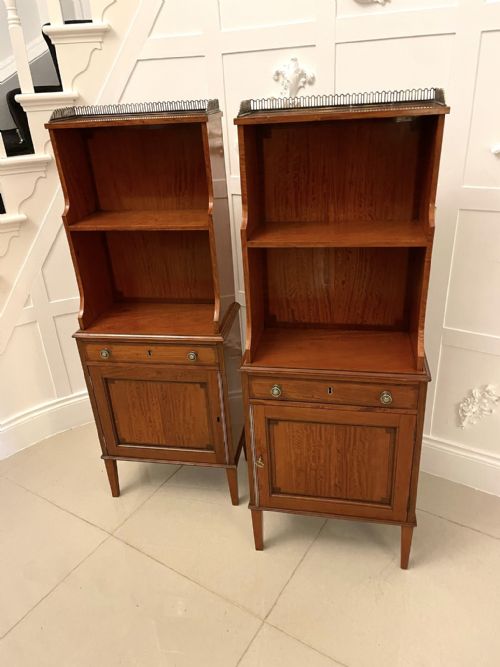


Regency Satinwood Cabinet
A regency satinwood cabinet brings pale timber, precise crossbanding and classic proportion into a room.
Regency Satinwood Cabinet
A regency satinwood cabinet sits within a tradition of formal English case furniture spanning the nineteenth century, Georgian eras and revival periods. The pieces appearing here range from compact side cabinets and demi-lune forms to secretaire bookcases, chiffoniers and corner cabinets.
Buyers looking at this phrase most frequently encounter side cabinets, bookcases and secretaire desks dating from the Regency and Victorian periods. Timber selection defines the group, dominated by satinwood with contrasting bandings of rosewood, mahogany and ebony.
Origins stretch from the late eighteenth century through to later revivals in the nineteenth and twentieth centuries. Formats vary from simple open bookcases to fitted writing furniture complete with brass galleries and classical detail.
Materials and construction
Makers utilised satinwood veneers laid over secondary framing timbers such as mahogany or pine to achieve smooth, figured exterior surfaces. Crossbanding in darker woods like rosewood and ebony framed the pale grain panels with sharp geometric contrast.
Brass hardware, including galleries, handles and escutcheons, added functional and decorative accent to the polished wooden structures. Joinery relied on traditional dovetails and frame-and-panel construction to accommodate timber movement over time.
The recorded forms range from waterfall bookcases and work tables to chiffoniers, chests and desktop collector cases.
Variations in quality
Quality rests upon the choice of timber figure, the crispness of the inlay work and the integrity of the original hardware. Finer examples display symmetrical book-matched veneers and precise crossbanding that follows the contours of the piece without gaps.
Proportion and architectural balance separate standard workshop output from exceptional furniture designed in the manner of leading makers. The preservation of original polished surfaces and fitted interiors further distinguishes superior survivals.
Gillows
The Regency Satinwood Cabinet Glossary
- Satinwood
- A hard, durable timber native to Ceylon and the West Indies, prized for its lustrous yellow sheen and fine grain. It takes a high polish and serves as the primary face veneer on formal furniture.
- Crossbanding
- A decorative border technique where strips of veneer are laid perpendicular to the main grain of the panel. This frames the central surface with a contrasting band of timber.
- Secretaire
- A cabinet or desk incorporating a pull-out writing drawer fitted with small pigeonholes and drawers. It combines storage with a concealed writing surface.
- Chiffonier
- A low sideboard or cabinet developed during the Regency period, often featuring glazed or fabric-panelled doors below a shelf supported by pillars. It served practical storage needs in dining rooms and drawing rooms.
Regency Satinwood Cabinet: Frequently Asked Questions
What is a regency satinwood cabinet used for?
These cabinets store books, tableware or writing materials while serving as prominent decorative furniture within a room. Their fitted drawers and shelves accommodate small collections and everyday storage.
In period interiors, they functioned as sideboards, writing desks or display pieces in reception rooms. Today they fulfil similar roles in domestic settings.
How do I identify a Regency period piece?
Regency furniture typically displays classical architectural influence, symmetrical proportions and restrained ornamental detail. Look for classical motifs and contrasting timber bandings.
Construction methods, secondary woods and patination on the timber offer further clues to age. Comparing structural details helps separate original Regency work from later nineteenth-century revivals.
How should I care for satinwood furniture?
Keep satinwood furniture away from direct sunlight and heat sources to prevent the timber veneers from drying and cracking. Maintain stable indoor humidity levels.
Dust regularly with a soft, dry cloth and apply occasional high-grade wax polish appropriate for antique wood surfaces. Avoid silicone-based sprays.
Are these cabinets suitable for modern homes?
The compact proportions of many side cabinets and workstations allow them to fit easily into contemporary living spaces. Their pale timber brightens rooms while offering practical surface and drawer space.
They mix readily with varied interior styles, from traditional period rooms to minimal modern settings. Their functional interiors remain useful for contemporary storage needs.