
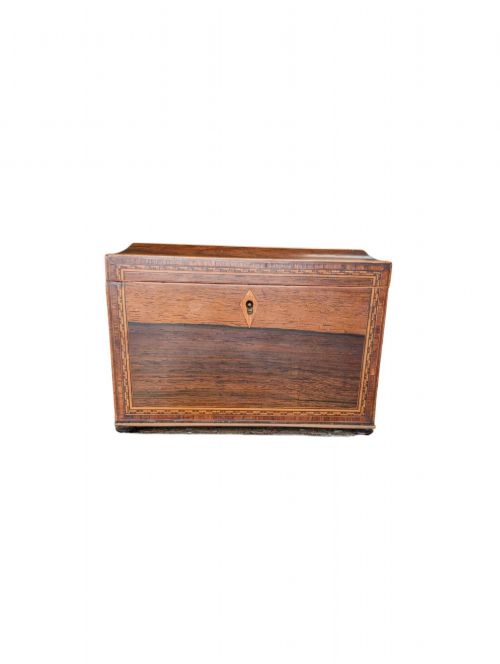
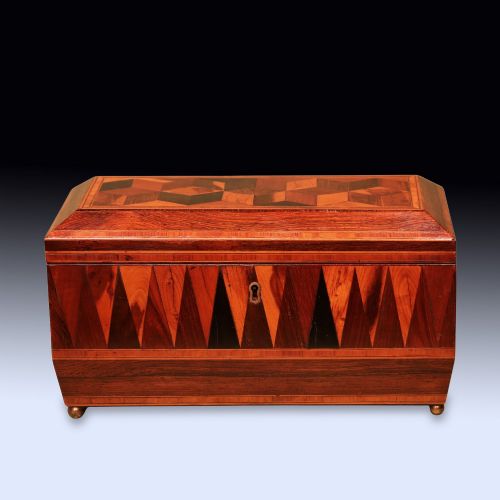


Regency Rosewood Tea Chest
A regency rosewood tea chest is a refined timber box made to store precious loose-leaf tea safely under lock.
Regency Rosewood Tea Chest
When you search for a regency rosewood tea chest, you are looking at elegant containers designed during the early nineteenth century to house expensive tea leaves. These pieces range from compact tabletop boxes to larger freestanding teapoys fitted with stands.
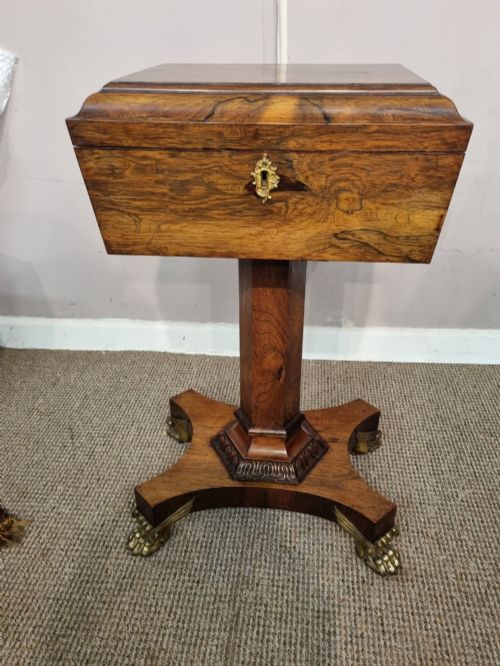
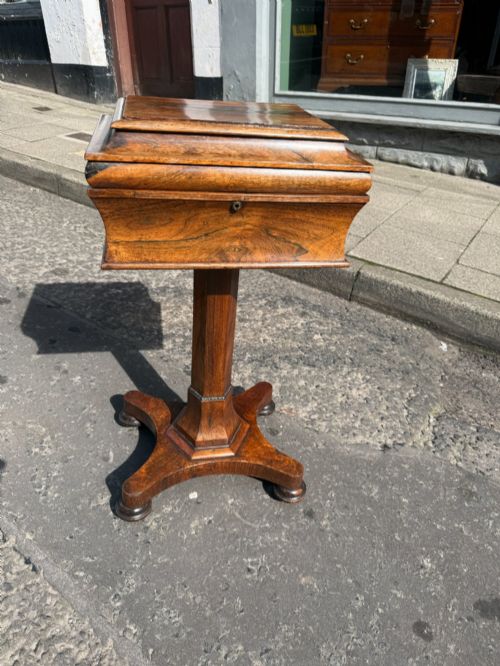
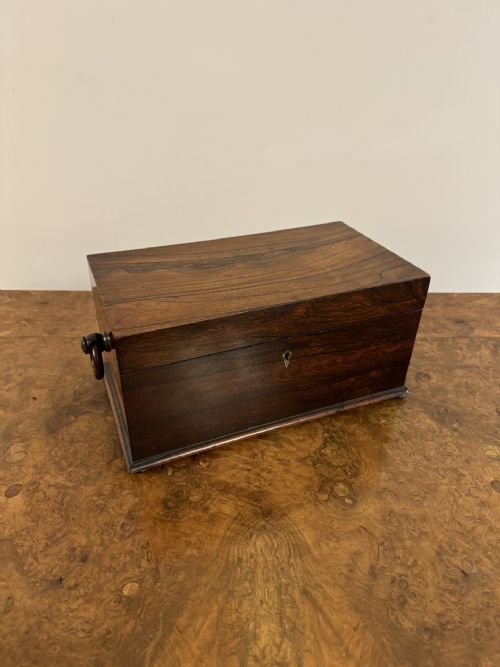
The most common forms on this page include sarcophagus shapes resting on lion paw feet and oblong tapered boxes featuring hinged lids. Many examples date from the Regency and William IV periods, reflecting the tastes of Georgian drawing rooms.
Interiors typically reveal fitted compartments and small mixing bowls made of glass, intended for preparing the daily brew. These boxes served a practical function in the parlour while displaying the social status of the household through fine cabinetmaking.
Materials and Construction
Craftsmen built these chests using dense rosewood timber, often applied as fine veneers over a stable secondary wood core. The natural grain of the rosewood provides deep dark tones that form the primary visual surface of each piece.
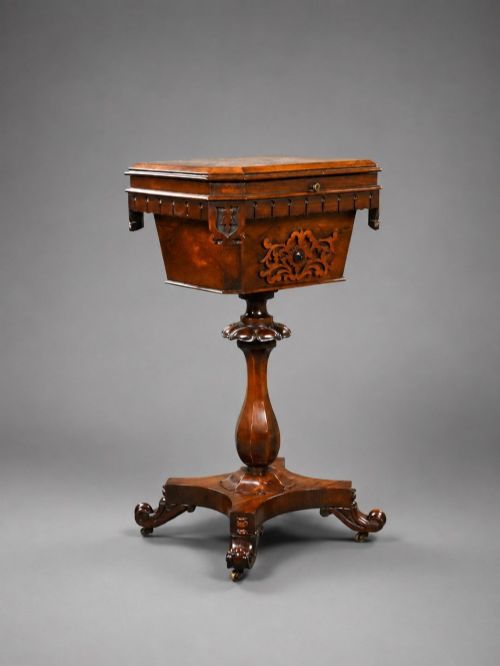
Decoration relied on contrasting materials set directly into the timber, including bright brass stringing, boxwood lines, and shimmering mother of pearl. Artisans also utilised parquetry and shell inlay to create geometric and floral motifs across the lids and panels.
The inventory spans the Regency, Georgian, and Victorian periods, showcasing both tabletop caddies and pedestal teapoys.
Quality and Craftsmanship
The distinction between ordinary boxes and finer examples rests on the precision of the brass inlay and the complexity of the internal fittings. Superior pieces feature crisp parquetry work and intact interior compartments complete with original mixing bowls and matching canisters.
The choice of timber grain and the integrity of the cabinet construction also determine the standing of a piece. Well-preserved surfaces with rich patination and working brass locks indicate higher original workmanship from the Georgian era.
The Regency Rosewood Tea Chest Glossary
- Sarcophagus form
- A box shape featuring a domed or tapered lid and sloping sides reminiscent of a stone coffin. This architectural style was highly popular for grand tea caddies during the Regency period.
- Teapoy
- A freestanding piece of furniture comprising a tea chest mounted upon a central pillar and tripod base. These often served dual purposes as work boxes for sewing materials.
- Tunbridge Ware
- Small wooden objects decorated with intricate mosaic patterns made from tiny segments of various coloured woods. This specialised technique created detailed pictorial images on box lids.
- Parquetry
- A geometric mosaic of wood pieces used for decorative veneer on furniture surfaces. Craftsmen arranged contrasting timbers like satinwood and rosewood to form repeating patterns.
Regency Rosewood Tea Chest: Frequently Asked Questions
What is inside a tea chest?
Inside you typically find multiple lidded compartments designed to keep different varieties of tea separate and airtight. Many also retain a central glass bowl used for blending leaves.
These interior spaces often feature secondary timber linings and small bone knobs on the inner lids. The compartments protected expensive goods from moisture and light.
How do I date a tea chest?
Dating relies on examining the overall architectural form, the style of the brass inlay, and the construction methods used inside. Sarcophagus shapes and brass stringing point toward the Regency period.
Later pieces from the William IV or Victorian eras often introduce mother of pearl inlay and heavier proportions. Hardware such as original locks and escutcheons also helps narrow down the decade of manufacture.
Were these chests kept locked?
Tea was a remarkably costly commodity in the nineteenth century, making security essential for the household. Servants were typically kept from accessing the leaves by the use of small working keys.
The fitted locks and escutcheons on these boxes were functional rather than merely decorative. Owners kept the key close to ensure strict control over the household supplies.
How do I care for rosewood?
Rosewood benefits from stable environmental conditions away from direct sunlight and sudden temperature changes. Keeping the room humidity moderate prevents the timber and delicate veneers from splitting.
A light application of traditional wax helps maintain the natural lustre of the polished surface without building up residue. Avoid using liquid cleaners that might seep into the grain or damage old brass inlay.