
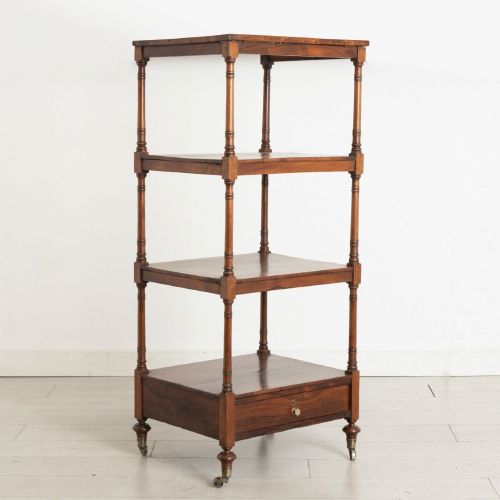
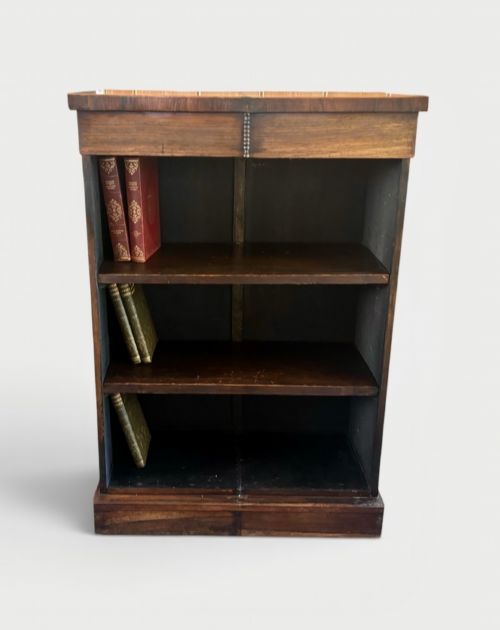
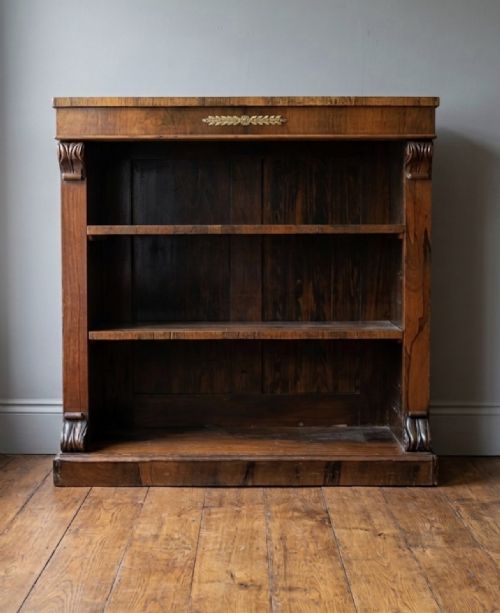


Regency Rosewood Display Shelf
These pieces of regency rosewood display shelf furniture bring rich grain and tiered utility to a room, offering both surface display and book storage.
Regency Rosewood Display Shelf
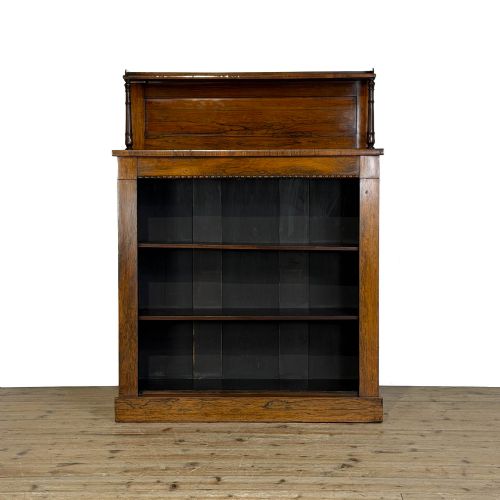
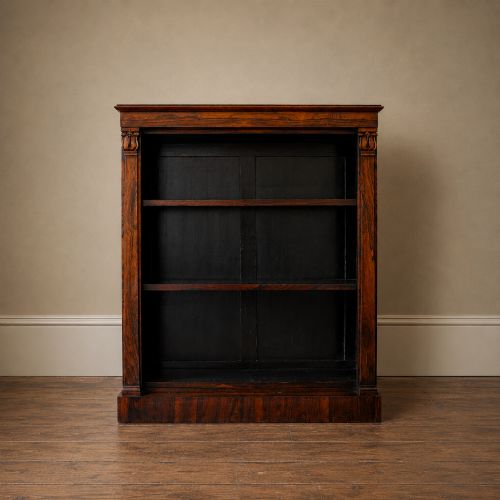
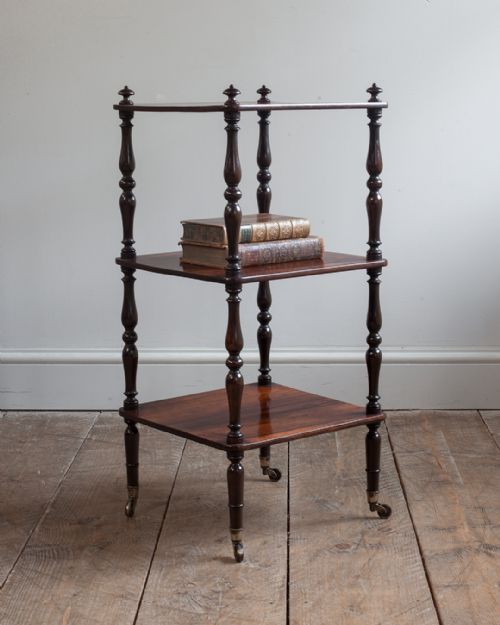
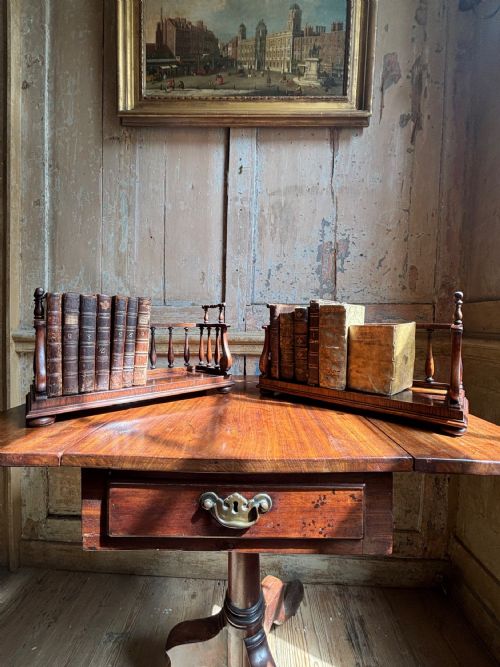
A regency rosewood display shelf spans several distinct forms recorded in the evidence, from multi-tiered whatnots and etageres to open bookcases, chiffoniers, wall shelves, and waterfall bookcases. The majority of pieces belong to the nineteenth century, encompassing Regency, George IV, and William IV periods, alongside later revival iterations.
Buyers encounter open front structures designed for books and display, often featuring adjustable shelves, graduated tiers, or integrated cupboards beneath. Forms range from low breakfront cabinets and dwarf bookcases to towering three and four-tier whatnots suited for corners or wall mounting.
While many examples adhere strictly to the Regency and Georgian eras, the listings also include Victorian pieces and twentieth-century revivals. This variety provides both authentic early nineteenth-century construction and later interpretations of the same aesthetic.
How they were made
Makers utilised solid woods and decorative veneers, applying rosewood over secondary timbers such as pine or oak. Selected items employ painted wood or simulated grain finishes to achieve the dark, figured appearance characteristic of the timber without relying entirely on solid construction.
Brass inlay, glass panels, and marble tops appear across the selections to accent the timber framework. Metal fittings reinforce structural joints on tiered whatnots and support adjustable shelving systems within open bookcases.
Listings feature rosewood, brass, glass, marble, pine, and oak across multiple nineteenth-century periods.
What varies in quality
Quality rests in the selection of the rosewood veneer, the crispness of brass inlay work, and the structural integrity of multi-tiered uprights. Superior examples exhibit tightly figured grain patterns and robust joinery that supports heavy volumes or display objects without sagging.
Proportion and scale distinguish finer workshops, with smaller or breakfront formats showing considered attention to architectural detail. The presence of original surface finishes, whether polished rosewood or simulated grain, separates untouched period pieces from heavily restored items.
Gillows
The Regency Rosewood Display Shelf Glossary
- Whatnot
- An open set of tiered shelves designed for displaying ornaments, books, or small objects. These pieces typically feature three or four levels supported by slender uprights.
- Etagere
- A French term for a freestanding display shelf or whatnot with multiple platforms. It serves a similar function to open shelving units by keeping decorative items visible.
- Chiffonier
- A low cabinet featuring shelving or a mirror superstructure above a closed cupboard base. This form combines display space with concealed storage.
- Waterfall bookcase
- A tiered shelving unit where each level steps back progressively from the bottom to the top. The profile resembles cascading water.
- Breakfront
- A cabinet design where the central section projects forward from the flanking outer sections. This architectural arrangement creates depth and shadow on the facade.
Regency Rosewood Display Shelf: Frequently Asked Questions
What is a whatnot?
A whatnot is a multi-tiered freestanding shelving unit designed to display ornaments, books, and small personal possessions. These open structures provide visible storage across several graduating levels.
First appearing in the late eighteenth century, they became popular household furniture throughout the Regency and Victorian periods for drawing rooms and parlours.
How do I spot a Regency piece?
Regency pieces date from the early nineteenth century and typically display classical architectural proportions, dark rosewood veneers, and restrained brass detailing. They often utilise open shelf formats or low breakfront cabinets.
Later revival items from the twentieth century imitate these proportions, so examining the construction methods and timber ageing helps clarify the period of manufacture.
Where should I place a display shelf?
These shelves suit living rooms, studies, and hallways where books and decorative objects require an open display. Low bookcases and chiffoniers fit well against principal walls, while compact whatnots occupy corners effectively.
Their open construction allows light to pass through the tiers, making them useful for breaking up solid expanses of wall without blocking light sources.
What is a chiffonier?
A chiffonier is a low cabinet featuring closed cupboard doors below and one or more open shelves above. This hybrid form provides both concealed storage and surface display.
Many examples incorporate marble tops or brass gallery rails on the upper tier, combining utility with decorative refinement.