



Regency Rosewood Desk Box
A regency rosewood desk box combines rich dark timbers with brilliant metal mounts to bring handsome portable order to a nineteenth-century study.
Regency Rosewood Desk Box
When searching for a regency rosewood desk box, buyers encounter portable writing slopes, document caskets, and desk chests originating primarily from the nineteenth century, including the Regency, Georgian, and William IV periods. These pieces range from compact tabletop containers to substantial campaign boxes designed for travel.
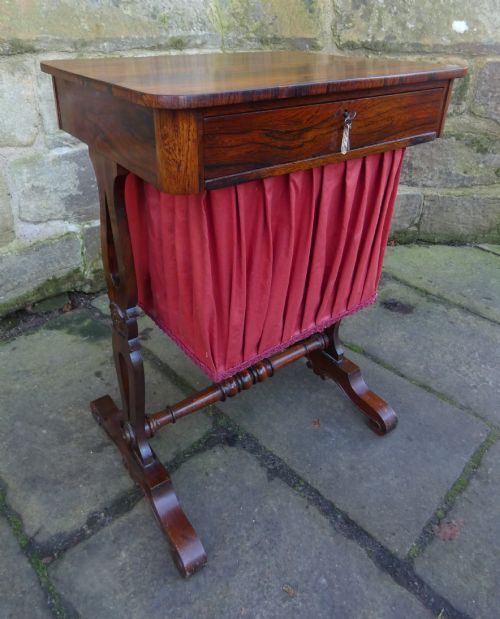
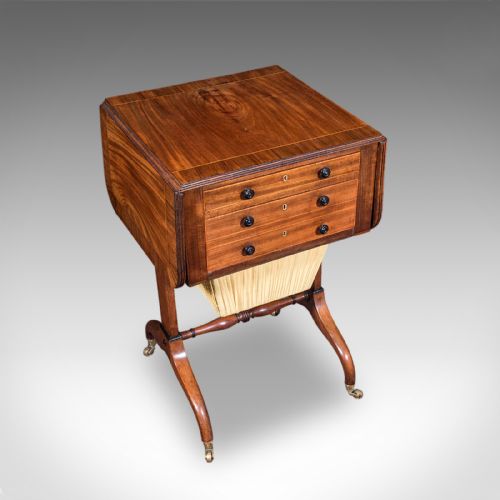
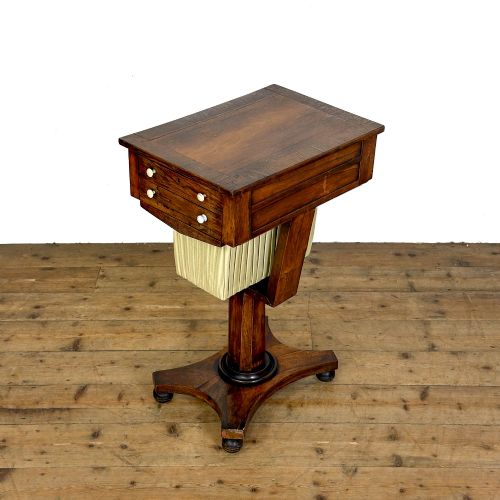
The objects take several distinct forms on this page, spanning bi-fold writing slopes with secret drawers, brass-bound document containers, and desk stands fitted with inkwells. Alongside these writing containers, related work tables and sewing boxes constructed in the same timber appear in the selection.
Materials and construction
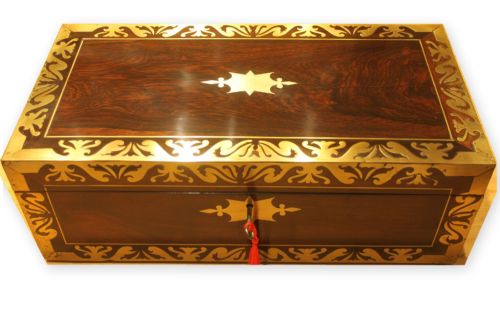
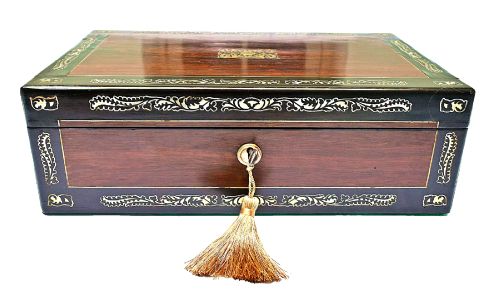
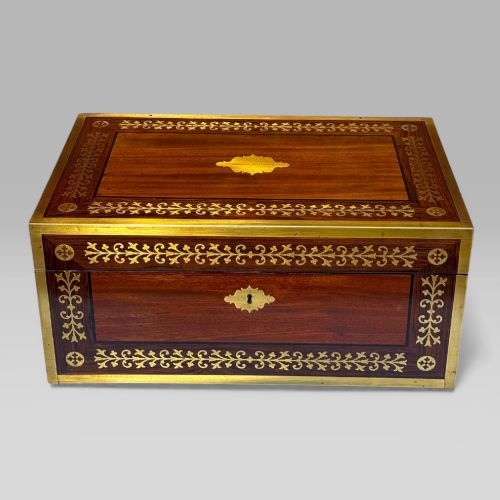
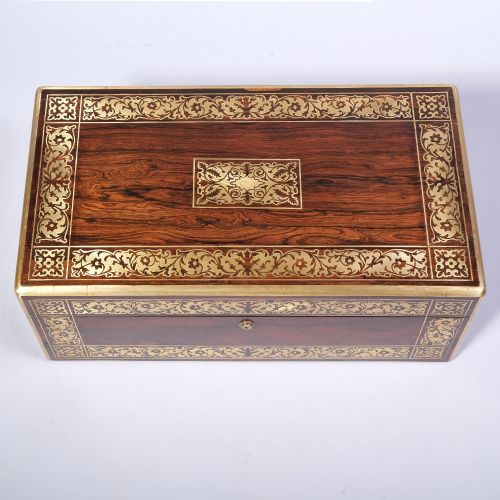
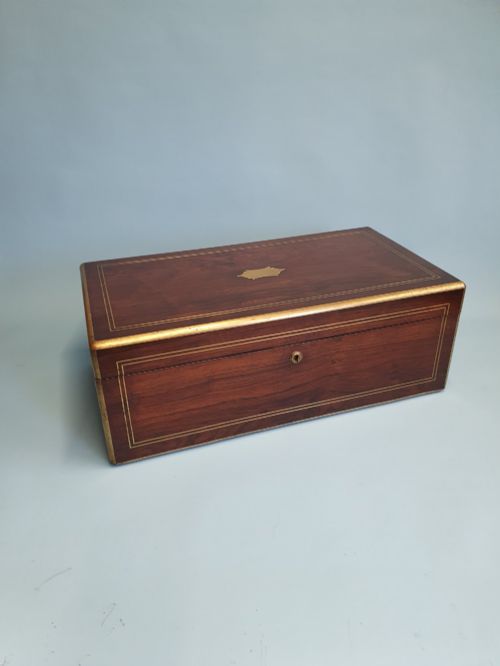
Craftsmen built these pieces using dense rosewood as the primary timber, frequently pairing it with contrasting mahogany or secondary woods. Surfaces were heavily ornamented with inlaid brass stringing, cut brass foliage, and mother-of-pearl accents.
Structural integrity relied on robust brass mounts, corners, and binding straps designed to protect portable boxes during transport. Interiors incorporated fitted compartments, secret drawers, glass inkwells, and fabric-lined writing surfaces.
Regency Rosewood Desk Box Retail Price Guide 2026
Typical asking prices for regency rosewood desk box among the pieces listed under this phrase on Sellingantiques today, from the lower quarter to the upper quarter. They describe what is for sale here now, not the wider market.
The listings show items spanning the nineteenth century, including Georgian, Regency, William IV, and Victorian periods.
Quality and craftsmanship
Quality rests in the precision of the brass inlay and the sharpness of the cut metalwork set into the rosewood grain. Superior examples display meticulous alignment in their brass corner mounts and escutcheons.
Interior execution distinguishes the tiers of manufacture, particularly the complexity of secret drawer mechanisms and the retention of original glass inkwells and fitted fabric components.
George Austin Dublin·Gillows of Lancaster
The Regency Rosewood Desk Box Glossary
- Writing slope
- A portable box with a hinged sloping lid that opens to reveal a slanted writing surface and internal storage. These units often include compartments for pens and inkwells.
- Campaign box
- A sturdy portable chest or desk reinforced with brass corners and flush handles for military travel. These items were built to withstand frequent relocation.
- Rosewood
- A heavy, dark timber prized for its distinctive grain patterns and deep purple-brown colour. It forms the primary exterior material for these nineteenth-century pieces.
- Document box
- A rigid container designed specifically for storing letters and papers rather than writing. These items feature secure locks and hinges suitable for desktop use.
Regency Rosewood Desk Box: Frequently Asked Questions
How were these boxes used?
Owners used these boxes to store writing paper, pens, inkwells, and private letters in an era before fitted stationery cabinets.
The hinged lids opened to create a sloping writing surface lined with fabric for drafting correspondence away from a permanent desk.
How do I identify the period?
Period identification relies on structural characteristics, timber selection, and decorative motifs such as brass foliate inlay and campaign mounts.
Pieces from this era typically date from the early nineteenth century under Georgian, Regency, or William IV stylistic influences.
What materials are standard?
The primary exterior material is rosewood, selected for its deep colour and decorative grain. Secondary woods like mahogany support the internal framework.
Metal components consist of brass binding, escutcheons, and inlay, occasionally complemented by mother-of-pearl details and glass inkwells.