


Regency Rosewood Davenport
A regency rosewood davenport brings compact, beautifully figured stationery storage and a sloped writing surface into any room.
Regency Rosewood Davenport
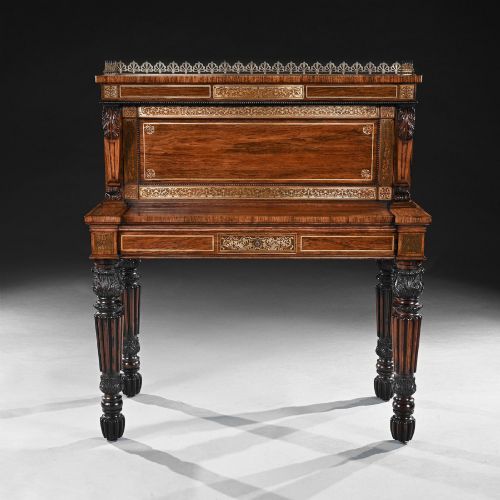
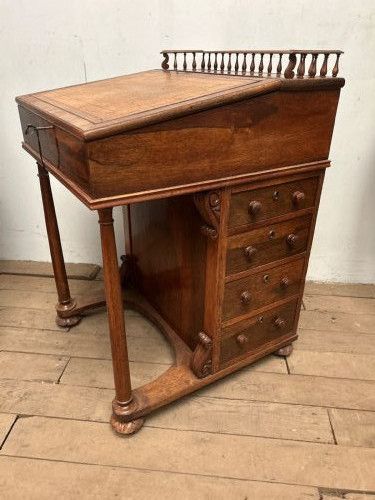
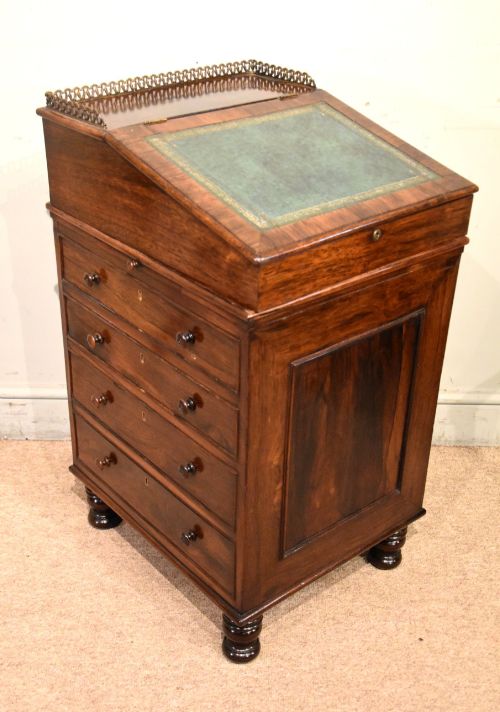
A regency rosewood davenport is a small desk designed with a sloping upper writing surface and a pedestal of drawers below. These pieces belong primarily to the Regency period and the wider nineteenth century, appearing alongside related writing tables and desks.
Most examples found here date from the early decades of the nineteenth century, including pieces attributed to workshops such as Gillows. They vary from simple compact forms to sliding top designs with fitted compartments.
The small proportions make these writing desks practical for modern rooms while retaining the distinctive dark timber grain and brass details of the Regency style.
Quality and Craftsmanship
The distinction between standard examples and the finest pieces lies in the crispness of the brass inlay and the handling of the timber grain. Finer workshops selected symmetrical rosewood veneers that matched evenly across the desk lid and drawer fronts.
Mechanical execution also separates pieces, visible in the smooth action of sliding tops, secret compartments, and well-fitted interior stationery drawers. Superior attribution, such as work linked to Gillows, commands greater attention through refined proportions and robust internal joinery.
Many of these miniature desks hide small pen drawers and inkwells designed to keep nineteenth-century correspondence neat.
Gillows Oxford Street Workshop·Gillows
The Regency Rosewood Davenport Glossary
- Davenport
- A compact pedestal desk featuring a sloping, often leather-lined writing surface above a bank of drawers. The form became popular during the Regency period for domestic correspondence.
- Rosewood
- A heavy, durable timber prized for its dark purple-brown colour and distinctive black grain figuring. It was extensively used for high-status cabinet work in the nineteenth century.
- Palisander
- A term applied to certain richly figured rosewood timbers imported from South America and elsewhere. It displays strong contrasting dark grain patterns.
- Slide top
- A mechanism allowing the upper writing section to pull forward over the seat for easier use. This feature appears on many better quality Regency examples.
- Bun feet
- Rounded, flattened spherical feet often turned from matching timber. They frequently sit upon castors to allow the desk to move.
Regency Rosewood Davenport: Frequently Asked Questions
What is a davenport desk used for?
These compact desks served primarily for private correspondence and letter writing in nineteenth-century drawing rooms or studies. The sloping top provided a comfortable surface for writing while the pedestal below held paper, pens, and ink.
Today, they function well in smaller spaces as writing desks or occasional tables that conceal modern stationery out of sight.
How do I spot a Regency davenport?
Look for characteristic design elements of the early nineteenth century, such as turned bun feet, brass inlay, and rich rosewood veneers. Proportions tend to be small and neat, often featuring a side-opening bank of four drawers.
Later Victorian interpretations sometimes adopt heavier carvings or altered proportions, while Regency pieces maintain cleaner architectural lines.
What is a sliding top davenport?
A sliding top allows the upper writing box to move forward toward the user, creating more legroom and a better angle for writing. This mechanical feature is frequently found on finer Regency examples.
Beneath the sliding section, makers often concealed small drawers or compartments for inkwells and pens.
How should I care for rosewood furniture?
Keep rosewood desks out of direct sunlight and away from heat sources to prevent the timber and veneers from drying out. Occasional light dusting with a dry cloth maintains the polished surface without damaging the wood.
Avoid placing damp items directly onto the timber or the leather writing slope to protect the historic finish.