




Regency Revival Shelf
These regency revival shelf pieces offer classical elegance and practical storage, capturing early nineteenth-century grace for modern rooms.
Regency Revival Shelf
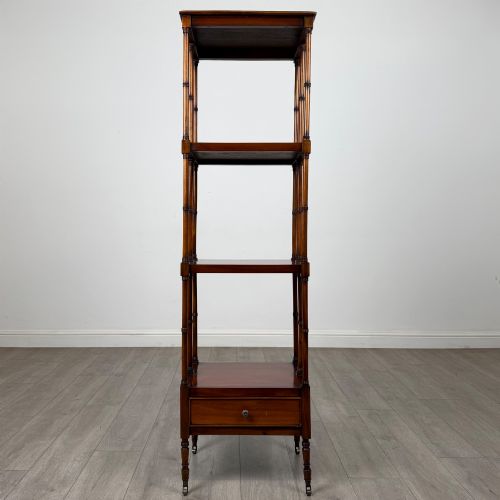
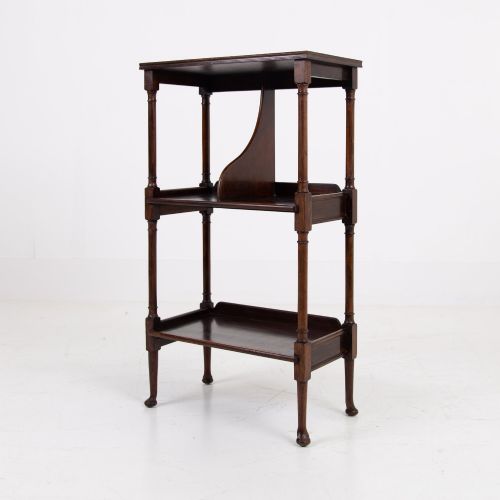
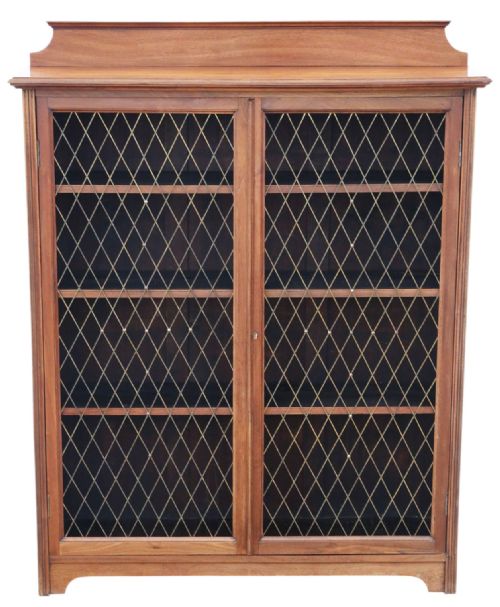
A regency revival shelf brings classical lines and compact storage into domestic interiors, drawing on earlier nineteenth-century forms. You encounter open bookcases, three-tier whatnots, etageres, and wall cabinets across the selection.
The pieces on this page span the Victorian era, the Edwardian period, and the early twentieth century. Makers of these later decades drew heavily on Regency and Gothic revival vocabularies to satisfy demand for stylish, usable furniture.
How they were made
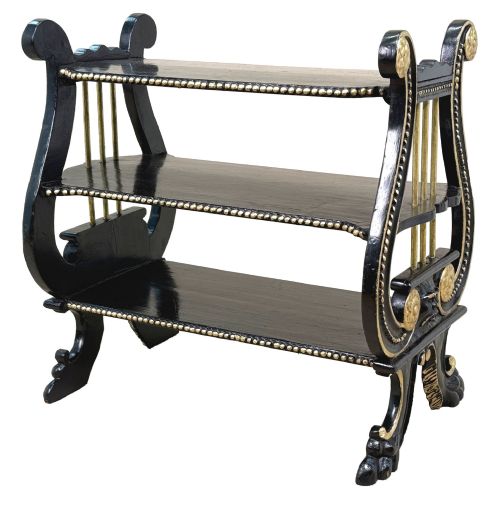
Cabinet makers relied on timbers such as mahogany, rosewood, and burr walnut, often applying ebonisation or parcel gilding for contrast. Brass fittings and glass elements appear frequently to accent the timber structures.
Construction techniques balanced decorative impact with daily utility, seen in adjustable display shelves within open bookcases and sturdy multi-tiered supports on étagères.
Town and Emanuel once supplied hanging wall cabinets to discerning Victorians who simply refused to leave their walls bare.
What varies in quality
Quality rests in the selection of figured veneers, the crispness of parcel gilding, and the harmony of proportion across smaller-scaled wall cabinets and larger bookcases. Finer examples show thoughtful integration of brass detailing and well-figured mahogany or walnut timbers.
The distinction between standard commercial output and superior craftsmanship lies in the depth of the timber finishing and the precision of assembly in tiered whatnots and bookcases.
Town and Emanuel
The Regency Revival Shelf Glossary
- Étagère
- A set of open shelves for displaying small objects or books, popular in Victorian and Edwardian interiors. These pieces often feature tiered platforms supported by slender uprights.
- Whatnot
- A piece of furniture consisting of several open shelves above one another, used for books or ornaments. The three-tier format is especially common in revival pieces.
- Parcel Gilded
- Partially gilded with gold leaf or paint, typically highlighting carved details or structural lines on ebonised wood. This technique provides sharp visual contrast against dark timbers.
- Breakfront
- A cabinet or bookcase whose central section projects forward from the flanking wings. This architectural arrangement adds depth and classical dignity to larger storage items.
Regency Revival Shelf: Frequently Asked Questions
What is a regency revival shelf?
A regency revival shelf is a piece of furniture made during the late nineteenth or early twentieth century that mimics the classical elegance of the early nineteenth-century Regency period.
These items range from open bookcases and wall cabinets to tiered whatnots and etageres, combining decorative appeal with practical storage.
Where were these pieces used?
They were designed for principal rooms in houses, including libraries, studies, and drawing rooms, where books and decorative objects needed to be displayed neatly.
Compact wall cabinets and étagères were also used in hallways and smaller reception spaces to maximise vertical storage.
How do I style a regency revival shelf?
These pieces suit both traditional and contemporary interiors, providing a grounding classical element against plain walls or patterned wallpaper.
Use the open shelves to house book collections, ceramics, or small display items, letting the mahogany, rosewood, or walnut timber tones warm the room.
How can I tell the period?
Dating relies on observing the timber choices, construction methods, and revival styles characteristic of the Victorian, Edwardian, and early twentieth-century periods.
Makers of these eras combined historical revival motifs with the woodwork standards of their own time.