


Regency Porcelain Tableware
Regency porcelain tableware brings the refined elegance of the early nineteenth century to the dining table through painted porcelain, gilt accents, and ironstone.
Regency Porcelain Tableware
Regency porcelain tableware encompasses a range of dining and dessert items produced during the late eighteenth and early nineteenth centuries. These pieces reflect the aesthetic preferences of the Regency, Georgian, and early nineteenth-century periods, capturing an era of sophisticated social dining.
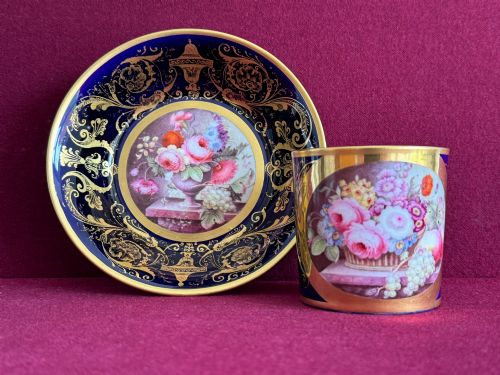
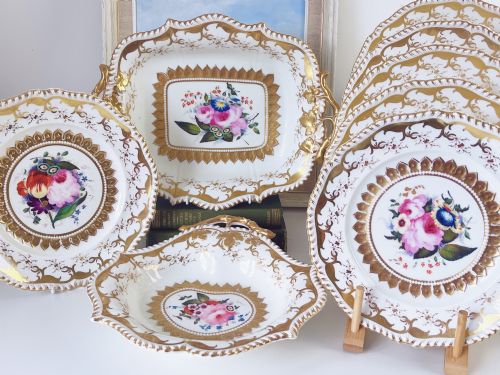
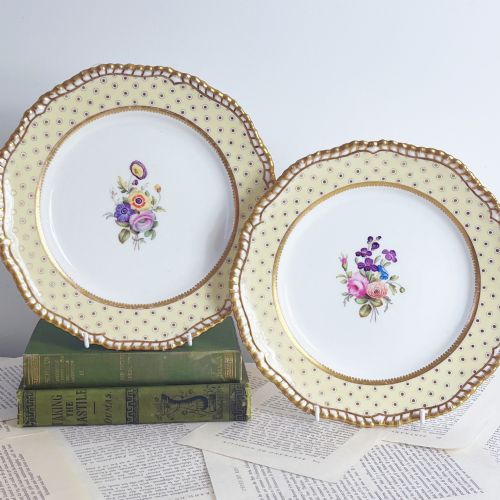
The objects available include comprehensive dessert services, individual dessert plates, serving dishes, tureens, sauceboats, and specialised vessels such as chocolate cups and sugar bowls. Dessert services and plates form the largest portion of these selections, often featuring botanical motifs or armorial crests.
Originating from prominent English factories, these items demonstrate the distinct ceramic styles of the Regency and Georgian eras. Collectors encounter both refined bone china and robust ironstone pieces designed for both display and formal hospitality.
Factors determining quality
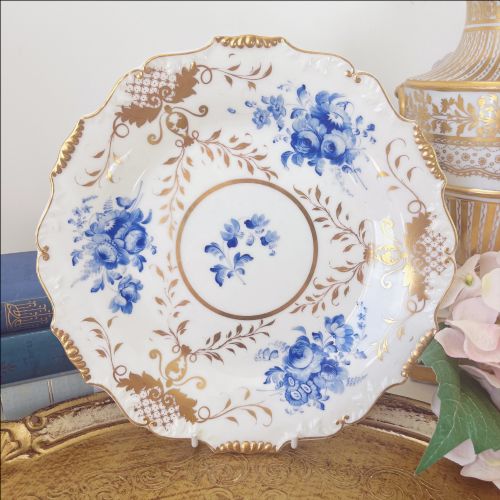
Quality in Regency porcelain tableware rests upon the precision of the handpainted details and the crispness of the porcelain body. Pieces decorated with individual botanical studies or detailed armorial crests demonstrate a higher level of artistic investment than standard transfer prints.
The application of gold leaf and gilding dictates the refinement of a vessel, with careful burnishing separating superior examples from simpler productions. The weight, translucency, and purity of the porcelain or bone china also indicate the standing of the manufacturing pottery.
Listings feature items spanning the 19th Century, Regency, and Georgian periods, utilising materials from gold leaf and enamel to ironstone and bone china.
Grainger Lee and Co·Spode·Wedgwood·Coalport·Chamberlain Worcester·Minton·Flight Barr and Barr·Mason·Barr Flight and Barr·Old Derby
The Regency Porcelain Tableware Glossary
- Ironstone
- A dense, durable type of earthenware patented in the early nineteenth century to withstand heavy use. It served as a robust alternative to softer earthenwares and porcelains.
- Felspar porcelain
- A specific ceramic body introduced by Spode that incorporated felspar into the mixture, increasing translucency and strength. This material allowed for sharper moulded details.
- Imari
- A decorative style inspired by Japanese export wares, characterised by underglaze blue, iron red, and abundant gilt highlights. It remained popular across various English factories throughout the period.
- Armorial
- Refers to tableware decorated with the specific heraldic crest or coat of arms belonging to a noble family. Such services were commissioned privately for important dining occasions.
- Sucrier
- A covered vessel designed specifically for holding sugar on the tea or dessert table. These pieces often match larger tea or dessert services.
Regency Porcelain Tableware: Frequently Asked Questions
What items are included in a dessert service?
A dessert service typically comprises a collection of dessert plates, serving dishes, and sometimes specialised pieces like compotes or tureens. These sets were used for the final course of a formal meal.
Individual pieces often share a uniform pattern, such as handpainted flowers or armorial crests, designed to present a cohesive aesthetic on the dining table.
How do I distinguish ironstone from porcelain?
Ironstone is a heavier, opaque ceramic body engineered for durability, whereas porcelain tends to be lighter and possesses some degree of translucency when held to the light.
Both materials were decorated with similar motifs like Chinoiserie patterns, but their weight and feel in the hand differ noticeably.
Were these pieces used daily or for display?
While robust ironstone tureens and dinner services were built for actual dining use, delicate cabinet plates and fine bone china cups were often reserved for formal display or special occasions.
Many surviving pieces retain signs of light use, reflecting their dual role as functional tableware and decorative status symbols in Regency homes.
How can I identify the period of a piece?
Dating relies on identifying factory marks, stylistic traits such as Regency Imari or Georgian armorial designs, and specific material formulations like felspar porcelain.
Comparing the painted motifs and baseline shapes to documented examples from makers like Spode or Worcester helps narrow down the production decade.