

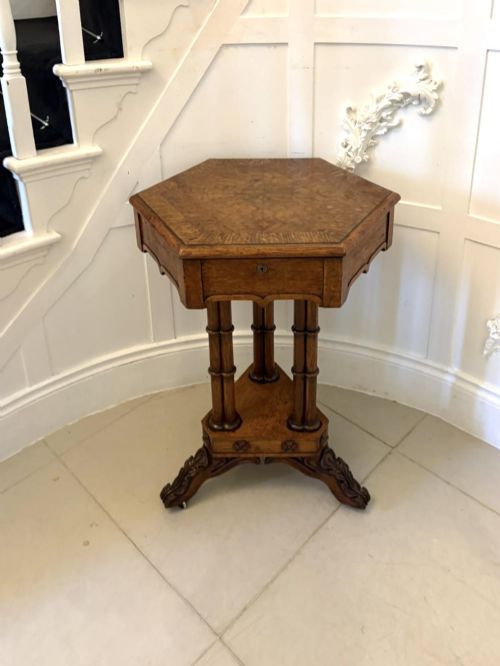
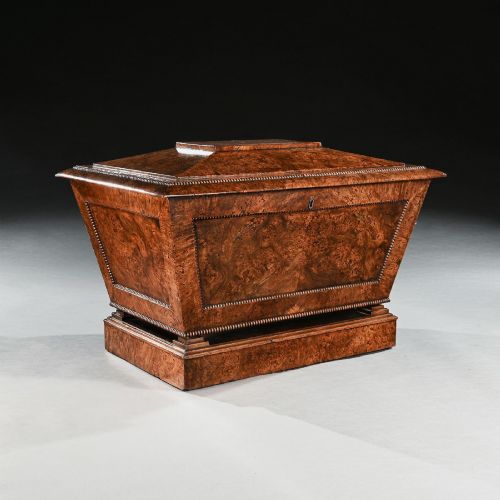
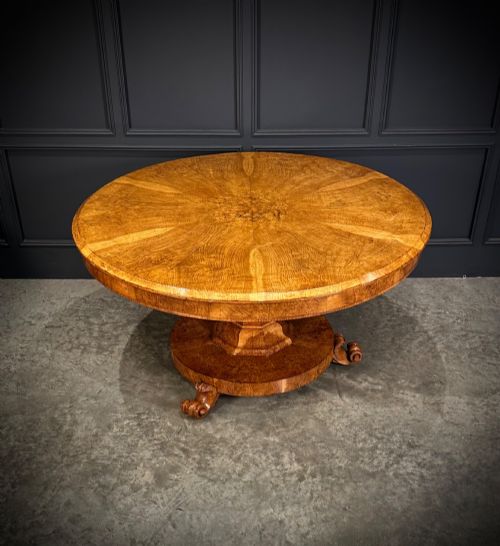


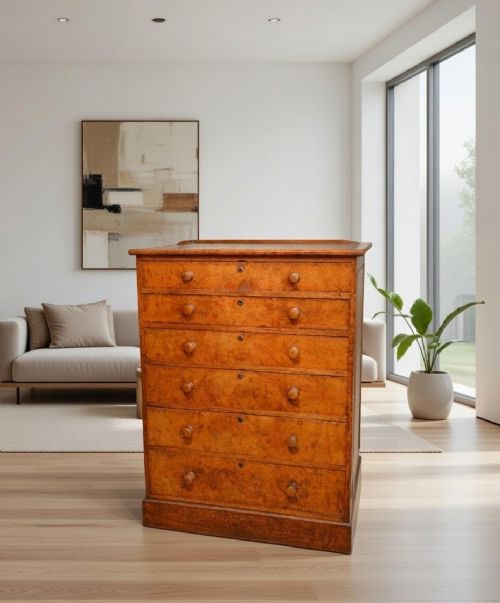


Regency Pollard Oak
Regency pollard oak furniture brings rich, knotted timber grain and warm golden brown tones into the principal rooms of the house.
Regency Pollard Oak
When you search for regency pollard oak, you encounter a specialised range of formal and domestic furnishings dating from the early nineteenth century. These items span the Regency, George IV, and William IV eras, capturing a period when cabinet makers favoured heavily figured native timbers.
The selections on this page comprise occasional tables, centre tables, dining chairs, cabinets, wine coolers, and desks. The smaller writing tables, tea caddies, and Pembroke or drop-flap tables appear alongside substantial library tables and side cabinets.
Most examples originate from the early nineteenth century, constructed during the height of the Regency and George IV periods. You will also find Victorian continuations and occasional pieces bearing regional Irish or Scottish cabinet-making characteristics.
How they were made
Cabinet makers utilised pollard oak veneers selected from the knotted pollarded growth of the tree, laying them over solid oak carcases to display swirling knot clusters. These distinct veneer patterns were frequently bordered with contrasting dark timbers such as ebony or inlaid with finely cut brass stringing.
Secondary structural elements incorporate standard oak and elm for drawer linings and chair frames. Mounts, castors, and paw feet are cast in brass, while desk interiors often integrate fitted compartments and leather writing surfaces.
Regency Pollard Oak Retail Price Guide 2026
Typical asking prices for regency pollard oak among the pieces listed under this phrase on Sellingantiques today, from the lower quarter to the upper quarter. They describe what is for sale here now, not the wider market.
Listings on this page span the 19th Century, Regency, George IV, William IV, and Victorian periods, featuring pollard oak alongside brass, ebony, and glass.
What varies in quality
The visual strength of the pollard oak figure dictates the primary distinction between standard examples and superior workshop production. Tables and cabinets featuring dense, evenly distributed knotting across the primary surfaces command greater appreciation.
Construction methods and secondary details such as original brass inlay, patinated leather panels, and signed maker stamps elevate particular pieces. Well-proportioned turned pedestals and crisp carved wooden mounts reflect the skill of the original maker.
Pennington of Camberwell·Williams and Gibton·William Trotter·Gillows
The Regency Pollard Oak Glossary
- Pollard oak
- Timber harvested from trees that were pollarded by cutting the top branches to promote a dense cluster of shoots, resulting in highly figured, mottled wood. This distinctive grain pattern forms the defining surface feature of these furnishings.
- Cellarette
- A freestanding container or cabinet used for storing bottles of wine in the dining room during the Regency period. They are often lined with lead or fitted with internal dividers.
- Teapoy
- A small box or chest designed for storing loose tea, typically mounted on a central pillar with a tripod base. These containers often contain internal lidded caddies and glass bowls.
- Davenport
- A compact pedestal desk featuring a sloping, hinged writing surface and drawers opening to the side. The form became popular during the Regency era for domestic correspondence.
- Dumb waiter
- A tiered set of revolving or stationary shelves supported by a central pillar, used in dining rooms for serving dishes without domestic staff present.
Regency Pollard Oak: Frequently Asked Questions
What is pollard oak?
Pollard oak is a timber taken from oak trees that were cut back severely in their youth to encourage dense branching. This process creates a tightly knotted, highly decorative grain pattern highly prized by Regency cabinet makers.
Craftsmen sliced this wood into thin veneers to cover the primary surfaces of tables, desks, and cabinets while using sturdier straight-grained oak for internal frames.
How do I care for pollard oak?
Keep pollard oak furniture away from direct sunlight and sudden temperature changes to prevent the delicate veneers from lifting or splitting. Regular dusting with a soft, dry cloth maintains the surface without the need for heavy polishes.
Applying a traditional beeswax occasionally helps nourish the antique timber and preserve its natural sheen.
Where were these pieces used?
These furnishings belonged primarily to the principal entertaining and private rooms of Regency townhouses and country estates. Centre tables and credenzas anchored formal drawing rooms, while writing tables and Davenport desks served libraries and private studies.
Smaller items like tea caddies and occasional tables moved easily between rooms depending on the daily activities of the household.