

Regency Period Rosewood Furniture
Regency period rosewood furniture brings rich timber tones and sharp architectural lines into a room, offering practical elegance for modern spaces.
Regency Period Rosewood Furniture
Regency period rosewood furniture encompasses refined seating, tables, and storage pieces produced during the early nineteenth century under Georgian and Regency styles. These items reflect an era of sophisticated interior design focused on symmetry, classical proportions, and rich surface grain.
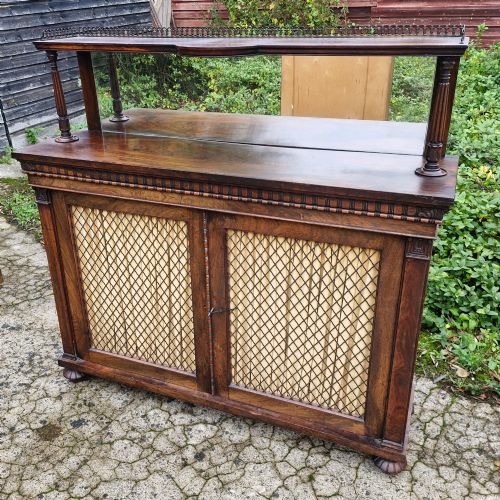
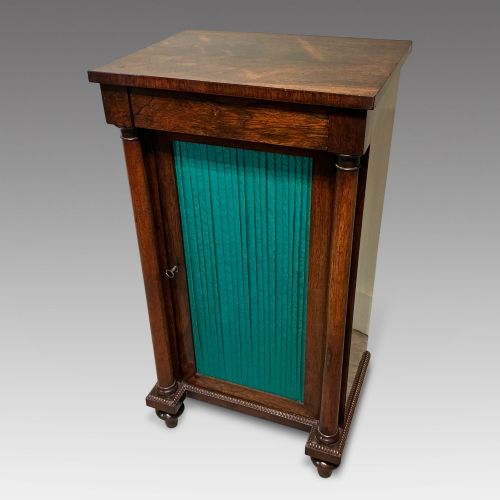
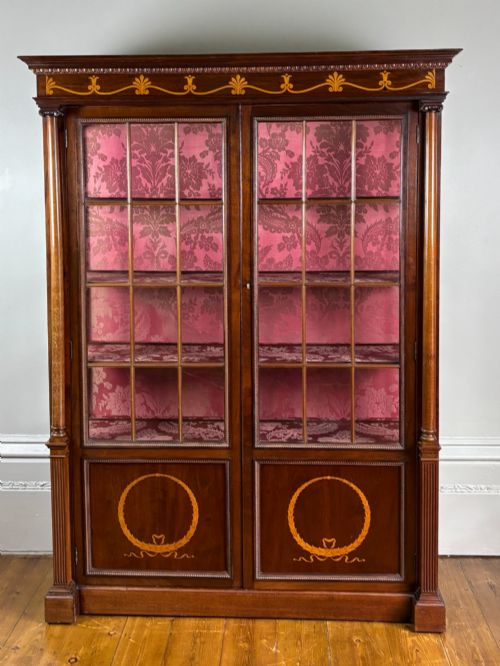
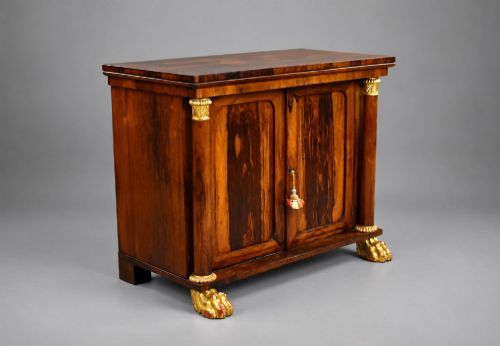
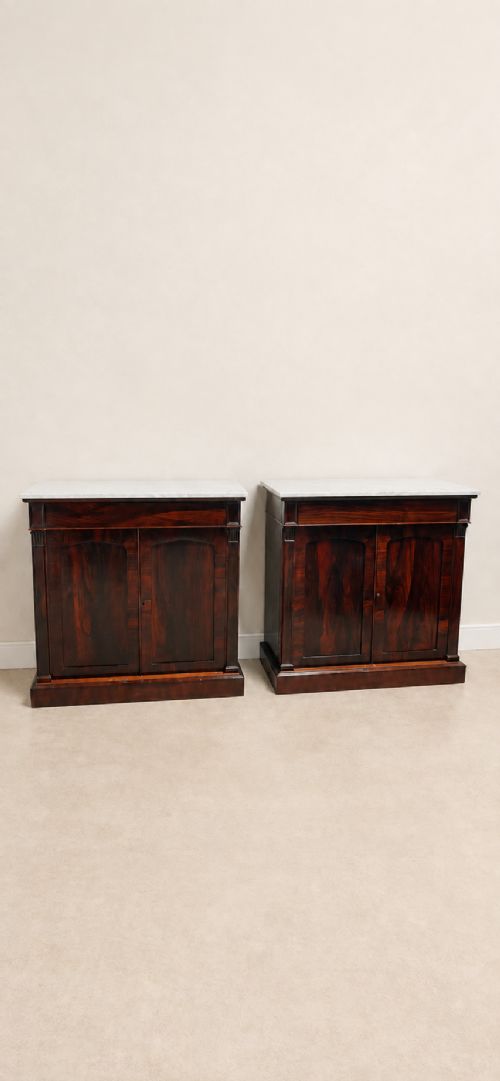
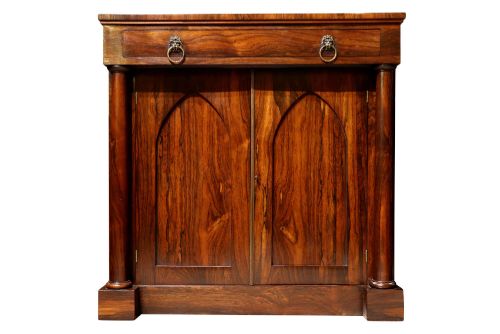
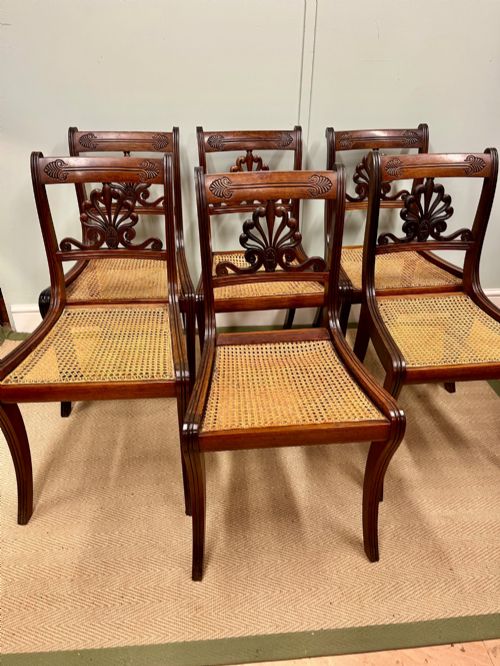
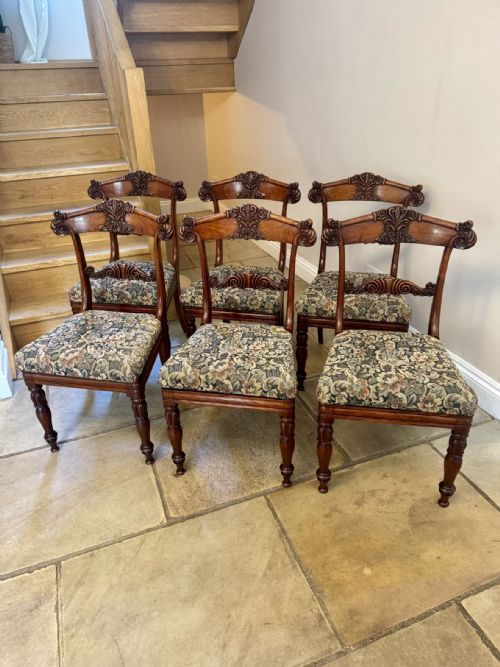
The pieces most commonly encountered on this page include card tables, chiffoniers, side cabinets, and dining chairs constructed from dark tropical timber. Smaller items such as bookcases, what-nots, and magazine racks also appear frequently to serve specific storage functions.
Makers and cabinet-makers of the period drew upon Regency, George IV, William IV, and occasionally Anglo-Indian design vocabularies. This selection demonstrates how domestic spaces of the early nineteenth century integrated display, dining, and gaming into unified room schemes.
How they were made
Cabinet-makers constructed carcases from sturdy secondary timbers before applying figured rosewood veneers to visible exterior surfaces. This technique allowed craftsmen to showcase dramatic dark grain patterns across wide tabletops and cabinet doors without risking the structural movement inherent in solid exotic timber.
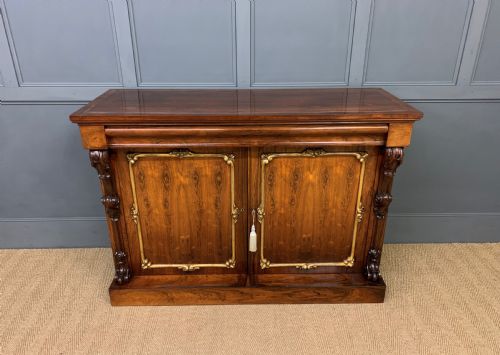
Many examples incorporate precision brass inlay, brass mounts, and castors to accent the dark wood and facilitate movement. Secondary materials such as glass, marble, leather, and upholstery appear on specific functional forms like card tables, bookcases, and chairs.
Regency Period Rosewood Furniture Retail Price Guide 2026
Typical asking prices for regency period rosewood furniture among the pieces listed under this phrase on Sellingantiques today, from the lower quarter to the upper quarter. They describe what is for sale here now, not the wider market.
The listings span the Regency, Georgian, and 19th Century periods, incorporating materials such as brass, marble, leather, and upholstery.
What varies in quality
The crispness of carved details and the visual cohesion of the rosewood veneers separate standard workshop output from exceptional cabinet-making. Superior pieces display carefully matched grain patterns that wrap symmetrically across drawer fronts and table leaves.
The integration of brass inlay and hardware dictates much of the visual success in finer examples, where metalwork sits flush with the timber surface. Heavier structural elements, such as pedestal bases and carved supports, show varying degrees of sculptural ambition.
Louis Constantin Le Gaigneur
The Regency Period Rosewood Furniture Glossary
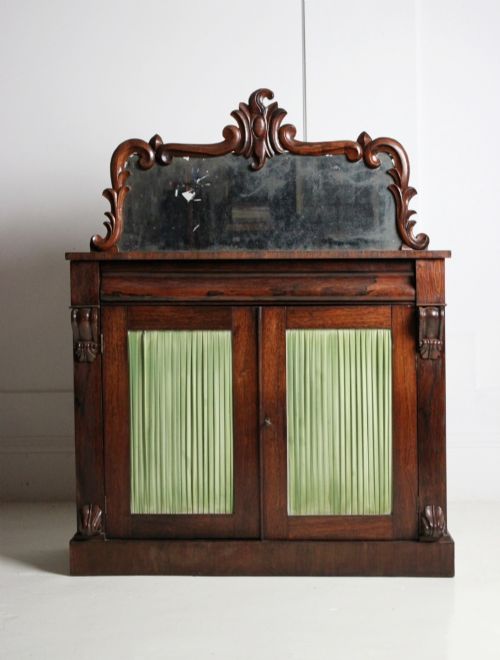
- Chiffonier
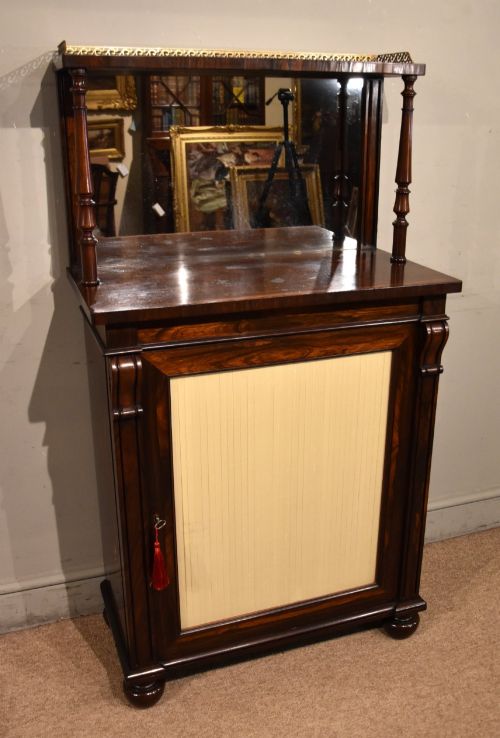
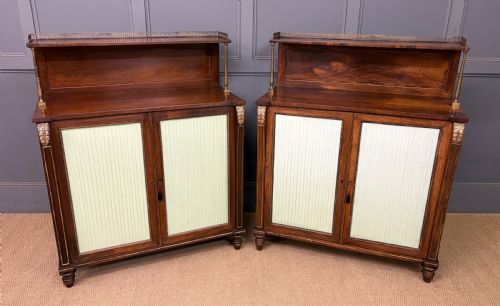
- A low cabinet featuring enclosed shelving below, frequently fitted with fabric-backed or panelled doors. These pieces developed during the early nineteenth century to store books and silver in the parlour.
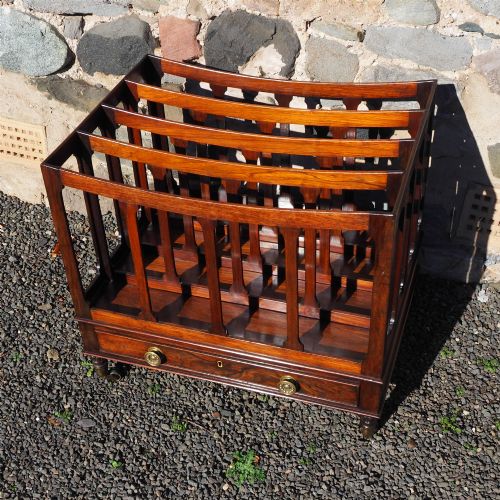
- Canterbury
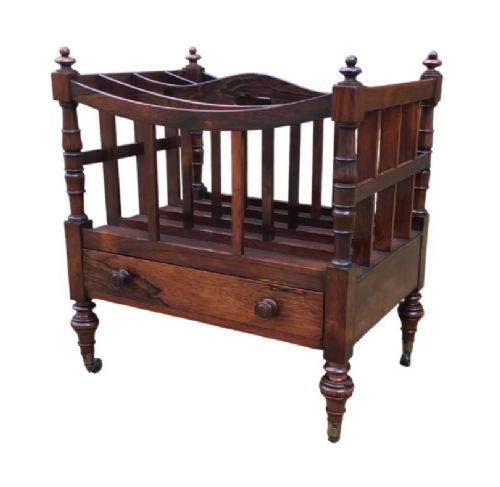
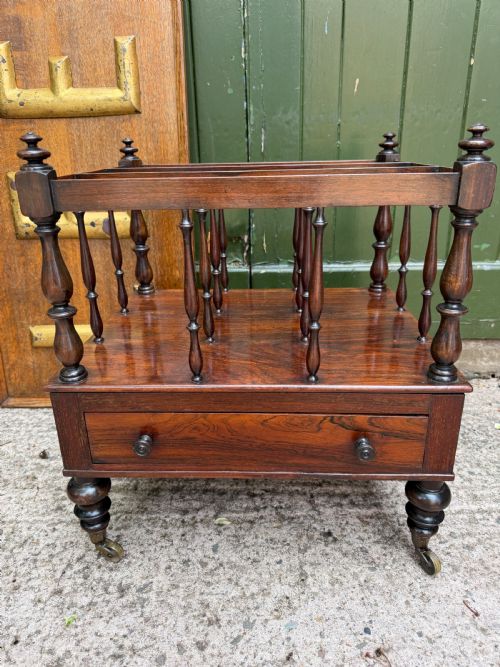
- A low, open-framed stand partitioned into compartments for holding sheet music or periodicals. They typically feature carrying handles and small drawers beneath the main rack.
- Sabots
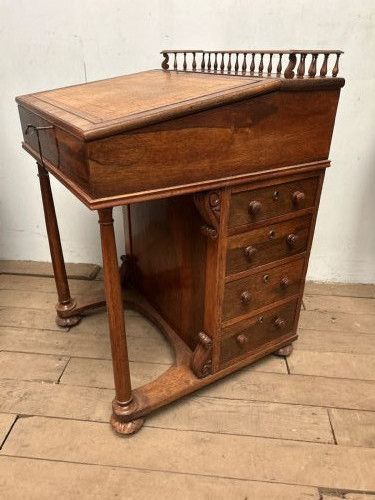
- Metal sleeves fitted over the base of furniture legs to protect the timber from wear and floor moisture. They appear frequently in brass on finer Regency card tables and writing desks.
- Goncalo Alves
- A dense, exotic tropical hardwood displaying contrasting dark brown and light yellow-brown figureing. Cabinet-makers utilised this timber alongside rosewood for select decorative cabinets.
- Quartetto tables
- A set of four graduating occasional tables designed to nest together when not in use. They emerged as a space-saving innovation during the Regency period.
Regency Period Rosewood Furniture: Frequently Asked Questions
What is a chiffonier used for?
A chiffonier served as a compact storage unit in the dining room or parlour, holding glassware, linens, or books behind closed doors. The top surface provided a convenient place for serving drinks or displaying decorative objects.
During the Regency period, these cabinets evolved to include raised shelf backs for books or small ornaments, bridging the gap between sideboards and bookcases.
How do I identify a Regency card table?
Regency card tables feature a folding top that rotates to reveal a lined gaming surface, often supported by a central pillar on a platform base with sabots and castors. When closed, they stood flat against the wall as console tables.
Finer examples incorporate brass inlay along the frieze and top, reflecting the neoclassical taste prevalent during the early nineteenth century.
Where were rosewood tables placed?
These tables were positioned in principal entertaining rooms, such as the drawing room, library, or entrance hall, where dark polished timber contrasted against lighter walls. Centre tables stood free in the middle of rooms, while sofa tables sat alongside seating.
Their finished backs allowed them to occupy central positions in a room rather than remaining pressed against the walls.
How do I care for rosewood furniture?
Rosewood requires stable humidity and protection from direct sunlight to prevent the timber from drying out or fading over time. Regular dusting with a soft, dry cloth preserves the polished surface without the need for heavy silicones.
Applying occasional specialist wax maintains the deep sheen of the veneer and protects the antique finish from minor environmental moisture.