




Regency Period Portraits
Regency period portraits capture the likenesses of sitters in oil, watercolour, and silhouette from an era of sharp social shift.
Regency Period Portraits
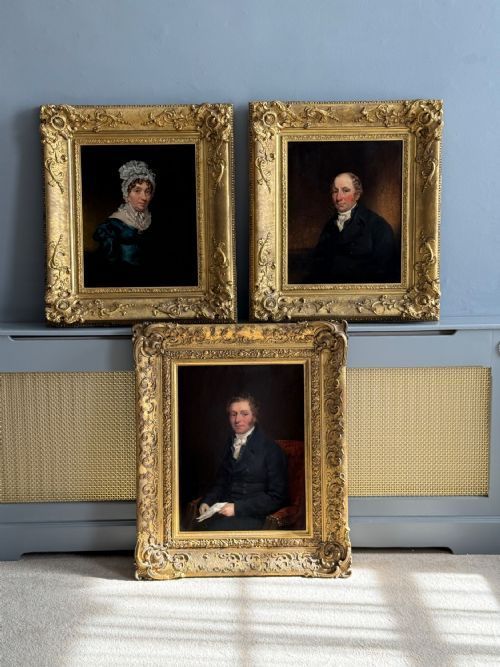
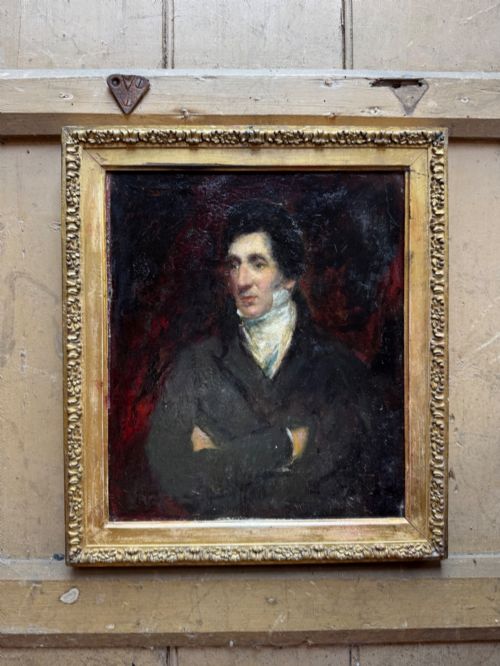
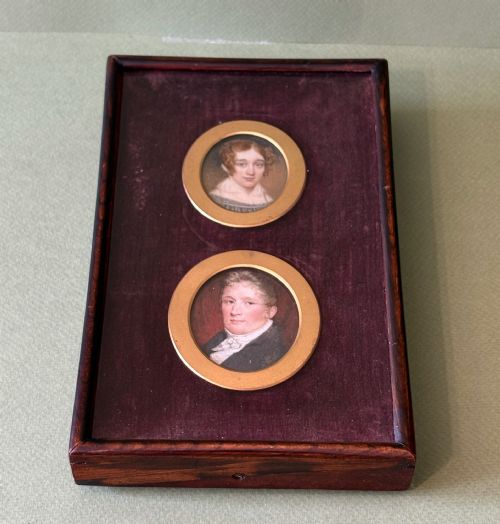
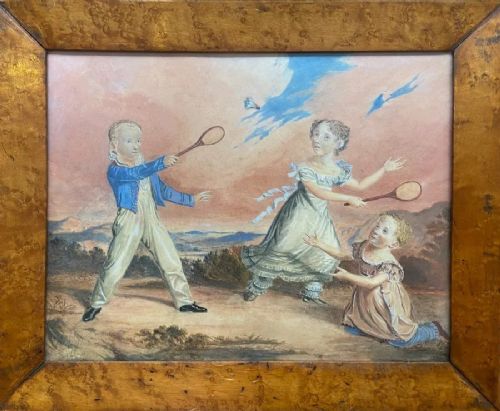
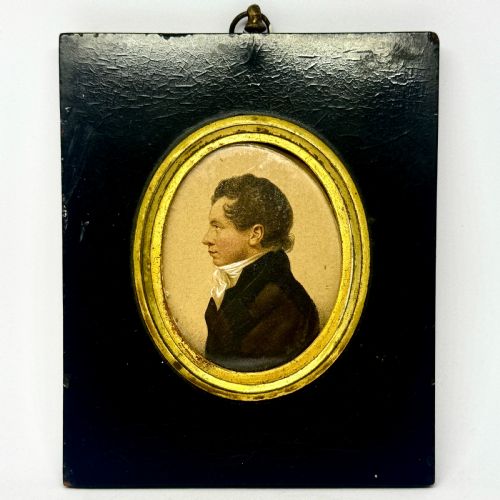
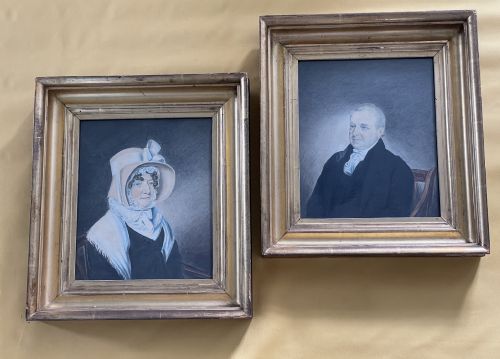
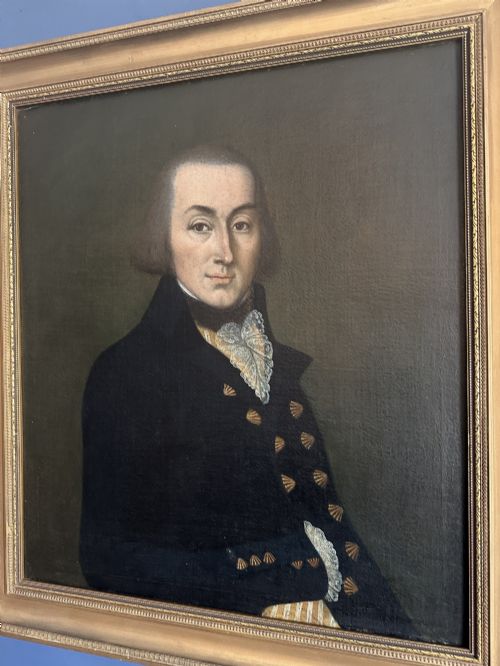
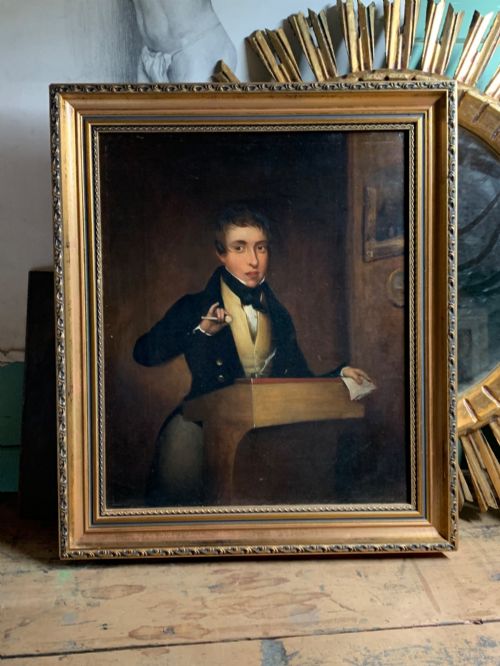
Regency period portraits encompass oil paintings, watercolours, portrait miniatures, engravings, and silhouettes created during the early nineteenth century and surrounding Georgian decades. A buyer exploring this selection encounters works executed on canvas, panel, paper, and glass, often housed in original giltwood, wood, or ebonised frames.
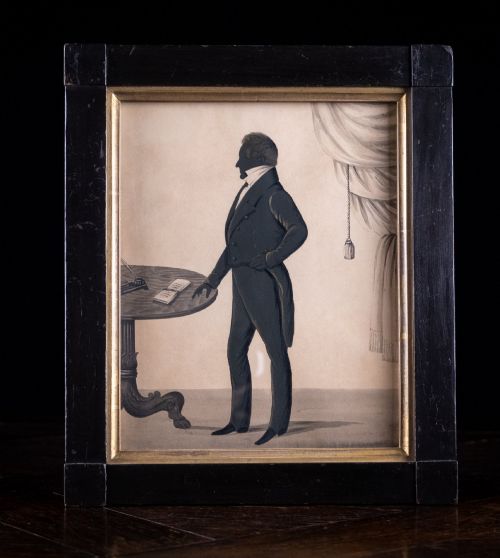
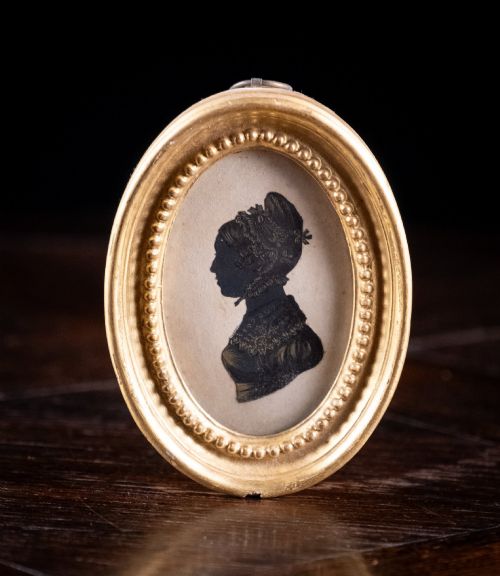
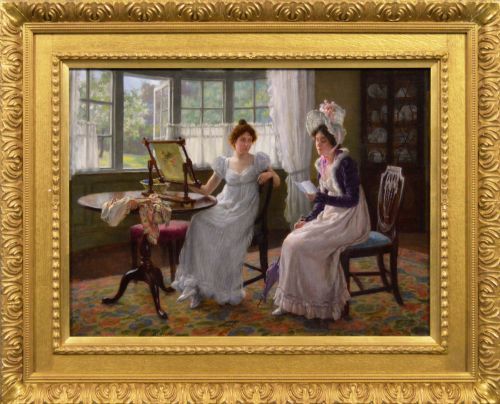
The most common formats on this page range from intimate watercolour miniatures and painted silhouettes to large-scale oil on canvas depictions of gentlemen, ladies, and children. Many capture individual sitters, whilst others present pairs or family groups associated with English Regency, Georgian, and nineteenth-century romanticism.
How they were made
Artists of the era utilised oil paint on canvas or wooden panel, watercolour and gouache on paper, and delicate pigments applied directly to glass for silhouettes. Engravers employed stipple and hand-colouring techniques on paper to produce multiples after prominent painters.
Framing formed an integral part of the presentation, using carved and gilded wood, Hogarth moulding, or dark ebonised profiles to protect and define the artwork.
A shaving ritual interrupted by an impatient wife makes domestic life in the Regency parlour delightfully permanent.
What varies in quality
Quality rests upon the precision of the draughtsmanship, the psychological depth captured in the sitter's expression, and the fluency of the brushwork or silhouette cutting. Works by documented studio artists or named painters display superior handling of fabric textures, lighting, and anatomical proportion compared to naive or provincial examples.
The survival of original framing, contemporary inscriptions, and untouched surfaces significantly elevates the standing of a piece within the broader range.
Joseph Clover RA·Sir Thomas Lawrence·Charles Haigh Wood·Thomas London·John Raphael Smith·Thomas Woolnoth·Emma Kendrick·Rolinda Sharples·Adam Buck·Richard Cosway RA
The Regency Period Portraits Glossary
- Portrait miniature
- A small-scale painting executed on ivory, vellum, or paper, designed for private contemplation or wearing as a locket. They required exceptional magnification and microscopic brush control.
- Giltwood
- Wood carved and coated with a layer of gold leaf or gilt gesso. Regency frames utilised this method to create brilliant reflective borders around paintings.
- Stipple engraving
- A printmaking technique using dots of varying density to render tonal gradations and flesh tones. This method translated delicate portrait drawings into reproducible prints.
- Gouache
- An opaque water-based paint mixed with a binding agent, offering a matte finish. Artists combined it with watercolour on paper to build denser highlights in miniature studies.
Regency Period Portraits: Frequently Asked Questions
What materials were used for these portraits?
Makers employed oil on canvas, wood panel, watercolour, gouache, glass, and paper. Engravers also produced printed works finished by hand.
Frames were commonly built from timber with giltwood finishes, plain wood, or ebonised surrounds.
How do I distinguish Regency portraits from Victorian ones?
Regency pieces typically reflect the neoclassical aesthetic, clothing styles, and softer romantic palettes of the early nineteenth century. Victorian examples often introduce heavier interior narratives and darker tones.
Inscriptions, sitters' attire, and framing styles frequently offer clues to the exact decade of production.
Were these portraits meant to be hung or kept private?
Larger oil paintings and framed engravings were displayed on the walls of drawing rooms and country houses. Smaller watercolours and silhouettes on glass were often kept in intimate spaces or carried as personal tokens.
Miniatures were frequently designed to be held in the hand or worn close to the body.
What is a painted silhouette on glass?
This technique involved painting the portrait profile directly onto the reverse of a glass panel, often backed with silk or foil to accentuate the contrast. It created a distinct reflective depth not found in paper silhouettes.