



Regency Period China Plate
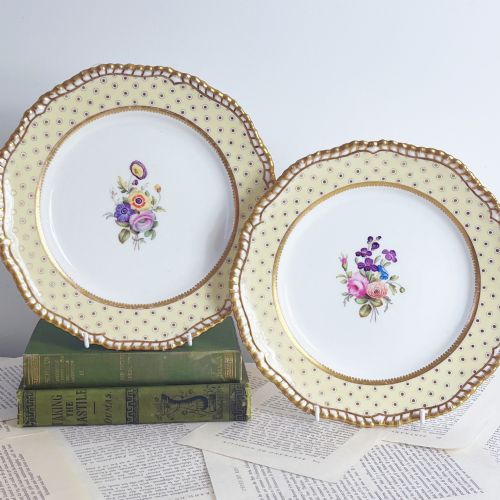
These regency period china plate examples bring together fine porcelain, rich gilding and botanical painting from the opening decades of the nineteenth century.
Regency Period China Plate
A regency period china plate represents the refined dining and dessert services of the early nineteenth century, encompassing forms from simple decorative dishes to comprehensive dessert and dinner services. The examples appearing here span the nineteenth century, Georgian, Regency and 1910 periods, reflecting both contemporary manufacture and later echoes of the taste.
Buyers seeking a regency period china plate will encounter specific functional types designed for the table, including serving dishes, dessert plates and oval dessert dishes. These pieces frequently emerge in pairs or small sets, such as the early Staffordshire groups and Spode pairs recorded in the current inventory.
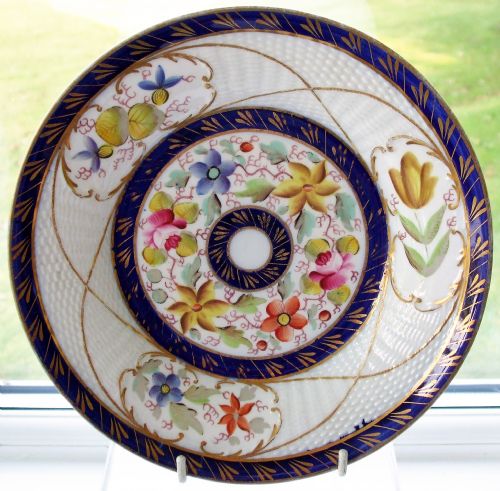
Originating largely from notable English factories, these ceramics carry the distinct stylistic markers of the Regency and Georgian eras alongside Grand Regency variants. The designs range from armorial motifs and topographical scenes to vibrant Imari palettes and botanical studies.
Materials and manufacture
The physical substance of a regency period china plate rests upon refined porcelain, earthenware and ceramic bodies, shaped to form plates and serving dishes. Manufacturers utilised specialised glaze formulations to seal the clay body and provide a smooth, glossy surface suitable for detailed overglaze painting.
Decoration relied heavily on the application of gold leaf, gilding and enamels to accent borders, rims and central motifs. Botanical subjects, topographical views and armorial designs were meticulously hand-painted onto the porcelain before final firing.
Binstead Cottage on the Isle of Wight found permanent immortality painted onto a Worcester dessert plate.
Factors of distinction
Quality in a regency period china plate is evident in the crispness of the porcelain moulding and the refinement of the ceramic body. Finer examples display superior translucency and a smoother glaze surface free from prominent firing imperfections.
The execution of the painted decoration marks the primary division between standard and superior pieces. Skilled brushwork in botanical studies, topographical scenes and the precision of the gilding elevate the artistic merit of individual plates and services.
Spode·New Hall·Minton·Coalport·Flight Barr And Barr·Chamberlain Worcester·Wedgwood·Barr Flight And Barr
The Regency Period China Plate Glossary
- Porcelain
- A hard, fine-grained ceramic material fired at high temperatures to achieve vitrification and translucency. It served as the primary canvas for Regency period dessert and dinner wares.
- Gilding
- The application of gold leaf or powdered gold to ceramic surfaces, typically accenting rims and borders. This decorative technique added considerable opulence to table services.
- Imari palette
- A decorative scheme employing iron red, underglaze blue and gold, inspired by Japanese export wares. Staffordshire potteries frequently utilised this vibrant style.
- Armorial
- A ceramic design featuring a family coat of arms or crest. Such pieces were custom ordered by landed families for their dining tables.
- Topographical
- A style of painting depicting specific identifiable landscapes, buildings or rural cottages. Worcester factories frequently applied these miniature views to centre wells.
Regency Period China Plate: Frequently Asked Questions
What distinguishes a dessert plate?
Dessert plates from this era were proportioned specifically for the final course of a formal meal, measuring slightly smaller than standard dinner plates. They often featured more elaborate painted decoration, such as botanical studies or topographical views.
Makers concentrated their finest artistic efforts on these pieces because dessert represented a social display of wealth and taste in the drawing room.
How should these plates be displayed?
Displaying these ceramics requires secure wall mountings or stable plate stands that support the rim without causing stress to the body. Direct sunlight should be avoided to protect enamel colours and gold leaf over time.
Living with these pieces involves gentle handling and hand washing rather than machine cleaning, ensuring the delicate glazes remain intact for daily appreciation.
Were these plates used daily?
Such fine porcelain and earthenware served primarily during formal dinners, grand suppers and polite tea or dessert gatherings. Households kept them specifically for entertaining guests rather than routine family meals.
This restricted usage is the reason many surviving examples retain crisp gilding and unblemished painted surfaces after two centuries.
How do I identify factory work?
Factory identification relies upon painted or impressed marks found on the reverse of the ceramic body, alongside characteristic paste colours and potting techniques. Distinctive painting styles and pattern numbers also point toward specific workshops.
Comparing known markers helps separate major manufacturers like Spode, Worcester and Coalport from smaller or anonymous regional potteries.