

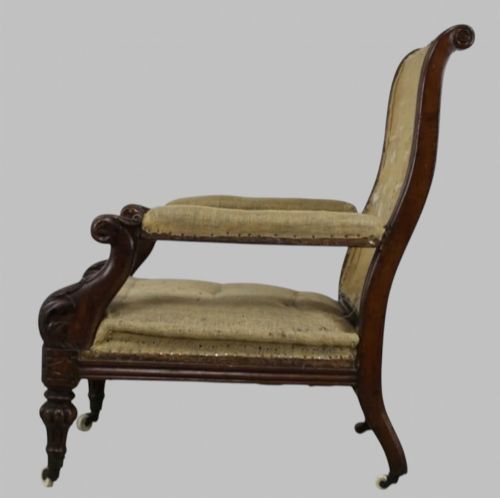



Regency Oak Desk
A regency oak desk brings the honest grain of English timber together with the architectural clarity of the early nineteenth century.
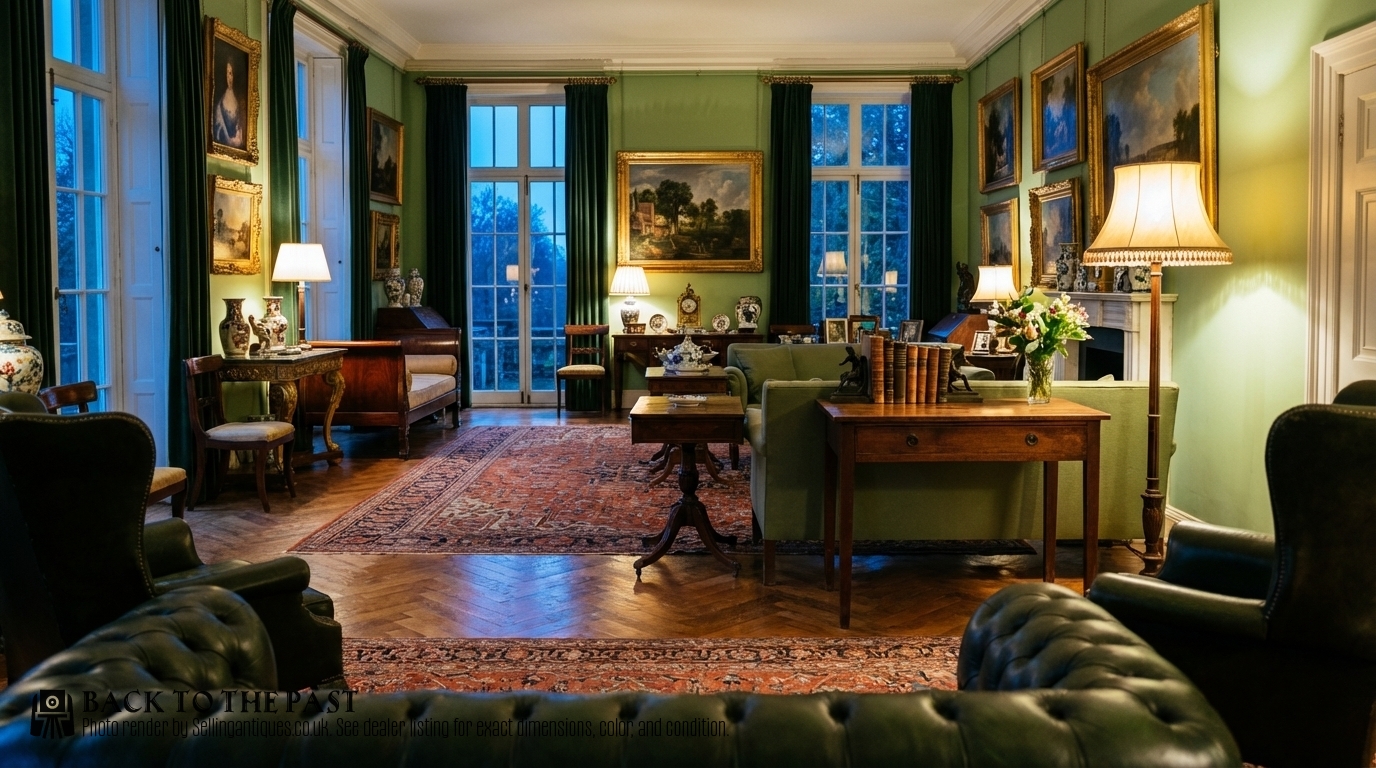
Regency Oak Desk
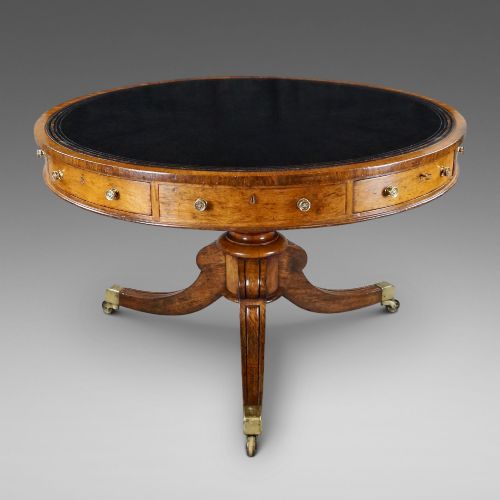
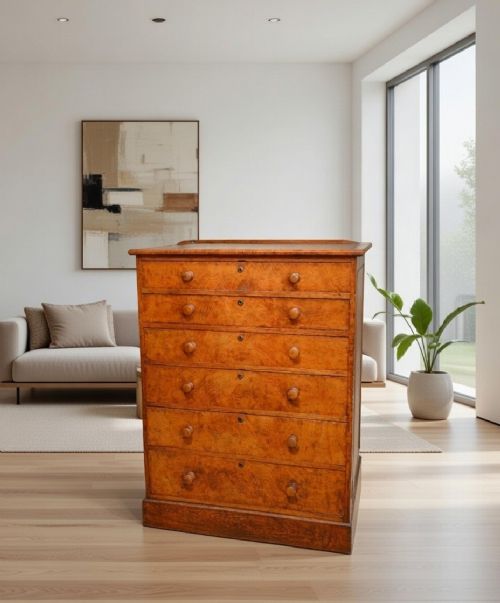
When you search for a regency oak desk, you encounter writing tables, partners desks, library drum tables, and secretaire chests designed for serious study or estate management.
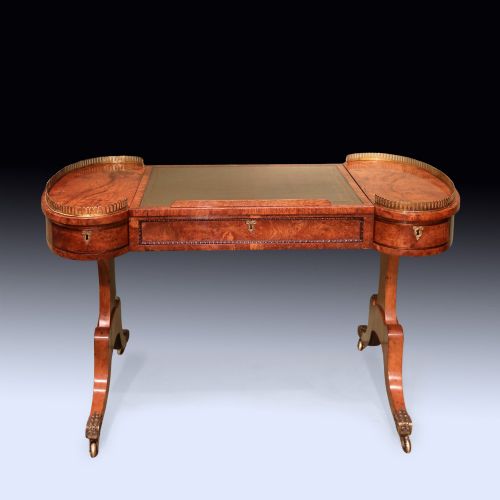
The version you meet most often on this page is the compact writing table or library table, frequently rendered in highly figured pollard oak or burr oak.
These pieces bridge late Georgian practicality and Regency elegance, serving as functional workspaces with deep frieze drawers and inset leather surfaces.
Materials and construction
Cabinetmakers utilised solid oak for structural integrity and drawer linings, applying veneers of pollard oak and burr oak to show off the mottled and knotty grain of the timber.
Turning, bracket construction, and brass handles or castors provide structural support and movement, while tooled leather inserts offer a durable writing plane.
Regency Oak Desk Retail Price Guide 2026
Typical asking prices for regency oak desk among the pieces listed under this phrase on Sellingantiques today, from the lower quarter to the upper quarter. They describe what is for sale here now, not the wider market.
Several desks share floor space with ship compasses and elbow chairs, reminding us that nineteenth-century writers often kept one eye on the horizon.
Assessing quality
Quality rests upon the choice of timber and the dexterity of the veneer work, particularly how symmetrically the burr or pollard oak figures match across the top and drawers.
Fine examples display crisp drawer dovetailing, original brass hardware, and secondary woods like oak preserved entirely intact within the carcass.
Williams and Gibton·Pennington of Camberwell
The Regency Oak Desk Glossary
- Pollard oak
- Timber taken from a tree that has been pruned at a height above livestock reach, producing a dense, highly decorative spotted grain pattern. This figure is prized by cabinetmakers for tabletops and drawer fronts.
- Partners desk
- A large desk designed with drawers and cupboards on both sides so two people can work facing each other. These often feature inset leather writing surfaces.
- Library table
- A freestanding table with a finished back, intended to sit in the centre of a room rather than against a wall. They generally incorporate frieze drawers for writing materials.
- Secretaire chest
- A chest of drawers where the top drawer pulls down and unfolds to reveal a fitted writing interior with small compartments and pigeonholes. It combines storage with a pull-out desk.
- Frieze
- The horizontal band running directly beneath the top surface of a table or desk, usually housing one or more drawers.
Regency Oak Desk: Frequently Asked Questions
How do I tell a partners desk from a writing table?
A partners desk provides workspace and drawer access on both opposing sides, making it a double-sided piece intended to stand away from any wall.
A standard writing table finishes with drawers on only one side and a panelled or plain reverse, meant to be operated by a single writer.
What is pollard oak and why is it used?
Pollard oak comes from trees that were regularly cut back at the crown, causing the grain to grow in a dense, speckled pattern full of tiny dark knots.
Cabinetmakers sliced this timber into decorative veneers to cover the flat expanses of tabletops and drawer fronts, creating striking visual movement.
Can I use a library table as a modern desk?
These tables provide generous surface area and stable construction well suited for contemporary laptop use and daily paperwork.
You should verify the kneehole clearance height, as older writing tables were sometimes built lower than standard modern desks.
How do I care for the leather top on my desk?
Leather writing surfaces require occasional treatment with specialist leather balms to maintain flexibility and prevent the material from drying out or cracking.
Keep liquids away from the leather and avoid placing hot mugs directly onto the surface to protect the historic gold tooling.