




Regency Night Table
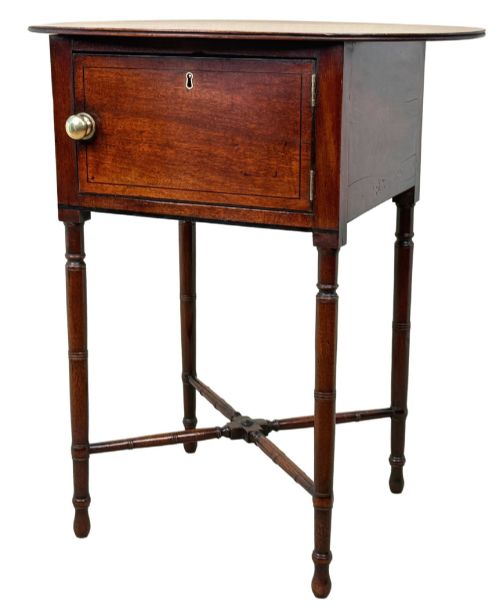
These pieces are a regency night table, compact items that bring period character and functional surface space to a bedroom.
Regency Night Table
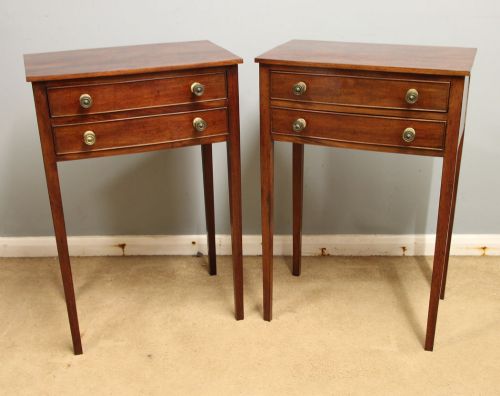
When you search for a regency night table, you are looking at small tables and cupboards designed for the bedside during the early nineteenth century and later revival periods. The most common form on this page is the freestanding mahogany bedside cabinet or cupboard, alongside pairs of lamp and side tables from the nineteenth and twentieth centuries.
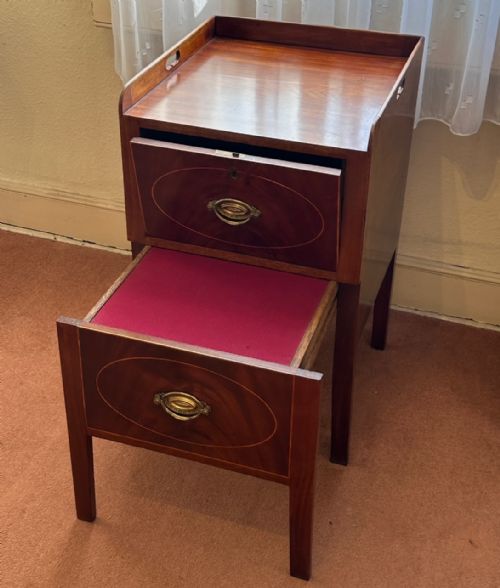
The selection includes cylindrical cupboards, pedestal cabinets, and tables featuring details such as pull-out steps or inlaid woodwork. Pieces range from the Regency and late Georgian eras through to twentieth-century revival interpretations in the same timber.
How they were made
Makers built these pieces primarily using solid mahogany and flame mahogany timbers, often enhanced with ebonised wood details. Construction relied on traditional cabinet-making joints to create stable bodies for daily use beside a bed.
Metal elements appear in brass fittings and handles, whilst auxiliary items from the period utilise silver plate and copper, as seen in chamber candlesticks.
The listings span the nineteenth century, Regency period, and twentieth-century revivals up to 1930, predominantly featuring mahogany.
What varies in quality
The distinction between pieces rests upon the selection of timber veneers, such as richly figured flame mahogany, and the crispness of any inlaid work. Superior examples display finer proportions and more thoughtful integration of functional elements like internal cupboards or pull-out steps.
Origin and period also influence standing, with genuine nineteenth-century pieces holding a different character compared to later twentieth-century revival tables.
The Regency Night Table Glossary
- Flame mahogany
- A veneer cut from the fork of the mahogany tree to create a distinctive, swirling fire-like pattern across the surface. This figuring was favoured on prominent surfaces of fine cabinets.
- Ebonised wood
- Timber treated to resemble ebony through a staining and finishing process. It provides a dark, contrasting accent against lighter mahogany panels.
- Night cabinet
- An enclosed bedside piece featuring a door or cupboard space rather than an open stand. It kept chamber items concealed.
- Pedestal cabinet
- A tall, narrow freestanding cupboard designed to sit beside a bed. Its vertical proportions suited compact Georgian and Regency rooms.
Regency Night Table: Frequently Asked Questions
What is a regency night table?
A regency night table is a small bedside cabinet or stand dating from the early nineteenth century or later revival eras. They were built to hold night-time essentials in the bedroom.
These pieces typically feature mahogany construction, standing on legs or a pedestal base with enclosed cupboard space.
How do I spot a real period piece?
Examine the timber selection, construction methods, and overall proportions of the cabinet. Genuine nineteenth-century examples show appropriate ageing in the mahogany and traditional joinery.
Revival pieces from the twentieth century often replicate these styles, so checking the materials and interior construction helps clarify the date.
Were these tables used for washing?
Some night tables and commodes from the period housed basins or chamber pots behind closed doors. Others functioned purely as lamp tables or storage cupboards for books and candles.
Internal fittings and pull-out steps indicate the specific domestic purpose of an individual cabinet.
Do these tables come in pairs?
Pairs do appear amongst the listings, originating from both the nineteenth century and twentieth-century revival periods. Matching bedside tables are particularly useful for symmetrical bedroom layouts.
Single cabinets are equally common, reflecting how bedroom furniture was originally purchased or survived over time.