





Regency Nesting Side Tables
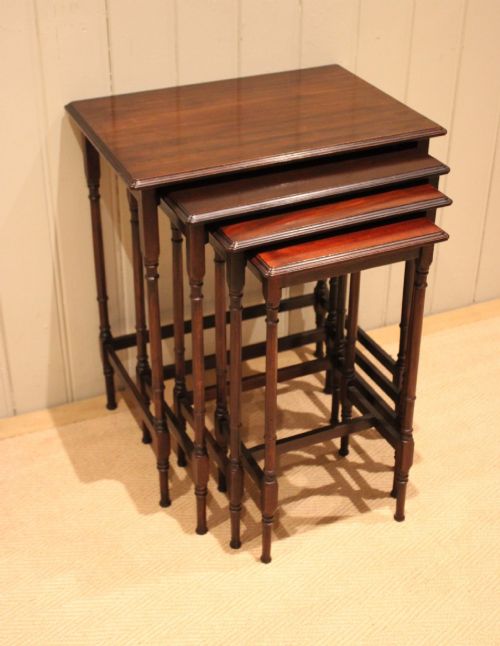
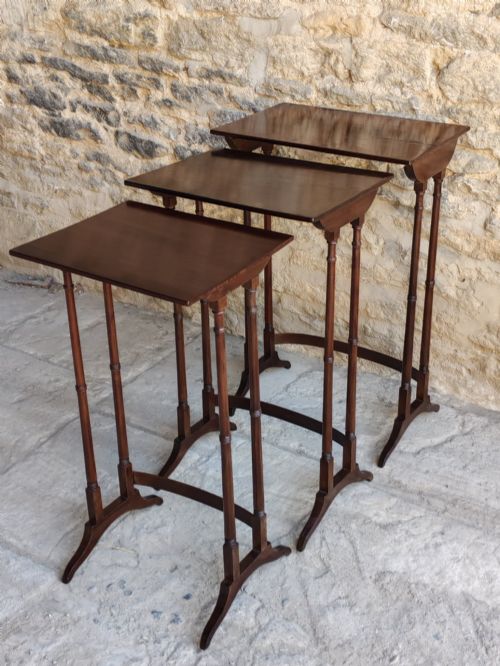
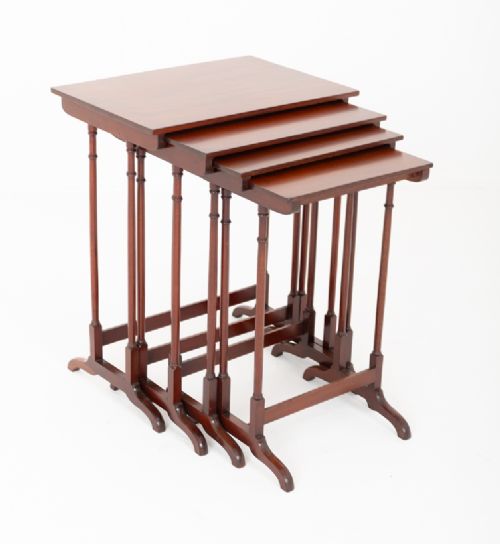
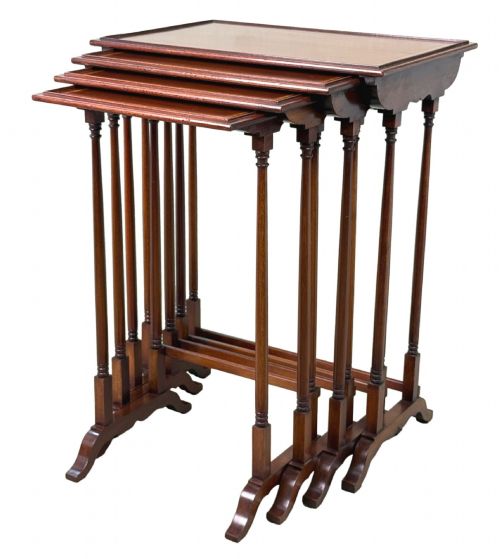
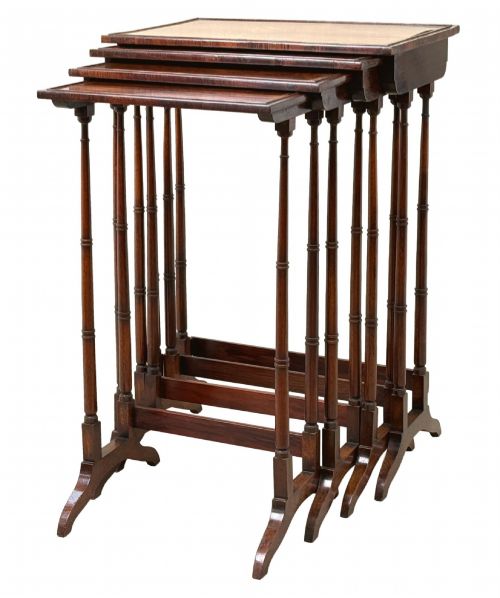
Regency nesting side tables are clever sets of graduated occasional tables designed to slide neatly one beneath another when not in use.
Regency Nesting Side Tables
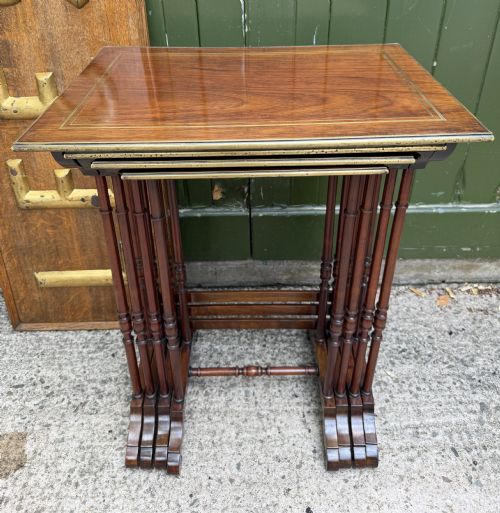
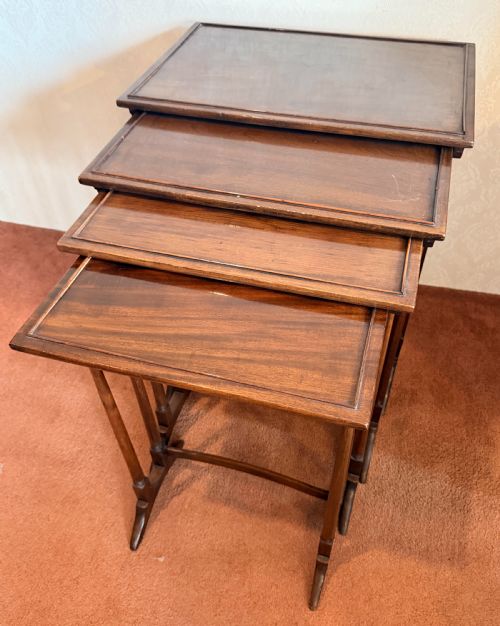
When you search for regency nesting side tables, you are looking at sets of three or four graduated occasional tables designed to slide beneath one another. These pieces serve as flexible surfaces in a room, ready to be pulled out for tea or games and stacked away to save space.
The versions you are most likely to meet on this page date predominantly from the nineteenth century, including the Regency period itself and later revivals from the Edwardian era and the 1920s. They appear most frequently as sets of four, historically termed quartetto tables.
Makers and workshops of the period utilised rich timbers like mahogany and rosewood, sometimes adding delicate inlays or Chinoiserie lacquer decoration. While many originate from the classic Regency era, later revivals capture the same practical elegance.
Materials and construction
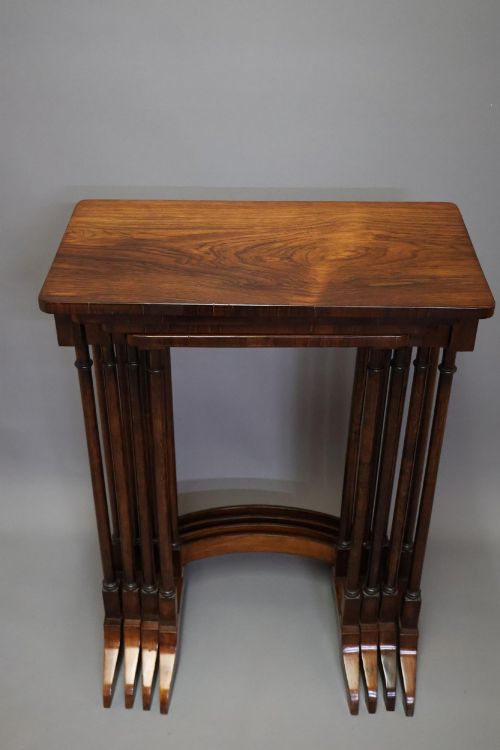
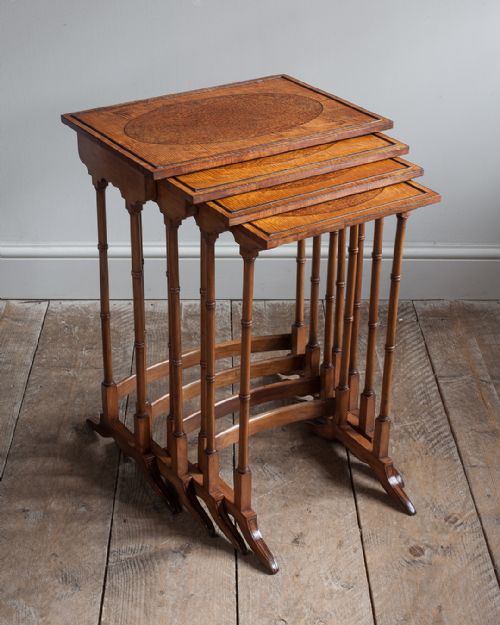
Cabinet makers constructed these tables primarily in solid mahogany and rosewood, frequently employing fine veneers on the tops to display rich wood grain. Some examples incorporate satinwood or feature elaborate brass inlay set into the timber.
Decorative techniques extend to Chinoiserie lacquer work, applying black lacquer and gold leaf detailing to create pictorial scenes on the surfaces. Workshops also produced simulated faux rosewood finishes alongside genuine timbers.
The structural design relies on slender, stable legs connected by trestles or small stretchers to ensure each table clears the one beneath it. This precise graduated sizing allows the set to nest compactly into a single footprint.
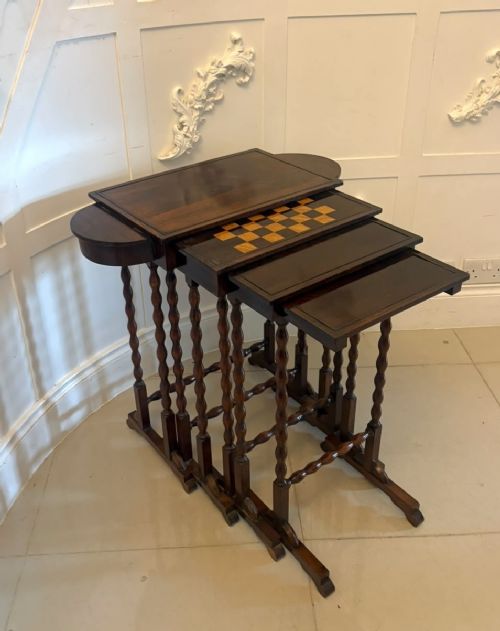
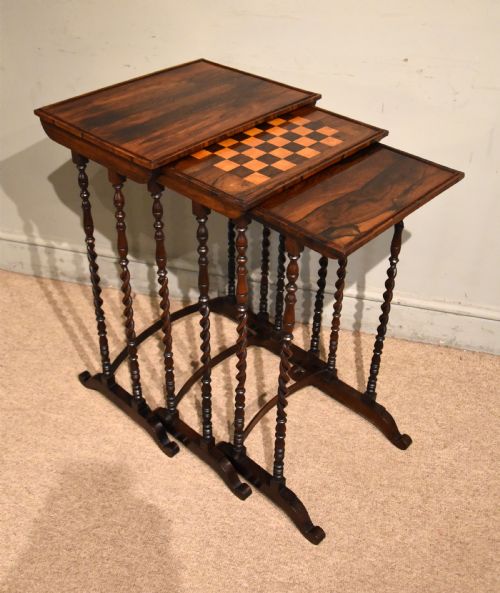
Some nineteenth-century tables come with a hidden chess board built right into the top, ready for an impromptu match.
Judging quality in nesting tables
The distinction between ordinary pieces and the finest examples lies in the selection of timber and the crispness of the cabinet work. Superior tables display densely figured rosewood or finely chosen mahogany veneers that match harmoniously across the graduated set.
Attention to detail in secondary decoration separates exceptional items from standard ones. Hand-applied brass inlay, integrated chess boards, or detailed Chinoiserie lacquer require a high level of specialist craftsmanship that elevates the piece.
Structural harmony is essential, as the tables must slide smoothly without binding and sit level when deployed independently. A well-made set maintains clean joints and proportional slender supports that bear weight without bulk.
Gillows·W&C Wilkinson London
The Regency Nesting Side Tables Glossary
- Quartetto
- A set of four graduated tables designed to nest together. This traditional term appears frequently in nineteenth-century descriptions of nesting suites.
- Chinoiserie
- European interpretation of Chinese and East Asian artistic traditions, typically expressed through lacquer and gold leaf decoration on furniture surfaces.
- Satinwood
- A durable hardwood with a lustrous, golden-yellow sheen used for contrasting veneers and fine inlays.
- Simulated rosewood
- A painted or stained wood finish designed to imitate the appearance of genuine rosewood timber.
- Brass inlay
- Thin strips of brass set flush into the wooden surface to form geometric or linear decorative patterns.
Regency Nesting Side Tables: Frequently Asked Questions
What is a quartetto table?
A quartetto table refers specifically to a set of four nesting tables designed to fit neatly one inside the other.
Cabinet makers of the Regency period and later revivals favoured this four-tier arrangement for its exceptional versatility in entertaining.
How were these tables used originally?
These tables served as portable surfaces for serving tea, holding books, or playing games like chess in principal reception rooms.
Servants would deploy the individual tables around the room as needed and stack them together afterwards to preserve floor space.
Are all these tables from the Regency period?
The selection includes pieces from the nineteenth century alongside later revivals from the Edwardian era and the 1920s.
While genuine Regency pieces date from the early decades of the nineteenth century, revival makers continued producing identical forms well into the twentieth century.
What woods should I expect to find?
Mahogany and rosewood are the primary timbers used in the construction of these nesting sets.
Craftsmen also utilised satinwood and applied decorative finishes such as black lacquer and gold leaf or simulated rosewood.