



19th Century Quartetto Tables
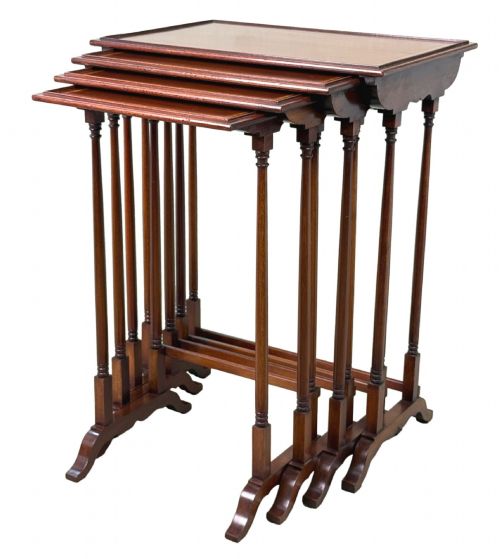
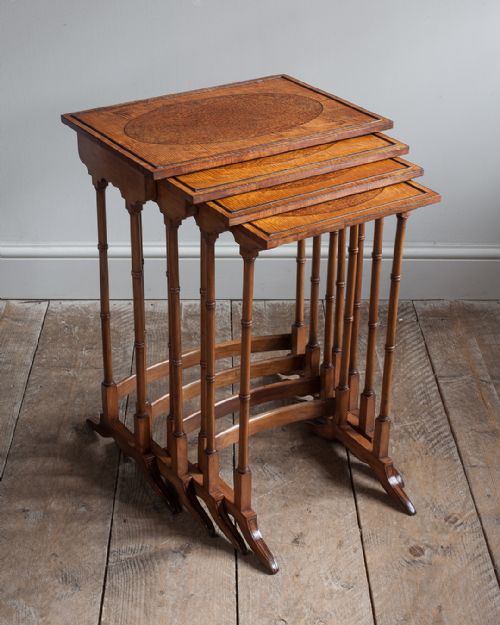
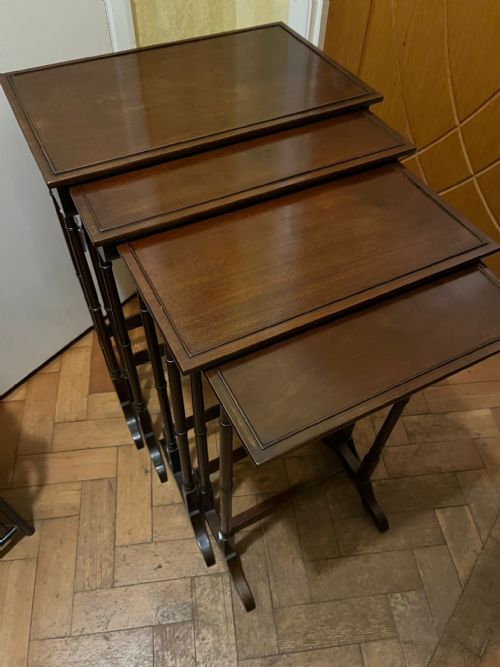
These 19th century quartetto tables are nested sets of four occasional pieces designed to slide neatly together when floor space demands.
19th Century Quartetto Tables
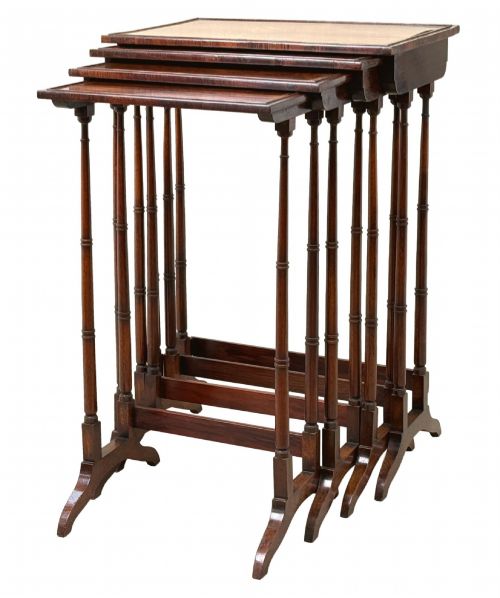
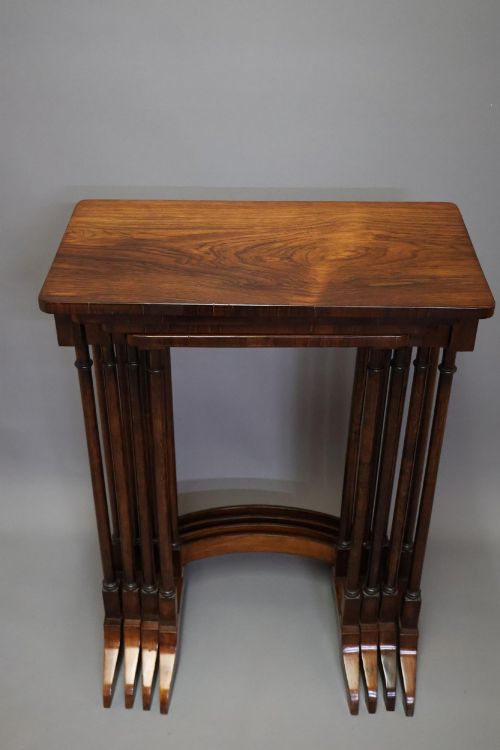
These 19th century quartetto tables are ingenious nesting sets comprising four graduated occasional tables that stack one beneath the other into the footprint of the largest single piece. Buyers searching this phrase encounter nests predominantly in rich mahogany or beautifully figured rosewood, though examples in satinwood, walnut, oak, and teak also appear.
Originating during the Regency and stretching through the Victorian era into the late nineteenth century, these sets served polite society for tea, writing, or needlework. Most configurations consist of four matching tables, though occasional sets of three surface in the records alongside robust hardwood imports.
The form prioritises versatility without sacrificing elegance, allowing a drawing room to adapt instantly from an open floor to a cluster of separate serving surfaces. Their slender turned or pillar supports and precise graduated frames define the aesthetic of the group.
How they were made
Cabinetmakers constructed these tables using dense timbers such as mahogany, rosewood, and walnut, often selecting highly figured veneers for the top surfaces. Timber stability was paramount so that the four graduated frames would slide effortlessly into one another without binding.
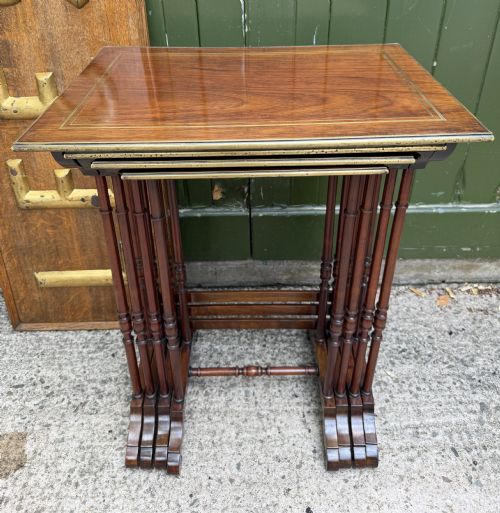
Detailing often included delicate brass inlay or subtle stringing, particularly on Regency examples, elevating the simple utility of a stacking frame into high-style cabinetwork. Joinery had to remain exceptionally light and slender to ensure the smallest table could clear the inner stretchers of the next size up.
Some sets slide together so tightly they trap a tiny pocket of air, letting out a polite sigh as you nest the smallest table home.
What varies in quality
The distinction between ordinary utility nests and masterwork sets lies in the selection of timber veneers and the precision of the graduating frame dimensions. Finer examples display continuous grain matching across the stacked tops or meticulous brass inlay set flush into rosewood.
Structural integrity across all four tiers determines lasting value, as lesser pieces suffer from loose joints caused by the constant friction of nesting and unnesting. The crispness of the turning on the legs and the absence of clumsy repairs preserve the original lightness of the design.
Gillows
The 19th Century Quartetto Tables Glossary
- Quartetto tables
- A set of four graduating occasional tables designed to nest together. The term derives from the Italian for a group of four.
- Nest of tables
- A group of several small tables of descending size that fit one beneath the other to save space. They became particularly popular during the Georgian and Victorian periods.
- Occasional table
- A small, light table intended for intermittent use in a principal room. These pieces were easily moved to serve guests for tea or reading.
- Regency
- An English design period spanning the early nineteenth century defined by classical restraint and archaeological influence. Furniture from this era often incorporates rosewood and brass detail.
- Stringing
- A thin inlay of contrasting wood or metal used to outline panels and tabletops. It provides a crisp linear border to figured veneers.
19th Century Quartetto Tables: Frequently Asked Questions
What are 19th century quartetto tables?
They are nests of four graduating tables designed to slide neatly inside one another to save floor space.
Cabinetmakers built them in woods like mahogany, rosewood, and walnut for use as flexible occasional surfaces in principal rooms.
How were quartetto tables used?
They served polite society for holding tea cups, books, writing materials, or needlework during the Regency and Victorian eras.
Hostesses could pull out individual tables as needed and stack them compactly away when the room needed to be cleared.
How do I tell Regency from Victorian tables?
Regency sets often feature finer rosewood timbers, slender columns, and delicate brass inlay or stringing. Victorian examples frequently utilise heavier mahogany or walnut with simpler turned supports.
Construction details and timber choice usually point directly to the prevailing style of the decade in which they were built.
How do I live with quartetto tables?
They work well positioned beside a sofa or in a corner where the stacked set occupies minimal space until extra surfaces are required. Pulling them apart distributes useful table space across a room without cluttering the floor permanently.
Keep them away from direct heat sources to protect the polished timber surfaces and delicate graduated joints.