


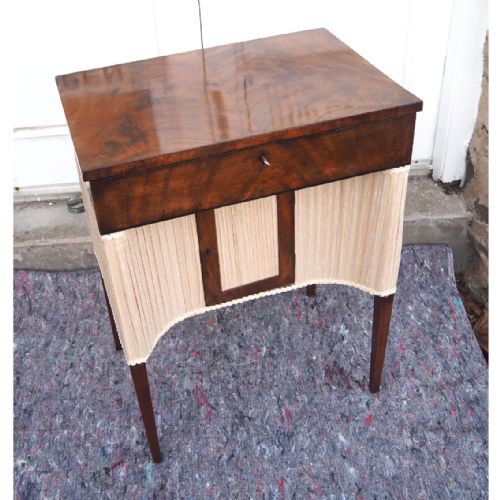


Regency Needlework Desk
A regency needlework desk brings tactile elegance into a room, offering clever compartments for stitching alongside a practical surface for writing.
Regency Needlework Desk
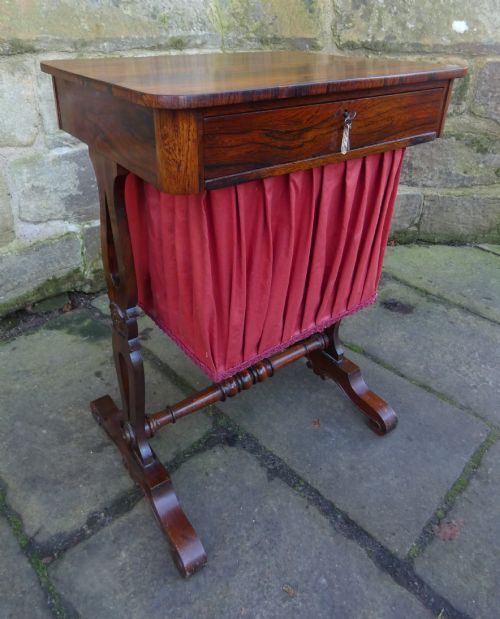
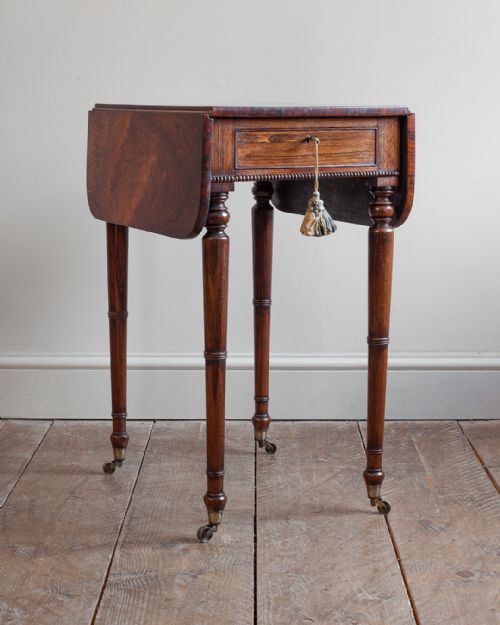
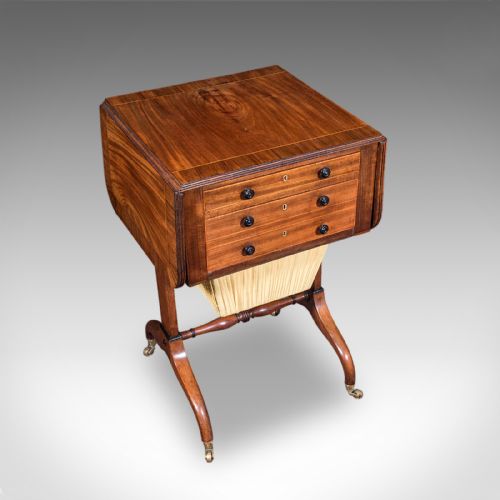
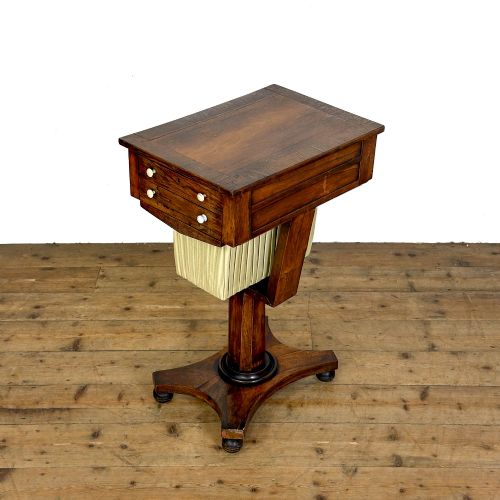
When you search for a regency needlework desk, you are looking at functional antique furniture designed for domestic craft and correspondence. These pieces double as sewing tables, work tables, and occasional tables, combining small drawers or hanging fabric bags with writing surfaces. The examples you are most likely to meet on this page hail from the 19th Century, Regency, and Victorian periods.
Makers of these items favoured rich timbers, with rosewood and mahogany appearing frequently across English Regency, Georgian, and William IV styles. Drop-leaf designs and occasional tables provide compact versatility, making them straightforward to place in modern interiors. Each piece bridges the gap between utility and decorative refinement.
How they were made
Cabinet makers utilised dense hardwoods such as mahogany, flame mahogany, and rosewood, often applying fine wood veneer over a stable secondary wood. Surfaces display rich natural grain patterns, whilst polished finishes highlight the warmth of the timber.
Regency Needlework Desk Retail Price Guide 2026
Typical asking prices for regency needlework desk among the pieces listed under this phrase on Sellingantiques today, from the lower quarter to the upper quarter. They describe what is for sale here now, not the wider market.
Hidden beneath many of these elegant tops hangs a secret fabric pouch, originally designed to swallow endless tangles of embroidery thread.
What varies in quality
The distinction between standard and superior pieces rests largely on the selection of timber and the precision of the cabinet work. Highly figured flame mahogany and richly grained rosewood elevate a piece, especially when matched carefully across drop leaves and drawer fronts.
Refinement in turning, jointing, and the integration of the needlework compartment separates workshop output. Subtle decorative details, such as finely cast brass fittings and well-proportioned pillar supports, indicate higher craftsmanship.
The Regency Needlework Desk Glossary
- Drop leaf
- A table top with hinged flaps that fold down to save space or lift up to extend the surface. This mechanism allows the furniture to adapt to smaller rooms.
- Flame mahogany
- A highly decorative veneer cut from where a branch joins the tree, displaying a characteristic flickering flame pattern. Cabinet makers used this to create striking visual movement on drawer fronts.
- Rosewood
- A heavy, durable timber with a dark grain and reddish-brown hue favoured during the Regency and Victorian eras. It polishes to a high lustre.
- Work table
- A small domestic table fitted with drawers and a fabric bag for holding sewing and needlework supplies. These versatile pieces also served for light writing tasks.
- William IV
- A transitional design style spanning the 1830s, characterised by robust proportions and classical revival motifs. Pieces from this era often feature substantial pedestals and finely figured wood.
Regency Needlework Desk: Frequently Asked Questions
What is a regency needlework desk used for?
These pieces were originally designed for domestic handcrafts like sewing and embroidery, whilst also providing a compact surface for writing letters. The integrated drawers and hanging fabric bags kept threads and tools neatly tucked away.
Today, they function brilliantly as occasional tables or small desks in sitting rooms and bedrooms. Their historic utility translates smoothly into modern spaces requiring modest writing surfaces.
How do I tell Regency from Victorian tables?
Regency pieces typically display restrained classical lines, lighter proportions, and refined brass details inspired by ancient Greece and Rome. They date from the early decades of the nineteenth century.
Victorian examples often feature heavier proportions, darker rosewood, and bolder turning on the pedestals. Examining the timber and structural form helps clarify the period of manufacture.
Are these tables suitable for everyday use?
Solid construction and durable hardwoods mean these tables handle gentle daily tasks like writing or displaying objects with ease. The drop leaves provide flexible surface space depending on your immediate needs.
Care should be taken to protect polished wood surfaces from moisture and direct heat. Treating the timber with appropriate wax preserves the historic finish.
What woods were used for these desks?
Makers relied heavily on imported tropical hardwoods, particularly rich brown mahogany and dark, heavily grained rosewood. Flame mahogany veneer was frequently selected for its striking visual movement on prominent surfaces.
Secondary woods like pine or oak appear inside drawer construction and internal framing. Brass hardware provides durable contrast against the dark polished timbers.