
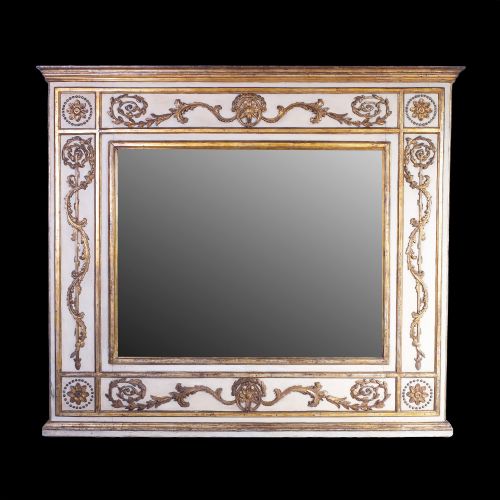
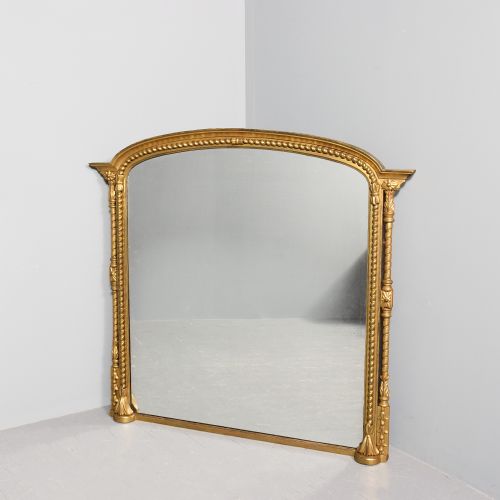

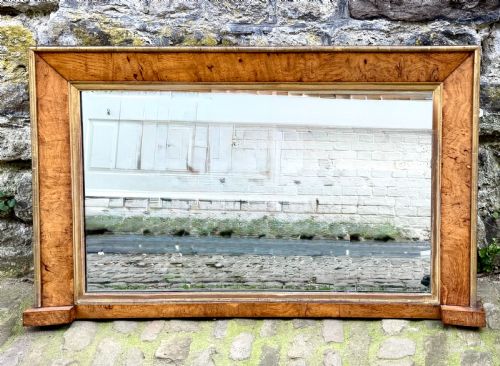


Regency Mantelpiece Mirror
A regency mantelpiece mirror brings architectural balance and reflective light to a room, anchoring the hearth with Neoclassical grace.
Regency Mantelpiece Mirror
A regency mantelpiece mirror sits above the fireplace, designed to expand the perceived volume of a room and catch the flickering light of candles or fires. These large formats primarily manifest as overmantel mirrors spanning horizontal spaces, though vertical pier variations also appear.
The dominant style on this page draws heavily on the Regency, Grand Regency, and Neoclassical vocabularies, alongside later Victorian revivals and early twentieth-century interpretations. Overmantels frequently utilise compartmental, triple plate, or tryptic configurations that divide the glass into distinct sections within a unified architectural frame.
Origins span the nineteenth century, including specific periods like the William IV era, stretching through to later Victorian and nineteen-twenty examples. Buyers encounter everything from simply painted wood frames to grand gilded surfaces designed to dominate the drawing room chimney breast.
Materials and Construction
Makers built these frames using timber foundations such as mahogany, walnut, or burl wood, alongside softer woods prepared for decorative finishes. Giltwood, gesso, composition, and gold leaf provide the luminous metallic surfaces characteristic of the period, often enhanced with painted wood or brass detailing.
Glass production relied on mirror plate inserts, frequently split into multiple sections within compartmental or triple plate overmantel designs. Carved wooden elements and moulded composition ornaments were applied to the frames to achieve the intricate Neoclassical motifs seen across the inventory.
Listings feature periods spanning the nineteenth century, the Regency era, the William IV reign, Victorian times, eighteen-eighty, and nineteen-twenty.
Factors of Quality
The distinction between standard and superior pieces rests upon the crispness of the carving and the depth of the gilding applied to the gesso or wood. Hand-carved giltwood details display a sharpness and precision that mass-produced composition ornaments simply cannot replicate.
Original mirror plates with age-appropriate foxing and silvering command greater appreciation than modern replacements. The architectural proportions of the frame, particularly in triple plate or tryptic overmantels, determine how successfully the object integrates with a mantelpiece.
The Regency Mantelpiece Mirror Glossary
- Overmantel mirror
- A large horizontal mirror designed specifically to be hung on the wall directly above a mantelpiece or fireplace. They often feature multi-plate glass configurations to fit the wider proportions of chimney breasts.
- Giltwood
- Timber, typically pine or gesso-coated wood, covered with thin sheets of gold leaf. It forms the lustrous golden surfaces characteristic of formal nineteenth-century frames.
- Composition
- A moulded material made from whiting, resin, linseed oil and glue, pressed into decorative reliefs. Makers utilised this mixture to create intricate ornaments on mirror frames more quickly than hand-carving.
- Tryptic
- A mirror divided into three distinct vertical or horizontal panels within a single frame. This format is common in larger nineteenth-century overmantel designs.
- Gesso
- A plaster-like mixture applied to wooden frame foundations to provide a smooth base for gilding or painting. Its smooth texture allows for fine surface detail.
Regency Mantelpiece Mirror: Frequently Asked Questions
Where should a mantelpiece mirror be hung?
These mirrors traditionally sit directly above the fireplace mantel, anchored securely to the wall to bear the substantial weight of the timber and glass. Positioning them at this height allows the plate to reflect the opposite side of the room and bounce natural light downwards.
While the hearth remains their natural home, large formats also function effectively on principal salon walls where horizontal proportions can anchor surrounding furniture.
How do I identify a Regency frame?
Regency frames typically display restrained Neoclassical motifs, architectural symmetry, and classical details such as reeding, columns, or ball-bearing friezes. The giltwood or painted surfaces aim for a clean, formal elegance rather than the heavy ornamentation of later Victorian pieces.
Examining the construction methods at the back of the timber frame often reveals period joinery and hand-cut fixings consistent with early nineteenth-century workshop practices.
Can these mirrors be used in modern rooms?
A regency mantelpiece mirror contrasts effectively against minimalist contemporary interiors by introducing historical texture, warmth, and metallic reflection. The architectural presence of a large giltwood or mahogany frame grounds modern seating arrangements and adds immediate focal depth.
Ensuring the wall structure can support the weight of the timber and glass remains the primary practical consideration when integrating antique mirrors into contemporary spaces.