
Regency Mahogany Storage
Regency mahogany storage brings together timber chests, presses, and side cabinets built to organise rooms with clean proportions and deep wood grain.
Regency Mahogany Storage
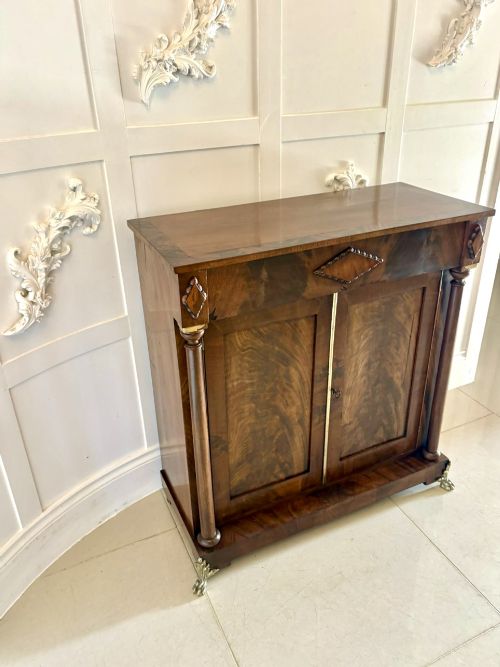
Regency mahogany storage encompasses chests of drawers, linen presses, bookcases, and side cabinets originating primarily from the Regency and Georgian periods. These pieces serve practical household needs through fitted drawers, cupboards, and shelving units designed for domestic order.
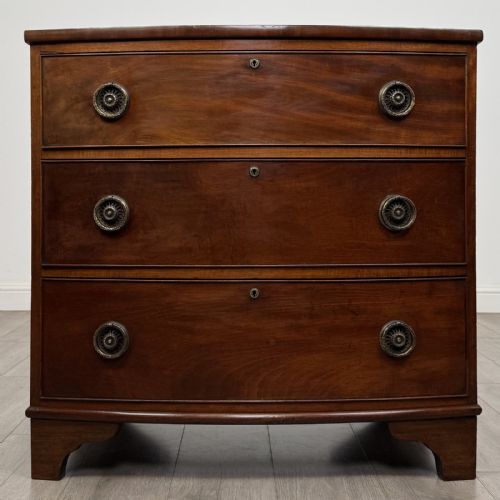
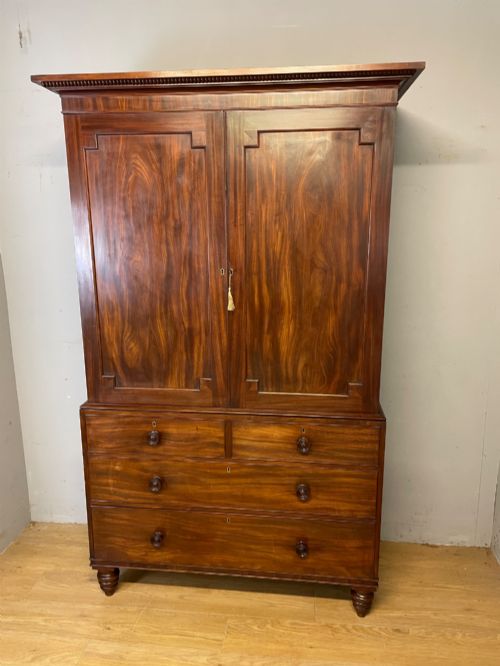
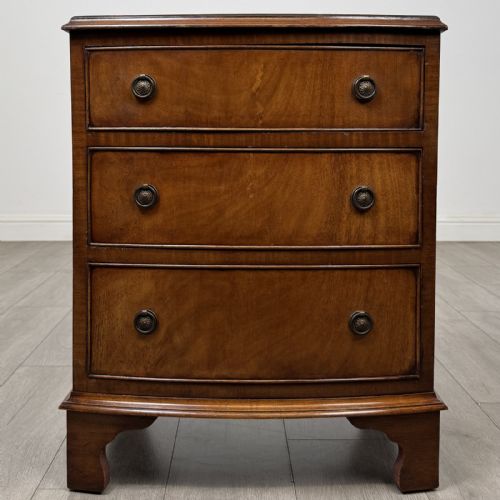
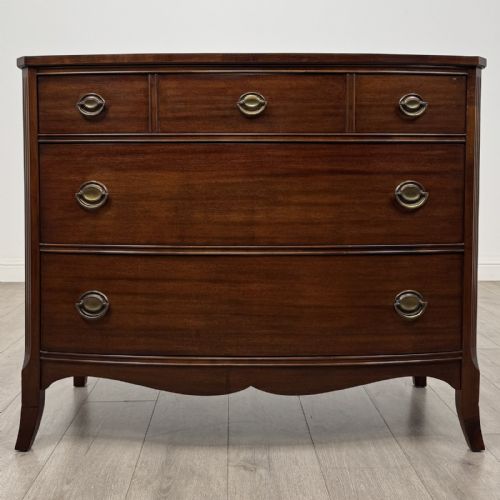
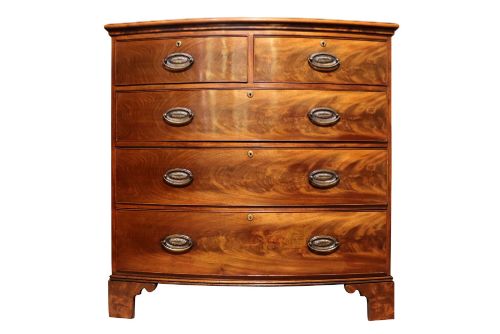
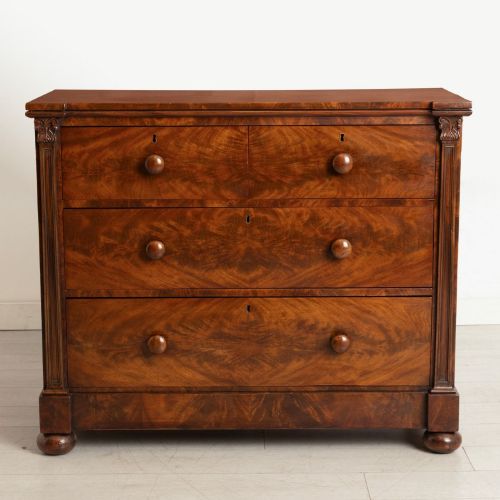
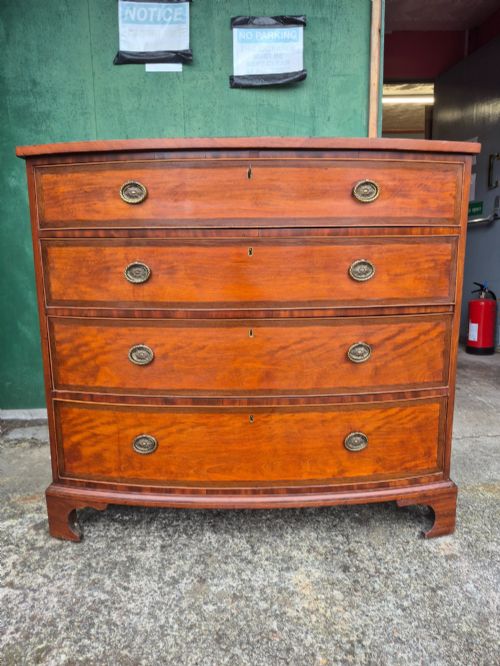
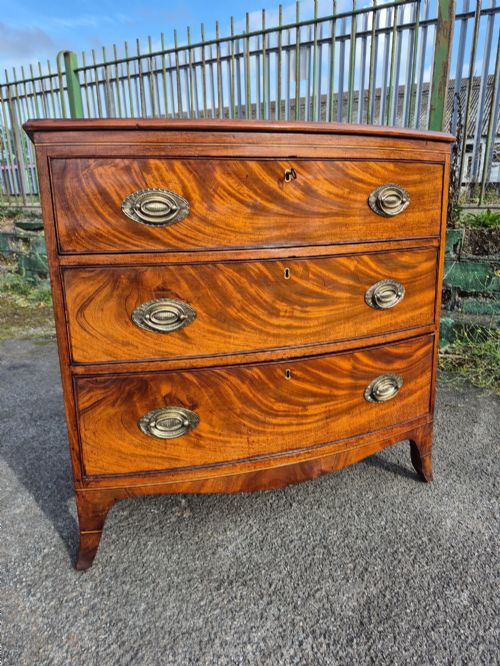
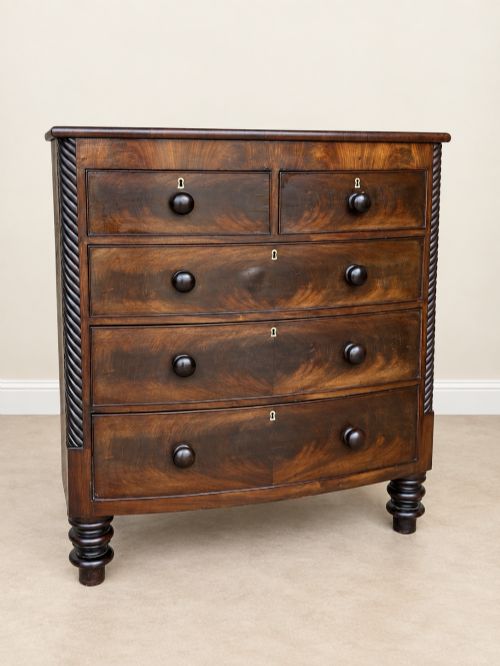
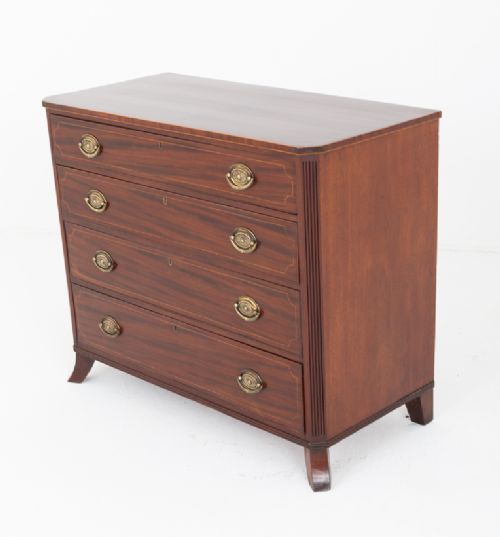
Chest of drawers variations dominate the selection, appearing frequently in bow front and straight configurations alongside taller linen presses and sideboards. Cabinet makers constructed these items to house clothing, linen, and household items within formal living spaces and bedrooms.
Origin dates span from the late Georgian era through the Regency period, with later revival pieces also represented in the inventory. Each object reflects the utilitarian demands of its period combined with cabinet making standards of the time.
Materials and Construction
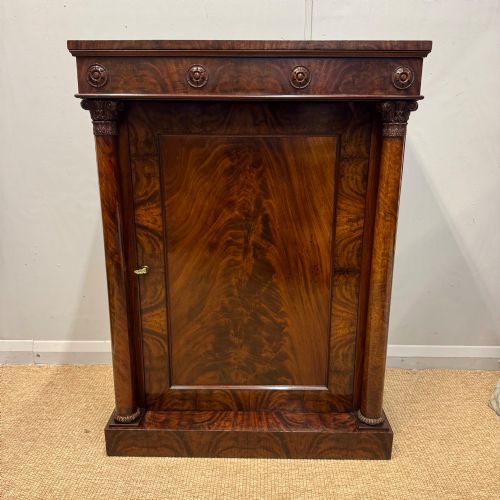
Cabinet makers utilised solid mahogany and flame mahogany veneers applied to secondary woods such as oak and pine. Flame mahogany veneer provides distinctive figured grain patterns across drawer fronts and cabinet doors, creating visual depth.
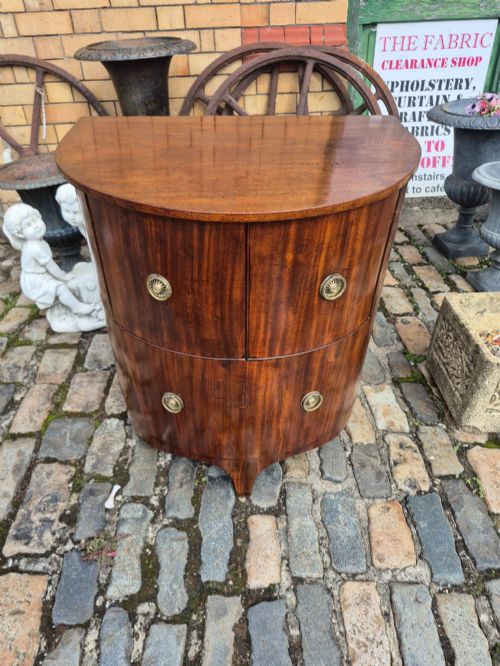
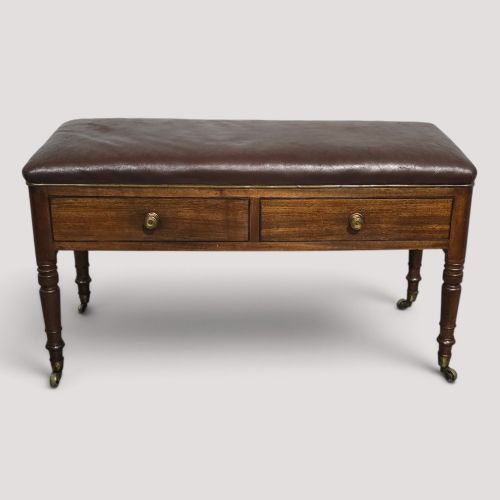
Brass hardware, including ring pulls, escutcheons, and drop handles, secures drawer faces and doors while adding metallic contrast to the dark timber. Secondary details involve contrasting stringing and banding in satinwood or ebonised wood.
Internal construction relies on hand cut dovetail joints for drawer boxes and frame and panel assembly for larger carcasses. Oak linings appear within robust drawers designed to bear weight over centuries of daily opening and closing.
Listings feature mahogany, oak, satinwood, and brass hardware across chests, presses, and side cabinets dating from the Georgian and Regency periods.
Assessing Quality
The degree of figuration in the mahogany veneer defines the visual standard of a piece, with deeply swirled flame patterns commanding greater attention than plain stock. Matching grain across adjacent drawer fronts indicates deliberate selection by the original maker.
Secondary wood selection and interior finishing reveal construction standards, particularly the tightness of dovetail joints and the presence of original oak drawer linings. Crisp carving on mouldings and original brass fittings preserve the integrity of the design.
T & G Seddon·Gillows
The Regency Mahogany Storage Glossary
- Bow front
- A convex curved cabinet front that projects outward in a smooth arc. This shape gained popularity during the late eighteenth and early nineteenth centuries on chests of drawers and sideboards.
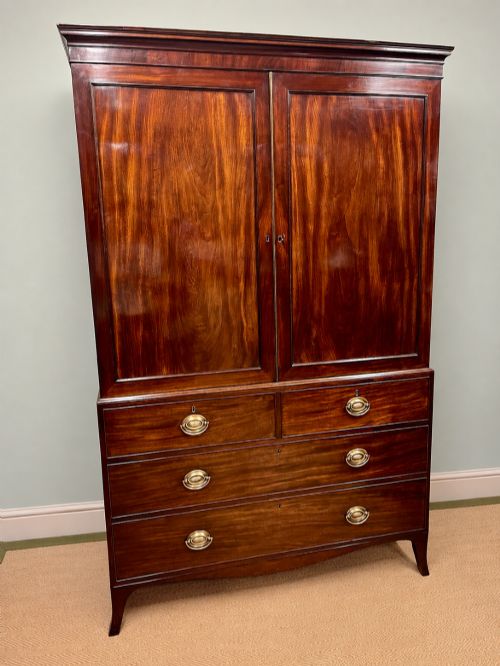
- Linen press
- A tall storage cabinet featuring upper sliding trays or shelves enclosed by doors, positioned above a base of wider drawers. Households used these to store folded textiles and bed linens.
- Crossbanding
- A narrow strip of veneer laid around the border of a larger panel with the grain running perpendicular to the centre. This technique frames drawer fronts and table tops.
- Caddy top
- A raised, moulded tabletop profile resembling the lid of a tea caddy. Cabinet makers applied this distinct edge to small chests and commodes.
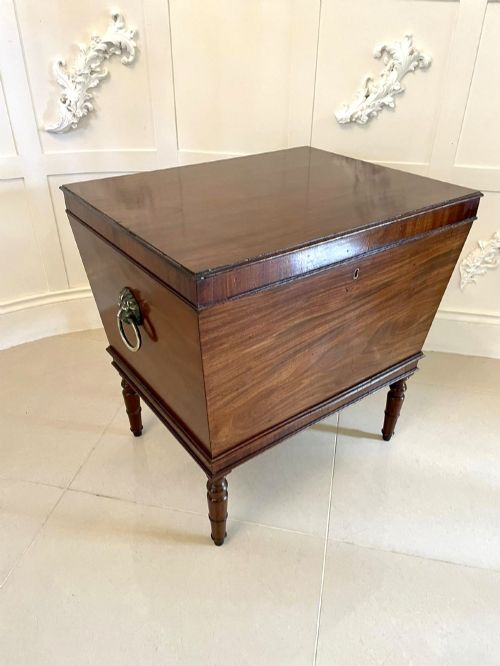
- Cellarette
- A freestanding box or cabinet lined for cooling and storing wine bottles. These units often feature lead linings and internal dividers.
Regency Mahogany Storage: Frequently Asked Questions
How do I identify a true Regency chest?
Examine the timber species, drawer construction, and proportions. Authentic examples display hand cut dovetails, native oak linings, and proportioned bracket feet or turned legs.
Secondary woods and brass hardware provide further period context. Makers during this era balanced structural utility with clean classical lines.
Where should I place a linen press?
Linen presses suit bedrooms, dressing rooms, or large hallways where vertical storage is required. Their deep upper compartments accommodate folded garments and bedding.
The wide base drawers offer supplementary storage for smaller items. Ensure adequate clearance for the large panel doors to swing open fully.
What is flame mahogany?
Flame mahogany is a highly figured veneer sliced from the point where branches join the main tree trunk. This timber yields undulating, fire-like patterns across large surfaces.
Cabinet makers reserved these veneers for primary visual areas such as top drawers and cabinet doors. The grain catches light differently depending on the viewing angle.
How do I care for antique mahogany?
Maintain stable indoor humidity and keep wooden furniture away from direct heat sources and sunlight. Natural beeswax polish preserves the moisture and lustre of the timber.
Avoid commercial silicone sprays that damage historic French polish finishes. Dust regularly with a soft, dry cloth to prevent particulate buildup.