
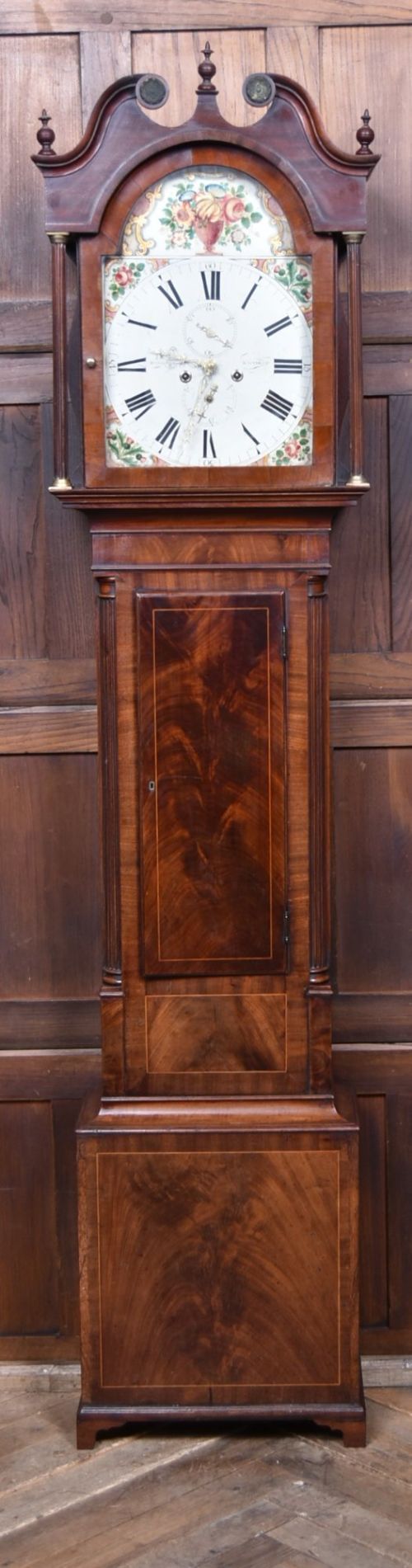
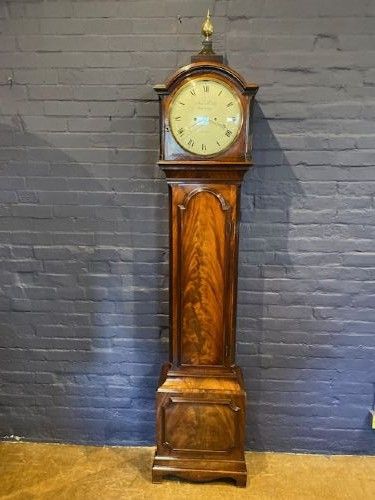
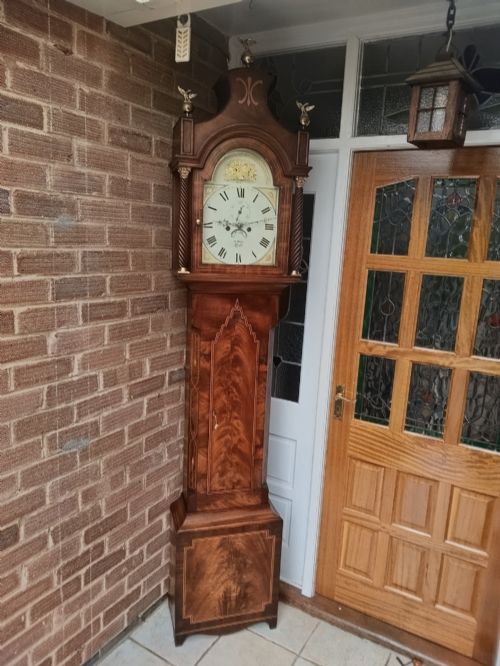
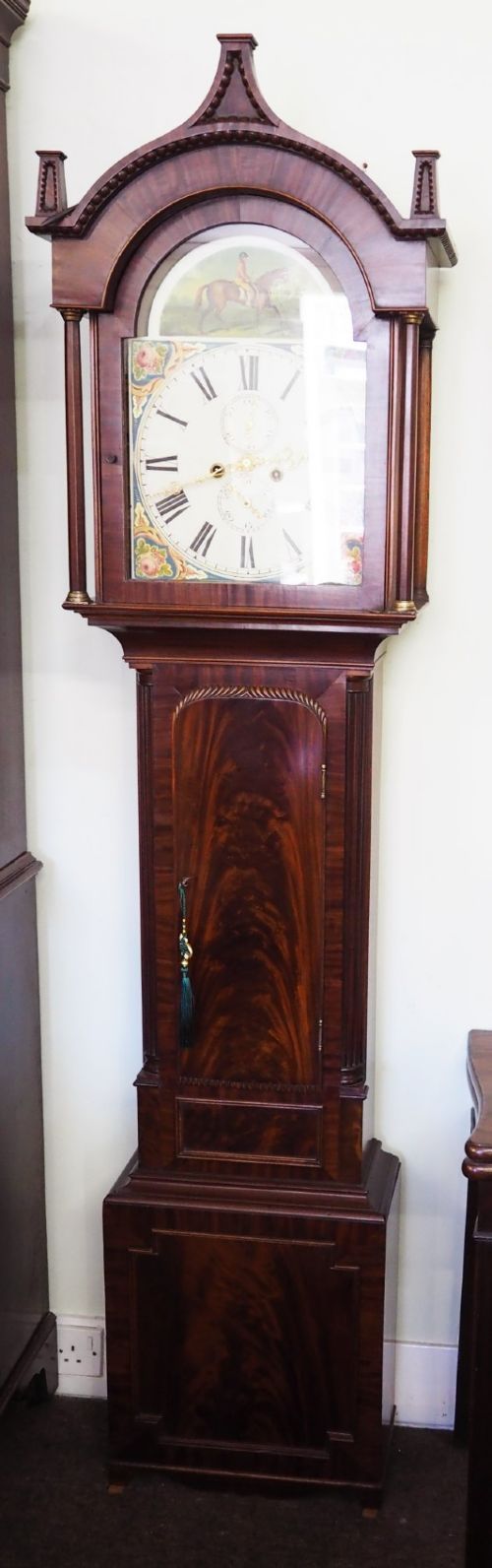


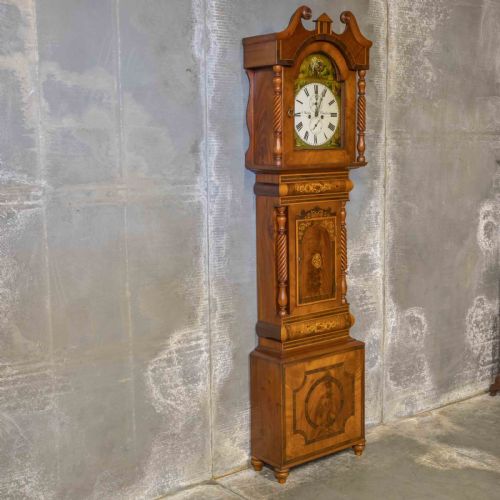


Regency Mahogany Standing Clock
A regency mahogany standing clock brings architectural presence and precision engineering into a room, uniting dense timber with steady mechanical timekeeping.
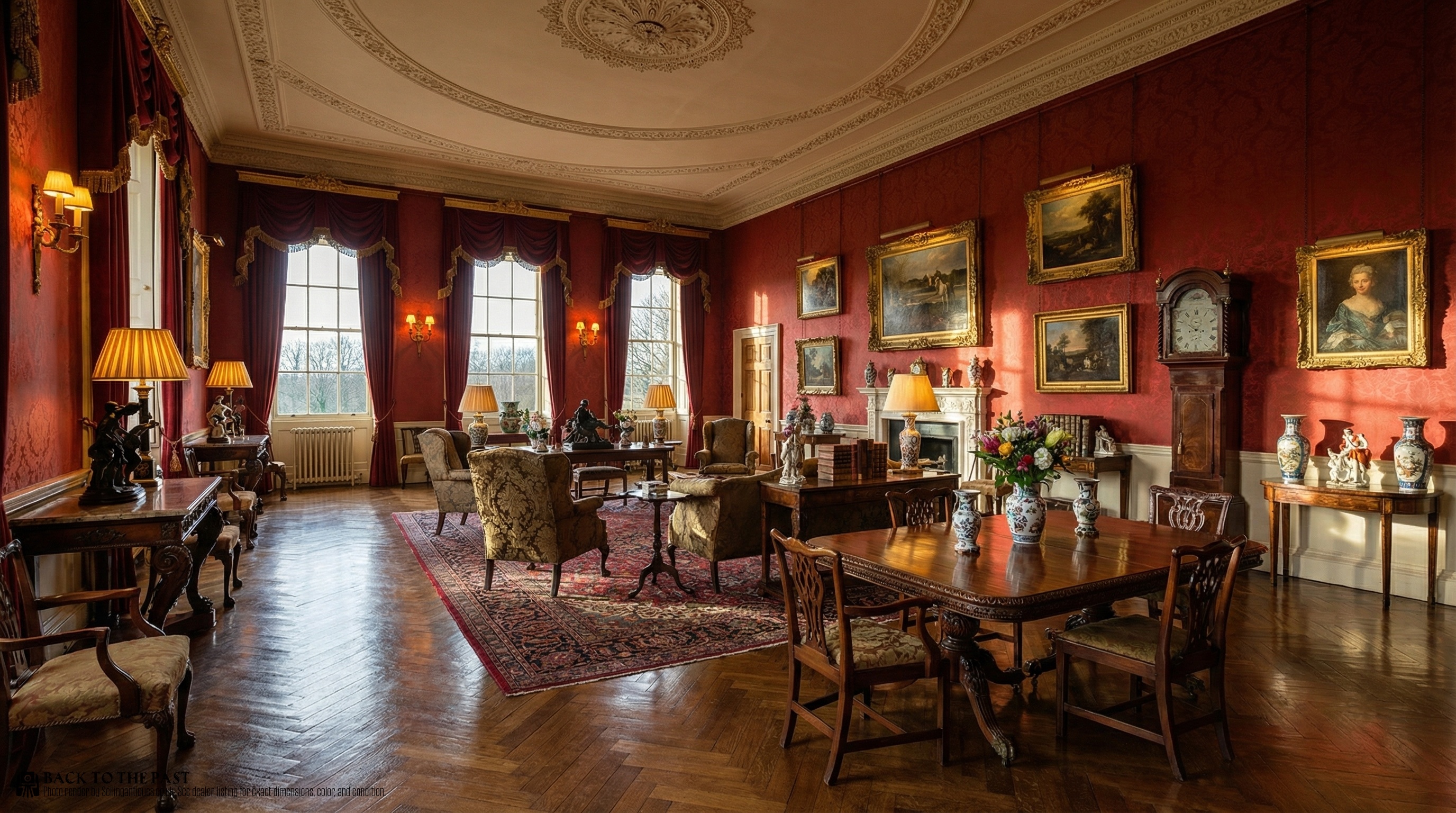
Regency Mahogany Standing Clock
A regency mahogany standing clock is a tall floor-standing timekeeper, frequently referenced in the trade as a longcase or grandfather clock. These vertical instruments date primarily from the Georgian and Regency periods through the nineteenth century, reflecting regional cabinetmaking traditions from London to Edinburgh and Durham.
The specimens on this page encompass various regional forms, including Scottish longcase clocks and smaller scale grandmother clocks. Makers range from provincial watchmakers to renowned London horologists, housed within cases of solid timber or flame mahogany veneer.
Buyers encounter architectural hooded designs alongside inlaid surfaces and painted iron dials. Each piece serves simultaneously as a functional timekeeper and a dominant item of case furniture.
Materials and construction
Cabinetmakers utilised dense tropical hardwoods, selecting figured flame mahogany and burr mahogany veneer for the primary visual surfaces of the trunk and hood. These figured timbers were laid over secondary woods to create deep optical movement on the door panels and plinths.
Dial construction relied upon painted iron or brass, often detailed with subsidiary seconds and calendar arcs beneath protective glass panels. Metalwork components within the movement required precision brass casting, steel arbours and heavy lead or iron weights suspended by cords or chains.
Several makers operated from historic London addresses like Bond Street, crafting timepieces that measured the hours of Regency society.
Distinctions in standard
Quality separates ordinary provincial workshop production from the refined output of celebrated London and Scottish makers. Superior examples exhibit exceptional figure in the flame mahogany veneer, sophisticated inlay work, and robustly engineered eight-day movements signed by known horologists.
Proportion and cabinet integrity dictate the overall desirability of a piece. Clocks retaining their original surface patination, well-proportioned hood columns and uncompromised dial architecture stand apart from those with replaced components or heavily restored timber.
Hendrie Ogg Dunfermline·James McCabe·Parkinson and Frodsham·Dwerrihouse and Carter·Ganthony Of London·Perigal Bond Street·Thos Newsom of Tottenham·Charles Denham of Durham
The Regency Mahogany Standing Clock Glossary
- Longcase clock
- A tall, floor-standing weight-driven timekeeper enclosed in a protective wooden case. It is commonly known as a grandfather clock.
- Flame mahogany
- A distinctive wood veneer cut from the fork of the mahogany tree to create a fiery, swirling grain pattern. Cabinetmakers utilised this figure on principal display surfaces.
- Regulator
- A precision pendulum clock designed to maintain extreme accuracy for timekeeping reference. These movements were essential for scientific and commercial timing.
- Lancet top
- An architectural hood shape featuring a pointed, arched profile resembling a lancet window. This silhouette appears on regional Georgian and Regency pieces.
Regency Mahogany Standing Clock: Frequently Asked Questions
How do eight day movements work?
An eight day movement requires winding once a week via key holes on the dial face, driving a train of brass wheels controlled by a swinging pendulum and falling weights.
This mechanism allowed domestic clocks to maintain reliable time without daily attention from the household.
Where should I place my clock?
These tall timekeepers require a stable, dry interior wall with a firm floor surface to ensure the pendulum swings plumb and the case remains upright.
Avoid exterior walls subject to dampness or direct sunlight that might dry out and split the mahogany veneer.
How do I distinguish regional styles?
Scottish longcase clocks often display distinct regional hood pediments and cabinet proportions compared to their London counterparts signed by makers like James McCabe.
Regional variations appear in the dial painting, wood selection, and architectural mouldings unique to workshops in Edinburgh or Durham.
What is a grandmother clock?
A grandmother clock is a smaller, slender version of the traditional longcase, built with reduced dimensions for more compact domestic spaces.
These scaled-down tall clocks retain standard weight-driven movements while presenting a significantly shorter vertical profile.