




Regency Mahogany Sideboard Pedestals
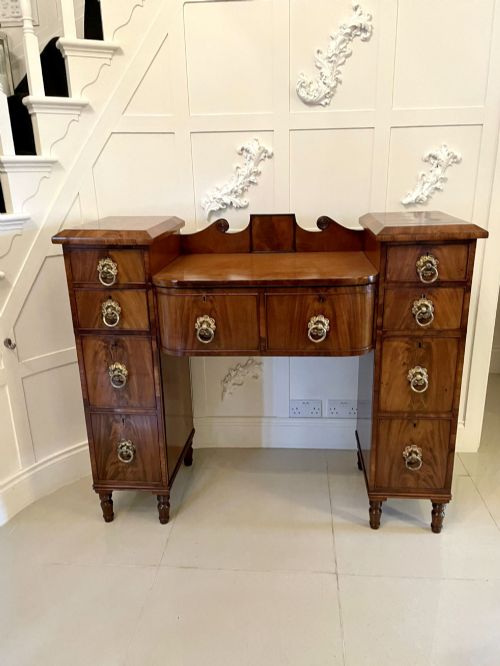
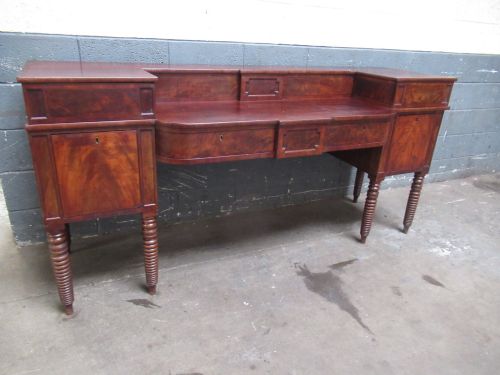
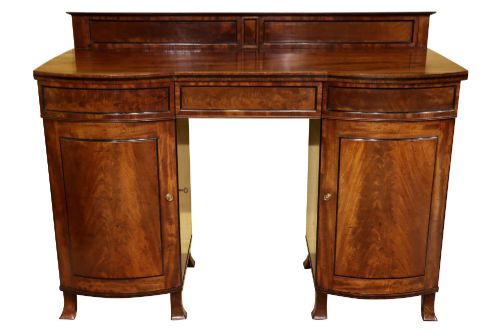
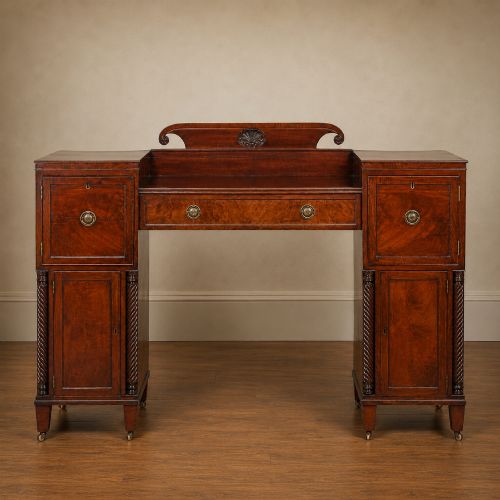
Regency mahogany sideboard pedestals offer striking timber figuring and sculptural proportions, prized by collectors for formal dining rooms.
Regency Mahogany Sideboard Pedestals
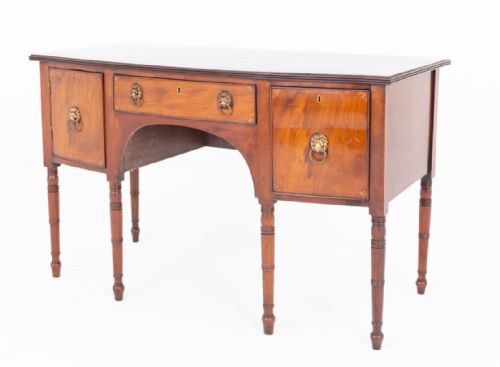
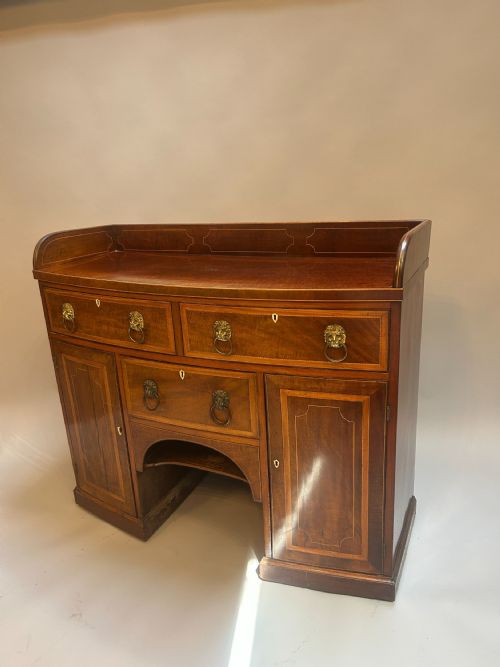
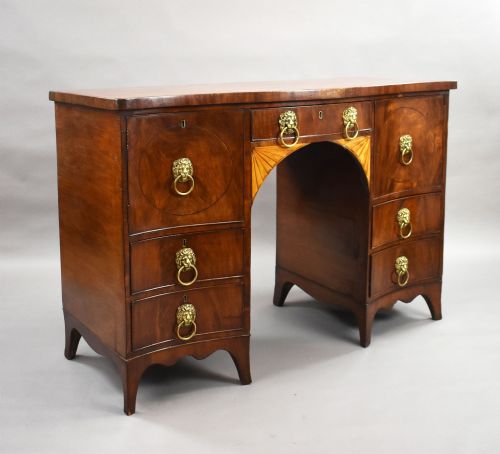
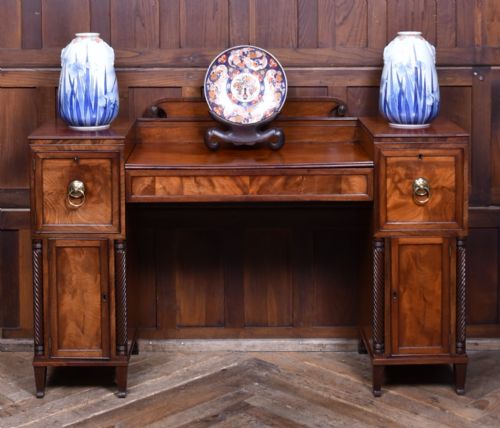
When you search for regency mahogany sideboard pedestals, you encounter substantial dining room furniture built primarily during the late Georgian and Regency periods. These pieces range from grand twin pedestal sideboards to standalone pedestal cabinets and paired pedestals designed to hold urns or serve food.
The specimens on this page originate predominantly from the nineteenth century, including pieces spanning the Regency, George IV, and William IV eras. Alongside formal pedestal sideboards, the selection encompasses related forms such as chiffoniers, serving tables, and brass-galleried sideboards.
Distinctions in quality
Quality rests upon the selection of timber veneers, where highly figured flame mahogany and symmetrical grain patterns distinguish superior items from plain boards. The sophistication of carved details, such as rope twist columns or lion paw feet, marks the distinction between standard workshop output and high-end cabinet making.
Structural integrity and original brass hardware further elevate a piece. Surviving brass galleries, fitted secretaire drawers, and untouched patination demonstrate superior preservation and original craftsmanship.
Drop-well pedestal sideboards offered guests a discreet timber basin for rinsing cutlery between courses at formal dining tables.
John Gregory·S Jamar·Gillington of Dublin·James Mein of Kelso·H Mower and Stephenson
The Regency Mahogany Sideboard Pedestals Glossary
- Flame mahogany
- A veneer cut from the fork of a mahogany tree to create a distinctive flame-like pattern. This decorative figuring is highly prized on the front drawers and doors of formal dining furniture.
- Pedestal
- A structural pillar or cabinet base that supports the ends of a sideboard or stands independently as a cabinet. They frequently house cellarets or shelving within.
- Brass gallery
- A metal rail mounted on the rear upper edge of a sideboard surface. It originally prevented serving dishes from sliding off during use.
- Secretaire
- A desk drawer that pulls down to reveal a fitted interior of small compartments and pigeonholes. It combines the storage function of a sideboard with writing capability.
- Chiffonier
- A small sideboard or low cabinet equipped with shelves and doors below. These pieces emerged during the Regency and William IV periods for smaller dining spaces.
Regency Mahogany Sideboard Pedestals: Frequently Asked Questions
What is the difference between a sideboard and pedestals?
A traditional sideboard is a single long unit combining surface space and storage cupboards. Pedestal sideboards feature separate cabinets or columns joined by a central serving board, while standalone pedestals are separate matching cupboards.
Standalone pedestals frequently flanked a central serving table in grand dining rooms. They were used to store wine bottles or support warming urns.
How do I identify a Regency period piece?
Regency furniture is characterised by classical architectural motifs, clean lines, and dark figured mahogany timbers. Cabinet makers drew inspiration from ancient Greek and Roman designs, incorporating brass inlay and carved paw feet.
Look for proportions typical of the early nineteenth century, alongside traditional hand-cut dovetail joinery in the drawer construction. Maker stamps and brass labels can occasionally confirm the exact period of production.
Were brass galleries original to these sideboards?
Brass galleries were fitted to many formal dining pieces to hold serving items securely in place. Their presence depended on the original commission and the grandness of the dining room.
When examining a gallery, check for consistent mounting holes and matching patination on the brass components. Galleries added both practical utility and decorative height to the back of the timber surface.
How do I care for antique mahogany furniture?
Maintain antique mahogany by keeping pieces away from direct sunlight and steady sources of artificial heat. Sudden temperature changes cause timber to warp and veneers to lift from their carcases.
Apply a traditional beeswax polish sparingly to nourish the dry grain and preserve the historic finish. Avoid modern silicone sprays, which damage the patina built up over centuries.